
Home · Prehistory · Chapter one
Palaeolithic
The Palaeolithic is the longest stage of human history. People lived in small bands, hunted and gathered plants, and made tools from stone, bone and wood. In this time humans mastered fire and spread out of Africa across Eurasia.
Tools
THEME ONE
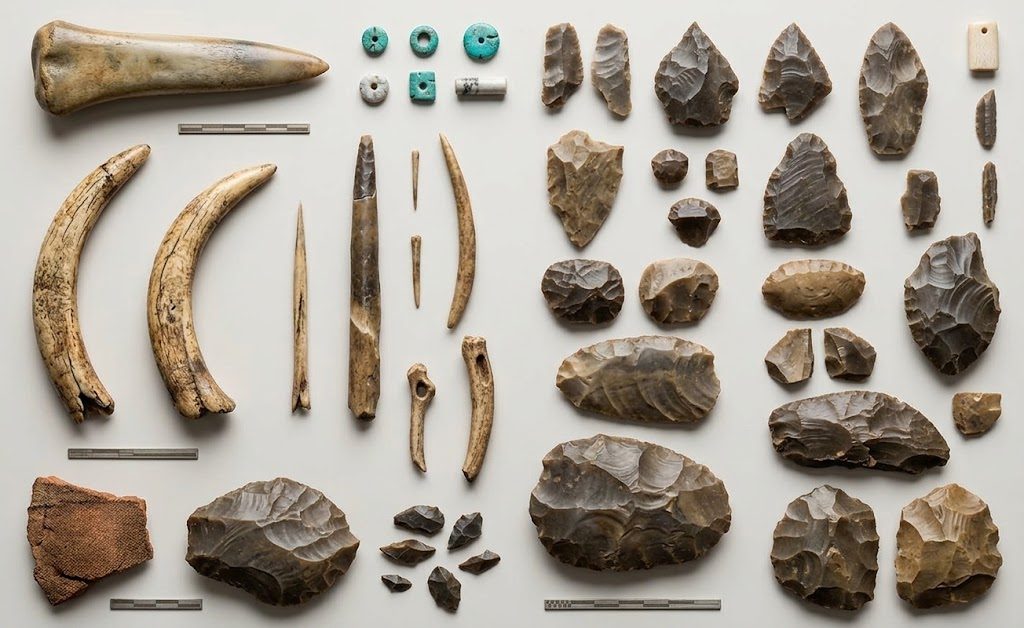
The first tools were split stones with a sharp edge. Over time the work grew finer: from crude handaxes to thin flakes and composite tools, where a stone point was fixed to a wooden handle.
That last step matters more than it looks. Binding a stone point to a shaft means holding two ideas at once - the cutting edge and the thing that carries it - and it is the beginning of every assembled object since.
Daily life and shelter
THEME TWO
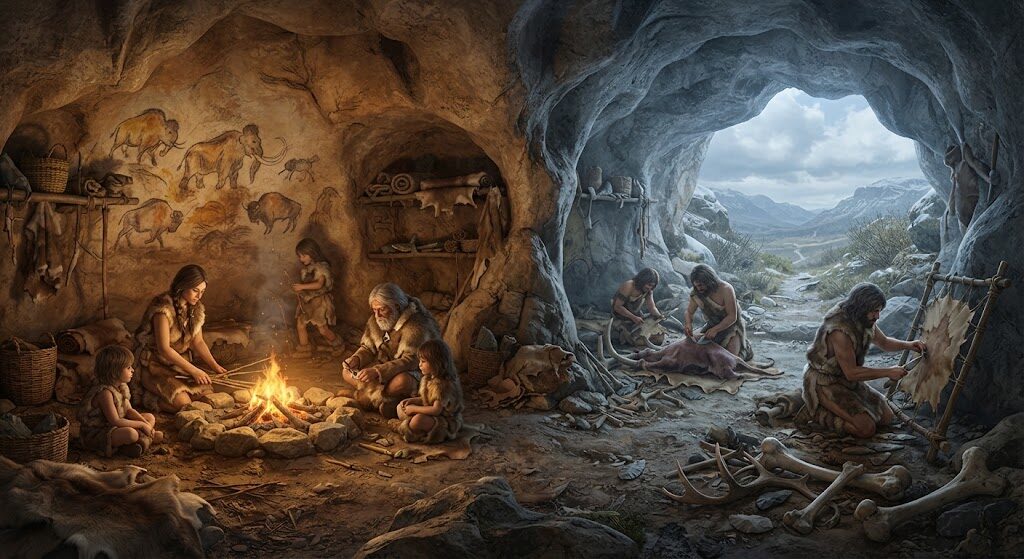
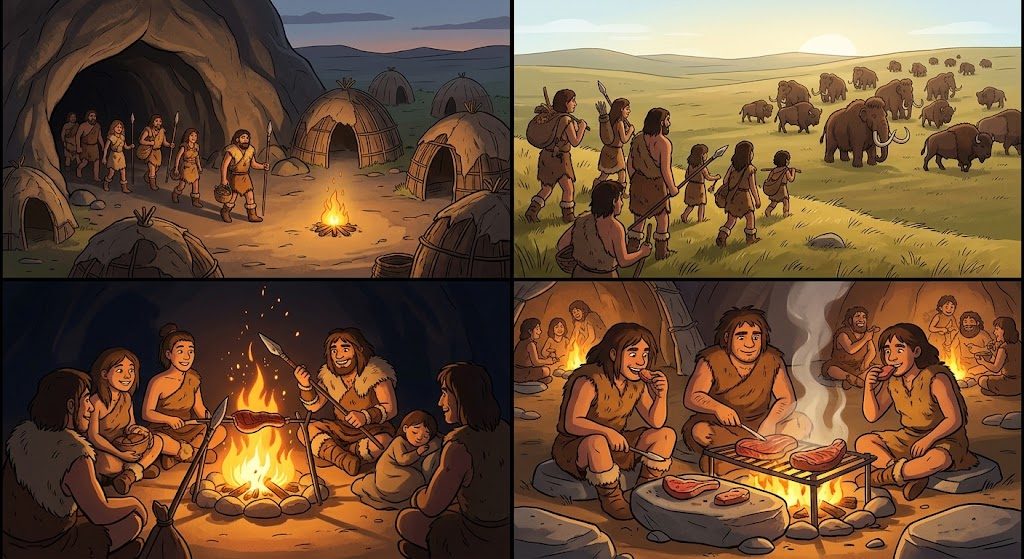
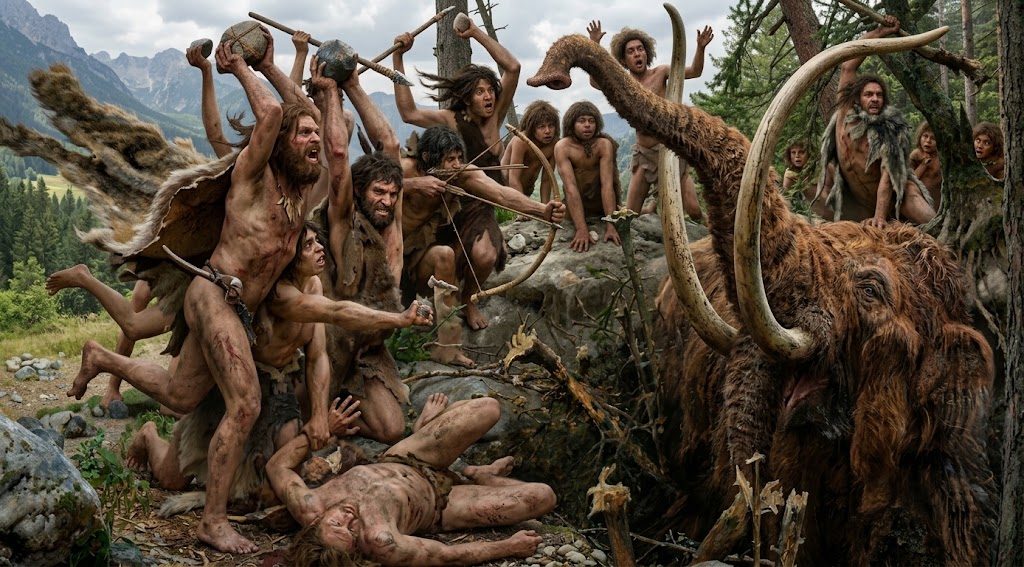
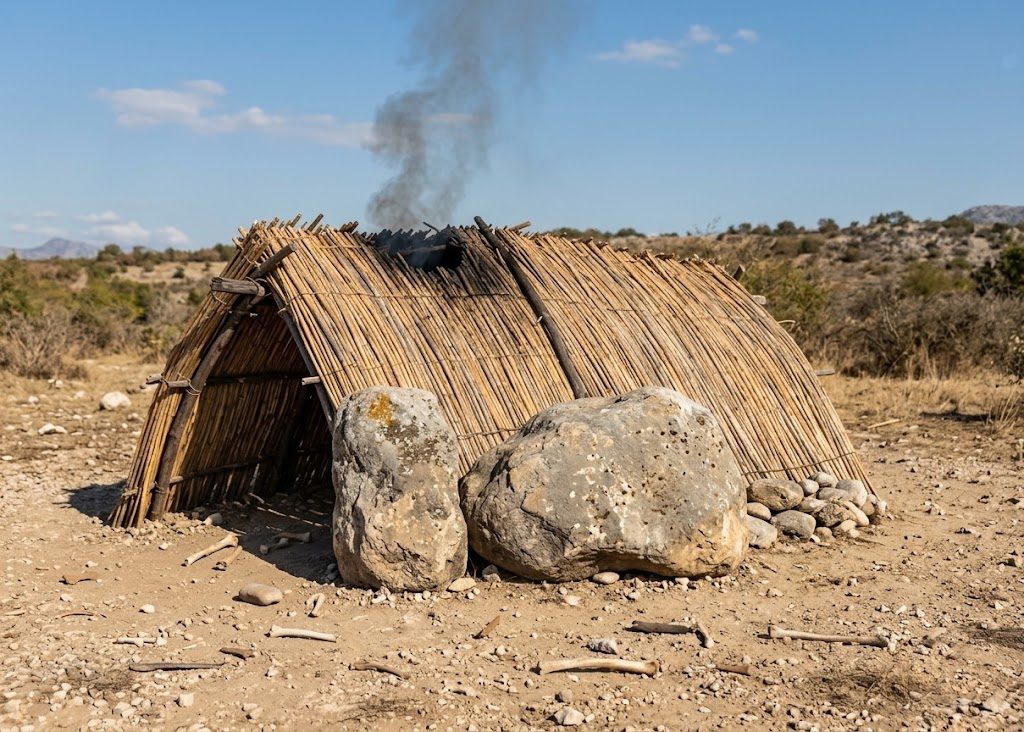
People lived in caves and light shelters, following herds of animals. Fire gave warmth, light and protection - and let them cook, which made food more nourishing.
Cooking is a kind of digestion done outside the body. Heat breaks food down before it is eaten, so the same meal yields far more energy and takes far less time to chew. The hours saved are hours that became available for everything else.
Art
THEME THREE
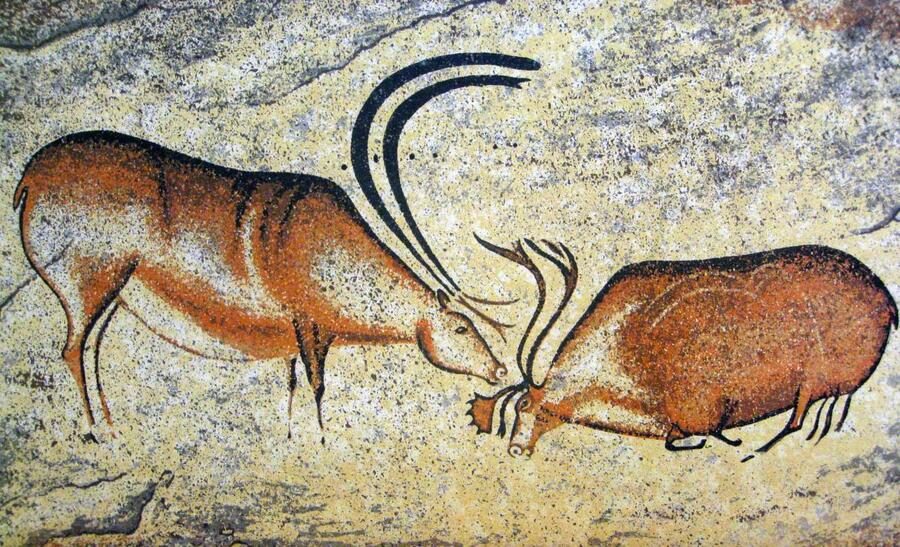
Cave walls were painted with animals: bison, horses, mammoths. Pigment came from clay and charcoal, and simple fat lamps gave light.
The animals are drawn with an economy of line any working illustrator would recognise as skill. Whatever these paintings were for, they were not made by beginners - and similar work appears in Europe and in Sulawesi at roughly the same time, almost certainly invented twice.
Beliefs
THEME FOUR
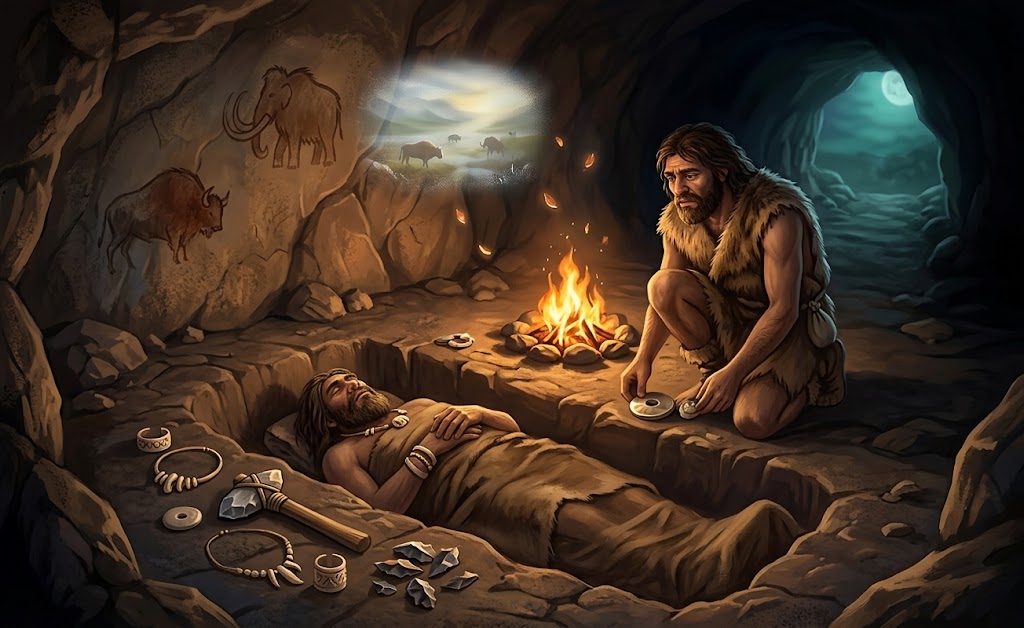
The dead were buried with tools and ornaments. People believed these things would be needed in another world, understood as a continuation of life on earth.
This is inference, not testimony. Grave goods tell us the burial was deliberate and that objects were thought to belong with the person, what exactly was imagined beyond that, nobody can recover.
Map
THEME FIVE
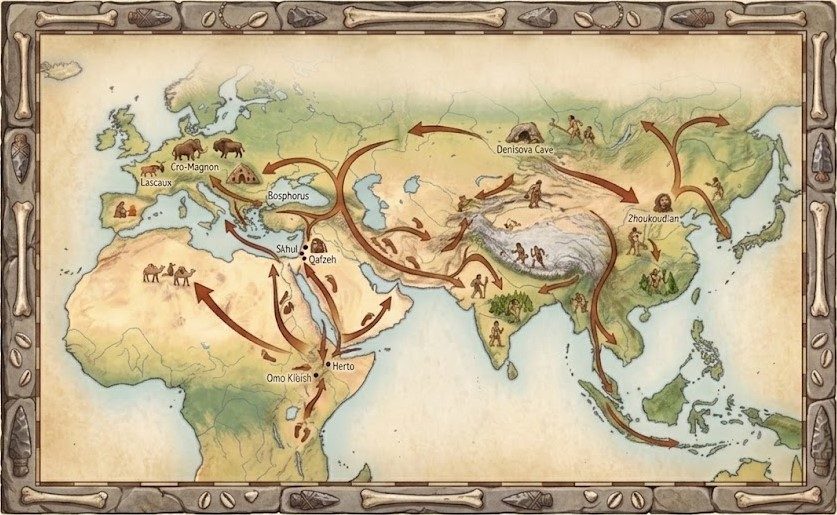
The map shows a probable picture of the world in the Palaeolithic: where people are thought to have lived and the routes along which they spread. It is an assumption built from finds, and finds survive unevenly - they cluster where conditions preserve bone and stone, and where archaeologists have looked. Blank regions mean absence of evidence, not absence of people.
Key dates
- 2.6 MyaFirst deliberately struck stone tools, at Gona in Ethiopia. A flake with an edge sharper than any tooth opens up marrow and meat.
- ~1 Mya – 400 kyaControlled use of fire. The date is genuinely contested, the effect is not.
- ~300 kyaEarliest fossils recognised as Homo sapiens, at Jebel Irhoud in Morocco.
- ~65 kyaPeople reach Australia, which required crossing open sea. Somebody built a craft and judged a current.
- ~40 kyaFigurative cave painting appears in Europe and on Sulawesi, independently of one another.
- ~10 000 BCEThe ice retreats, the large animals thin out, and the Mesolithic begins.
Questions and answers
What did people invent in the Palaeolithic?
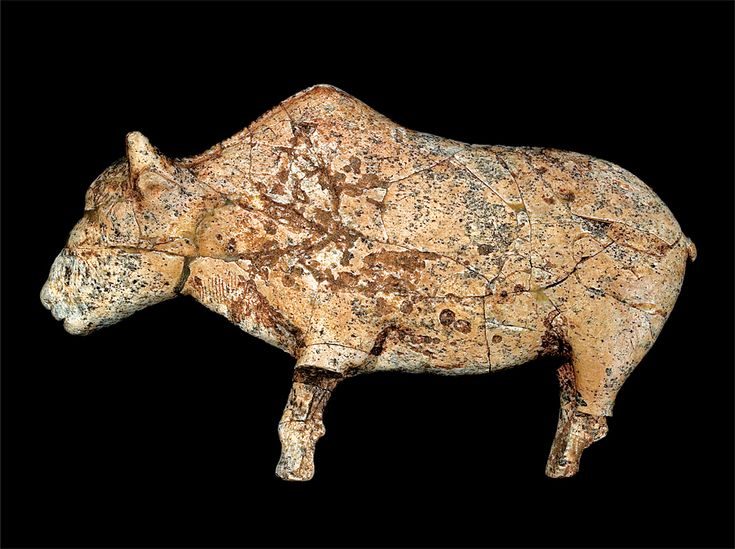
Chipped stone tools - from simple choppers to hand axes and fine blades - and the controlled use of fire. Later came the spear-thrower, bone needles, cave paintings, carved figurines and the first deliberate burials of the dead.
What came after the Palaeolithic?
The Mesolithic, or Middle Stone Age. When the ice sheets retreated after about 10 000 BCE, people in Europe adapted to warmer forests, smaller game and fishing. In the Near East the same transition is called the Epipalaeolithic.
What we call the Stone Age might as accurately be called the age of wood and rope - of which almost nothing survives.
That gap is worth holding on to while reading any account of this period, including this one. Wood, fibre, hide and language leave nearly no trace, so the record tilts hard toward the two materials that happen to last. Where this site is confident, it says why. Where it is guessing, it says that too.