Home · Prehistory · Chapter two
Mesolithic
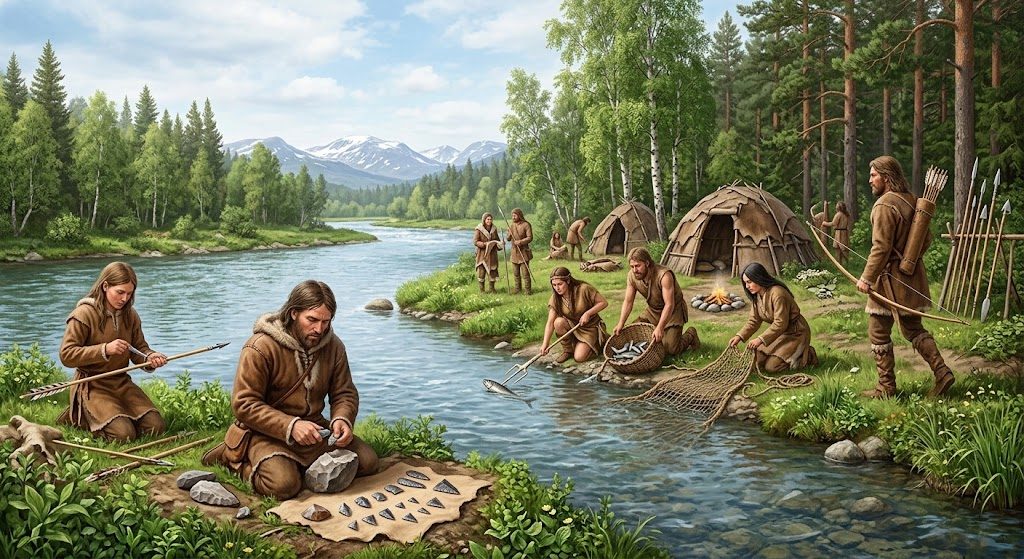
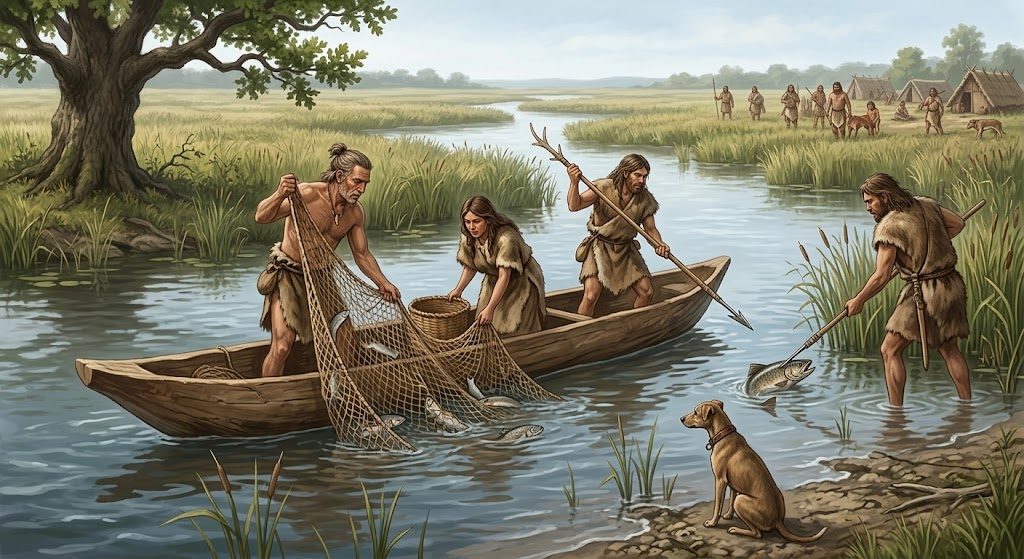
The ice retreated, the climate grew warmer and the large animals disappeared. People turned to hunting small, fast game, took up fishing and lived in smaller groups near water.
Tools
THEME ONE
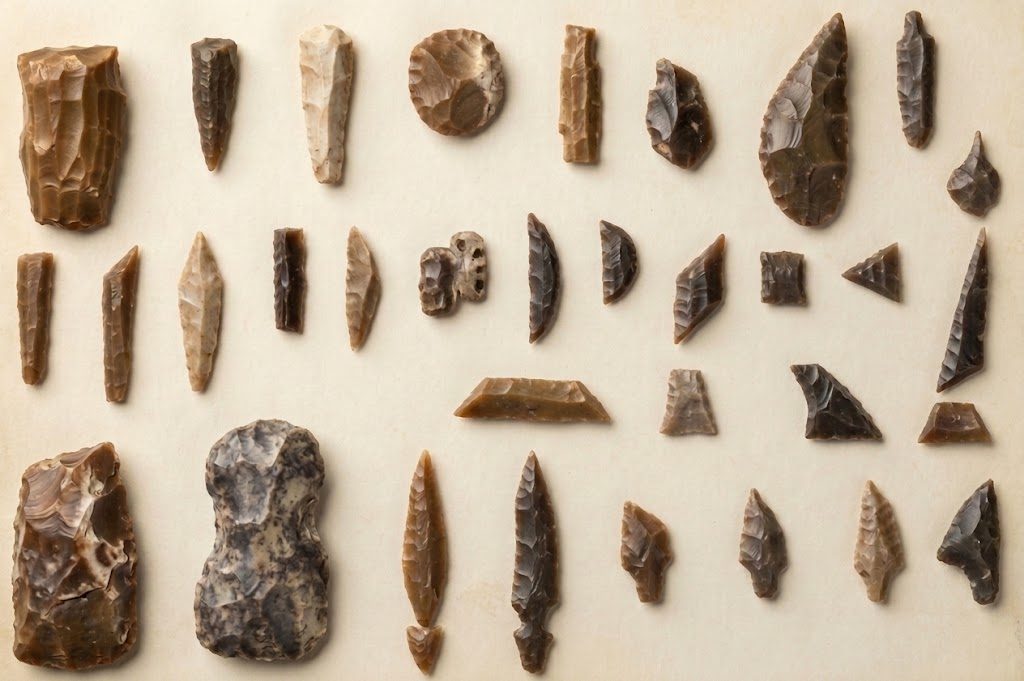
The key invention of the age is the bow and arrow. Microliths appeared: small stone inserts set into a bone or wooden base. Harpoons, hooks and nets were made the same way.
Microliths are a change of thinking as much as of technique. Instead of shaping one perfect blade, you make many small standard pieces and combine them - and when one breaks, you replace that piece rather than the whole tool.
Daily life and shelter
THEME TWO
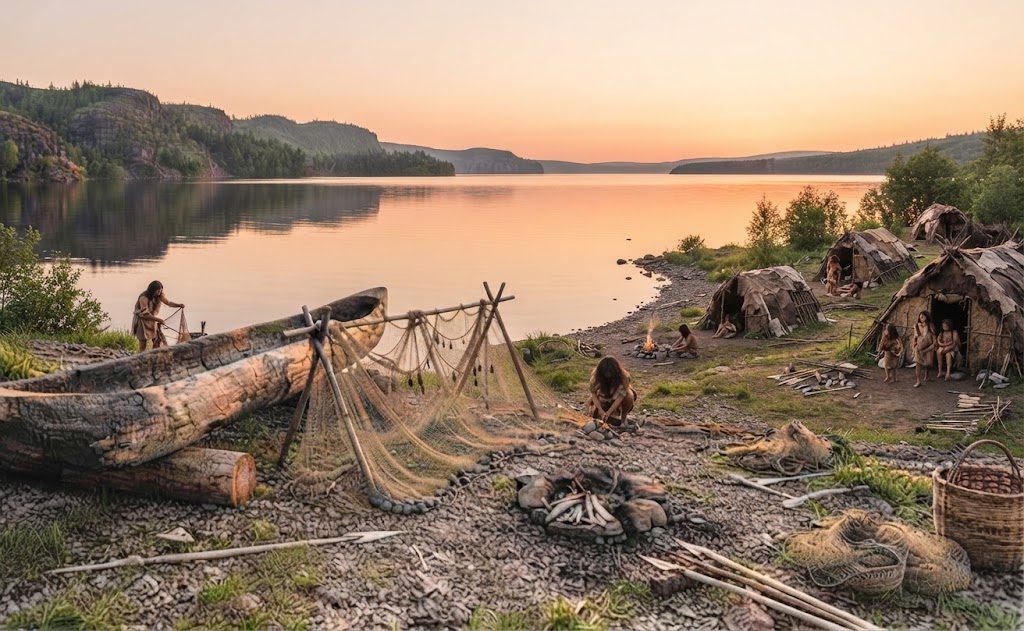
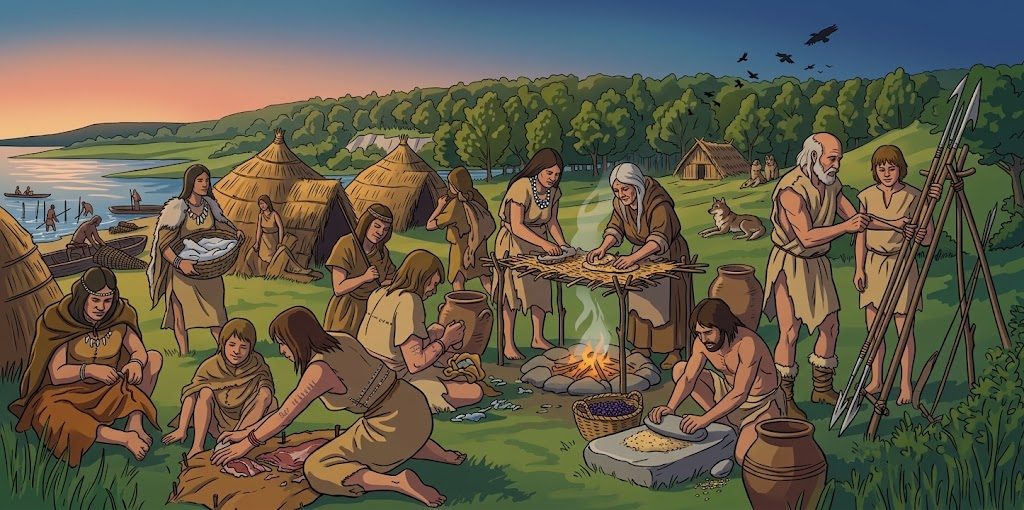
Camps stood by rivers, lakes and sea shores. Dugout boats appeared, along with the first domestic animal - the dog, a helper in the hunt.
Water changed the arithmetic of settlement. Fish and shellfish come back to the same place season after season, so a camp by a good shore could be returned to year on year - a step toward staying put, taken long before farming.
Art
THEME THREE
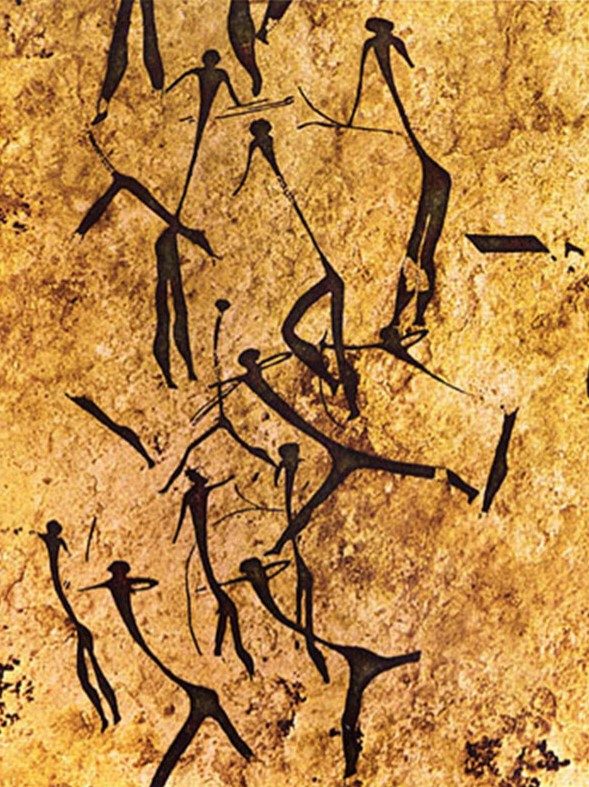
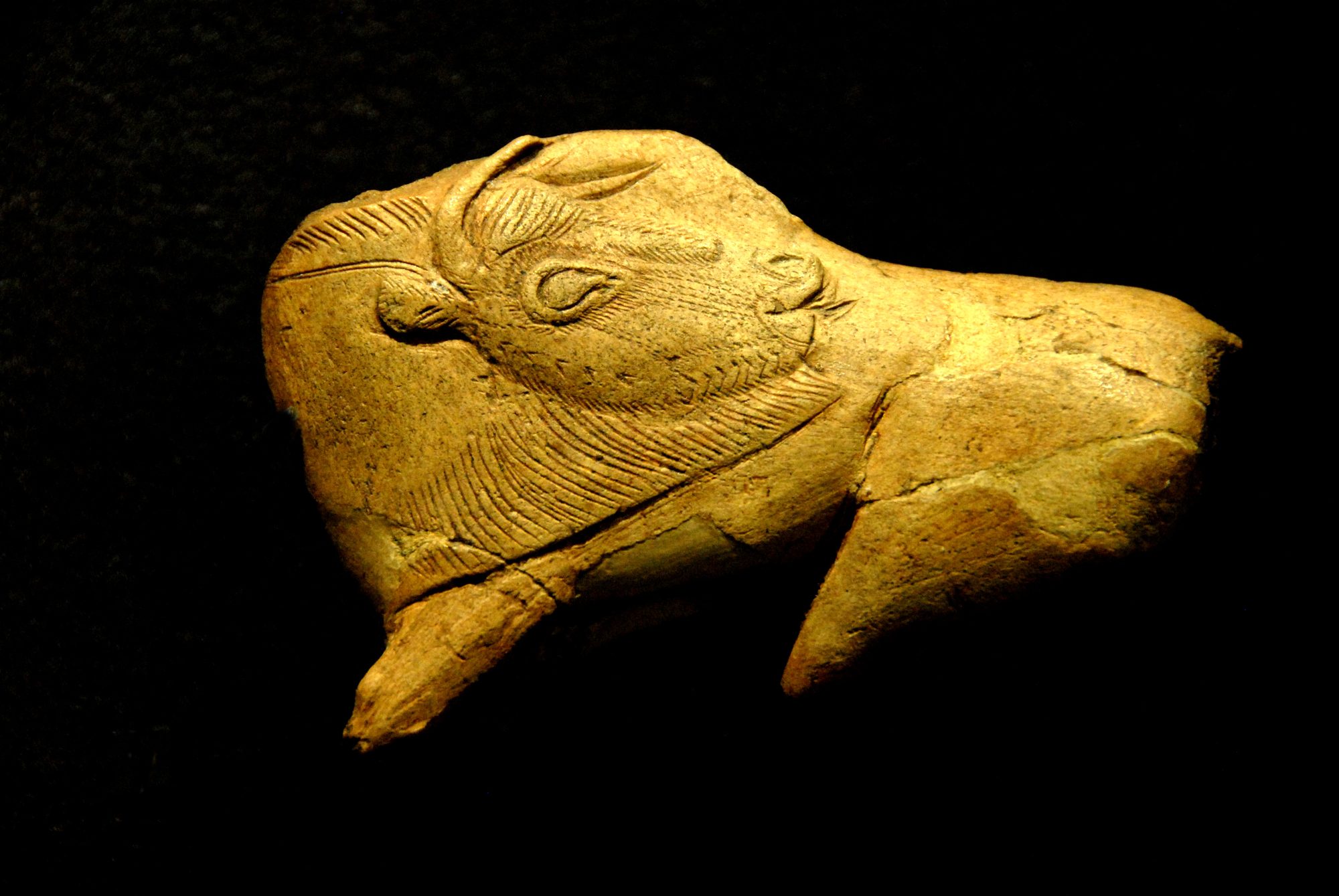
Images grew simpler and smaller, but people appeared in them far more often: hunting scenes, dances, boats. Open-air rock painting and fine bone carving appeared.
That shift is striking. Palaeolithic walls are full of animals and almost empty of people, here the human figure moves to the centre, usually in a group and usually doing something together.
Beliefs
THEME FOUR
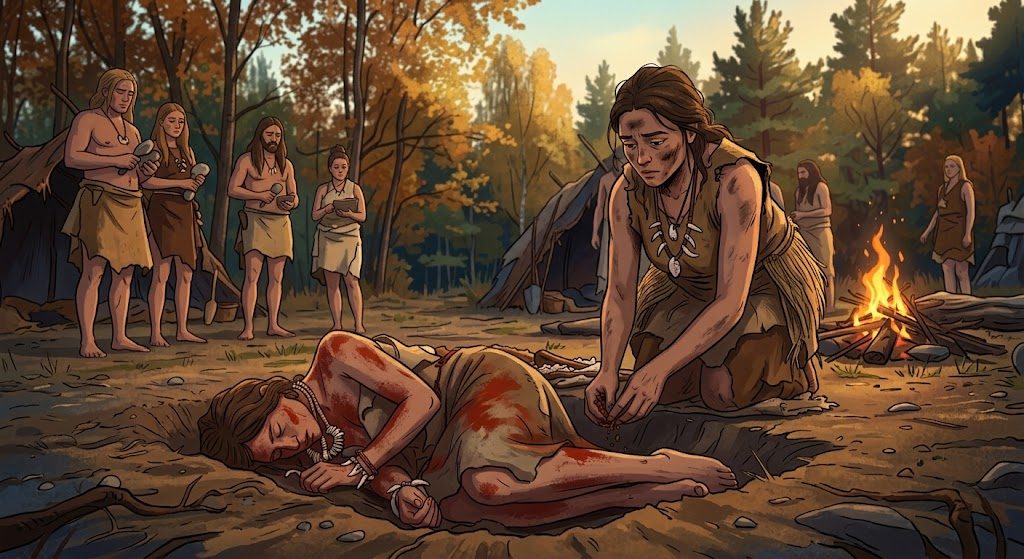
The first cemeteries appeared - permanent burial grounds beside the camp. Graves hold ornaments of teeth and shells, and the body was sometimes sprinkled with red pigment.
A cemetery implies a place worth returning to, and a claim on it. Burying generations in one spot ties a group to a stretch of land in a way that carrying the dead with you never could.
Map
THEME FIVE
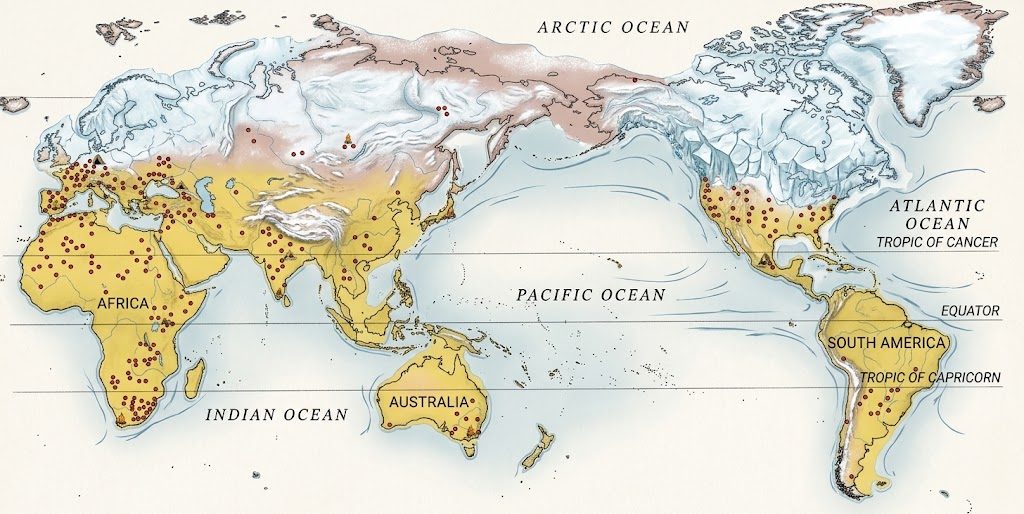
The map shows a probable picture of the world in the Mesolithic, with the coastlines of the time. A large share of Mesolithic life happened on shores that are now under water: sea levels rose as the ice melted, and the best camps - the ones by the shore - went first. Any map of this age is an assumption, and it is missing its richest sites by definition.
Key dates
- ~11 700 BCEThe last glacial period ends. Forests spread north across land that had been tundra.
- ~10 000 BCEBows and microlithic points come into wide use across Europe and western Asia.
- ~9000 BCEDugout boats and paddles appear in the archaeological record of northern Europe.
- ~8000 BCEDogs are buried alongside people - the relationship is old enough by now to be commemorated.
- ~6000 BCEFarming reaches the region and the Neolithic begins, at different times in different places.
Questions and answers
What is typical of the Mesolithic?
Microliths - tiny flint blades set into arrows, harpoons and sickles - the wide use of the bow and arrow, dugout canoes, fish traps and nets. People lived in small groups by rivers, lakes and coasts, and the dog, the first domesticated animal, was already a constant companion of hunters.
What came after the Mesolithic?
The Neolithic, or New Stone Age: farming and herding, permanent villages and pottery. Farming spread into Europe from Anatolia, and in many places Mesolithic hunters and the newcomer farmers lived side by side for centuries.