
Home · Ancient History · Chapter one
Ancient Egypt
For three thousand years a narrow green strip along the Nile carried one of the longest-lived civilisations in history. Its kings ruled from the first unification of the country around 2900 BCE until the death of Cleopatra and the Roman conquest in 30 BCE.
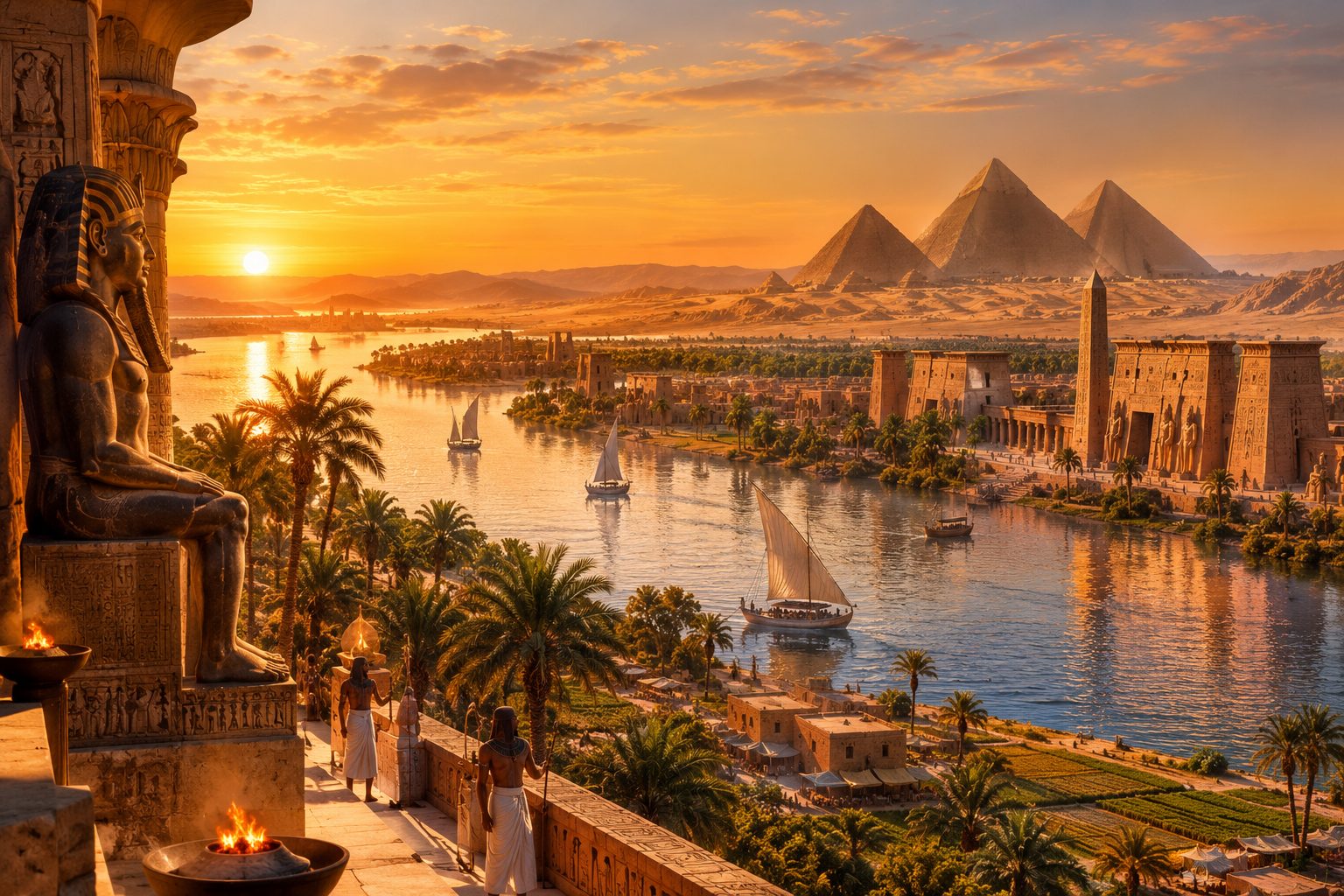
The gift of the Nile
The Greek historian Herodotus called Egypt "the gift of the river". South of the Delta almost no rain falls. Every summer the Nile rose and flooded its valley, and when the water drew back in autumn it left a layer of fertile black silt. The Egyptians named their country Kemet, "the black land", after that soil, and the desert around it Deshret, "the red land". The river was also the country's main road: boats carried grain, stone and officials from the First Cataract at Aswan down to the Mediterranean.
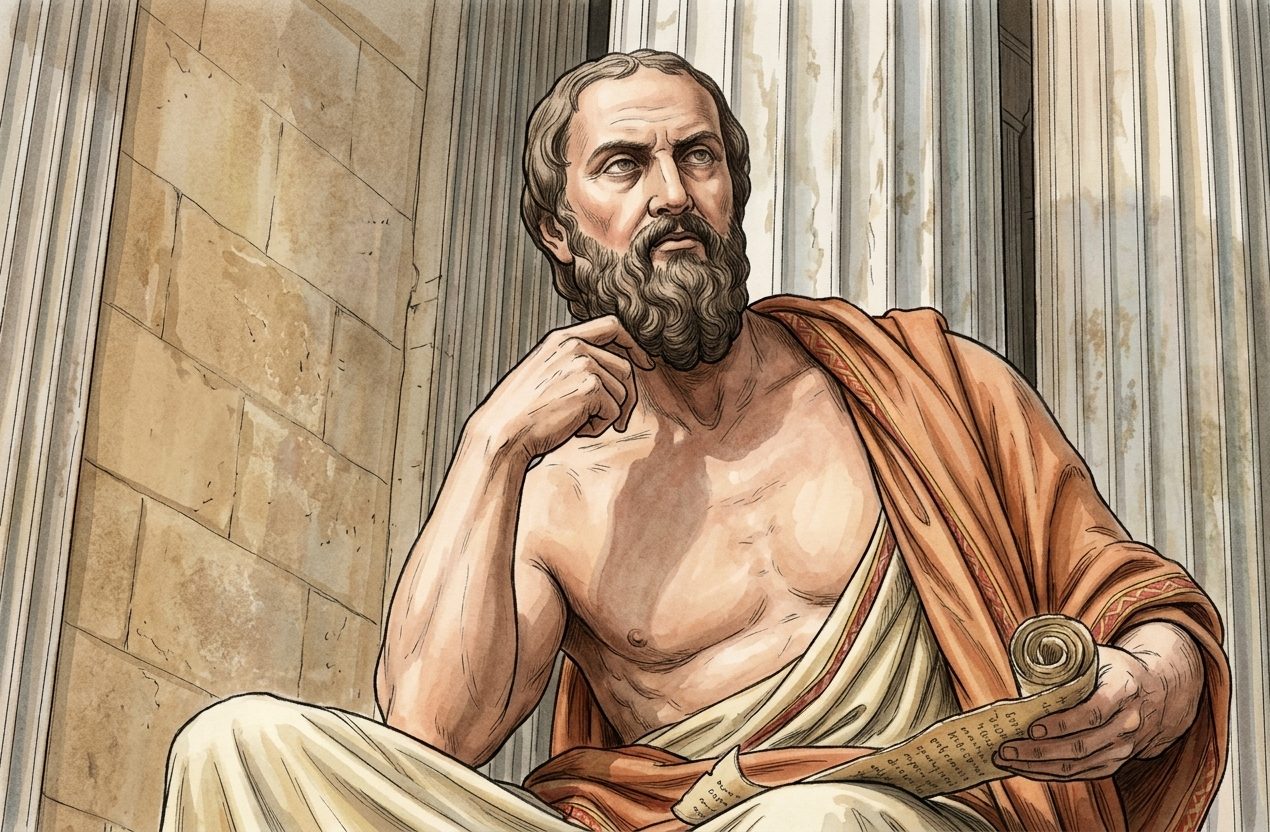
The king and maat
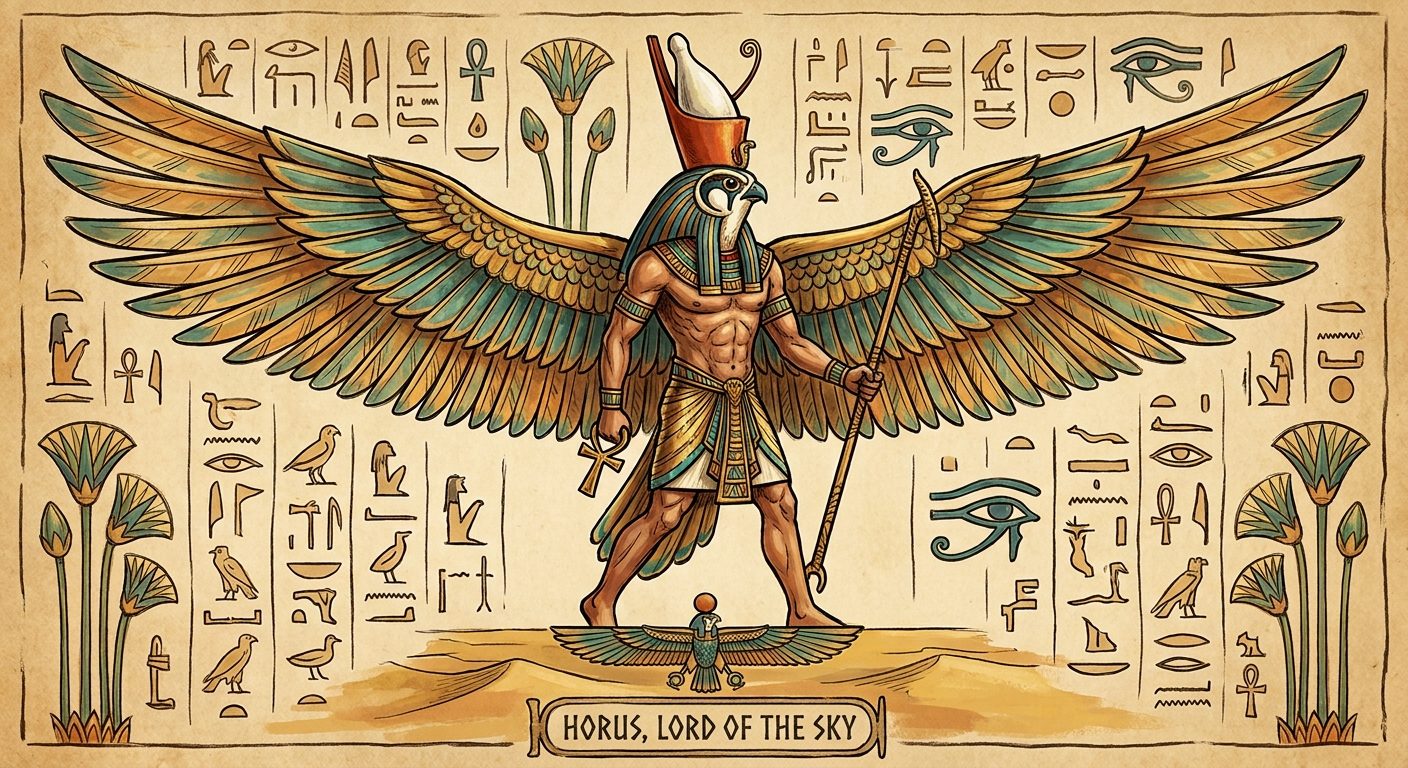
At the centre of the state stood the king. Egyptians saw him as the god Horus on earth and the link between gods and people. His task was to uphold maat - truth, justice and the order of the world - against chaos: to defeat enemies, feed the gods through temple offerings and keep the land fertile. The word "pharaoh" comes from the Egyptian per-aa, "great house", a name for the royal palace that was applied to the king himself only from the New Kingdom onward.
Writing and building
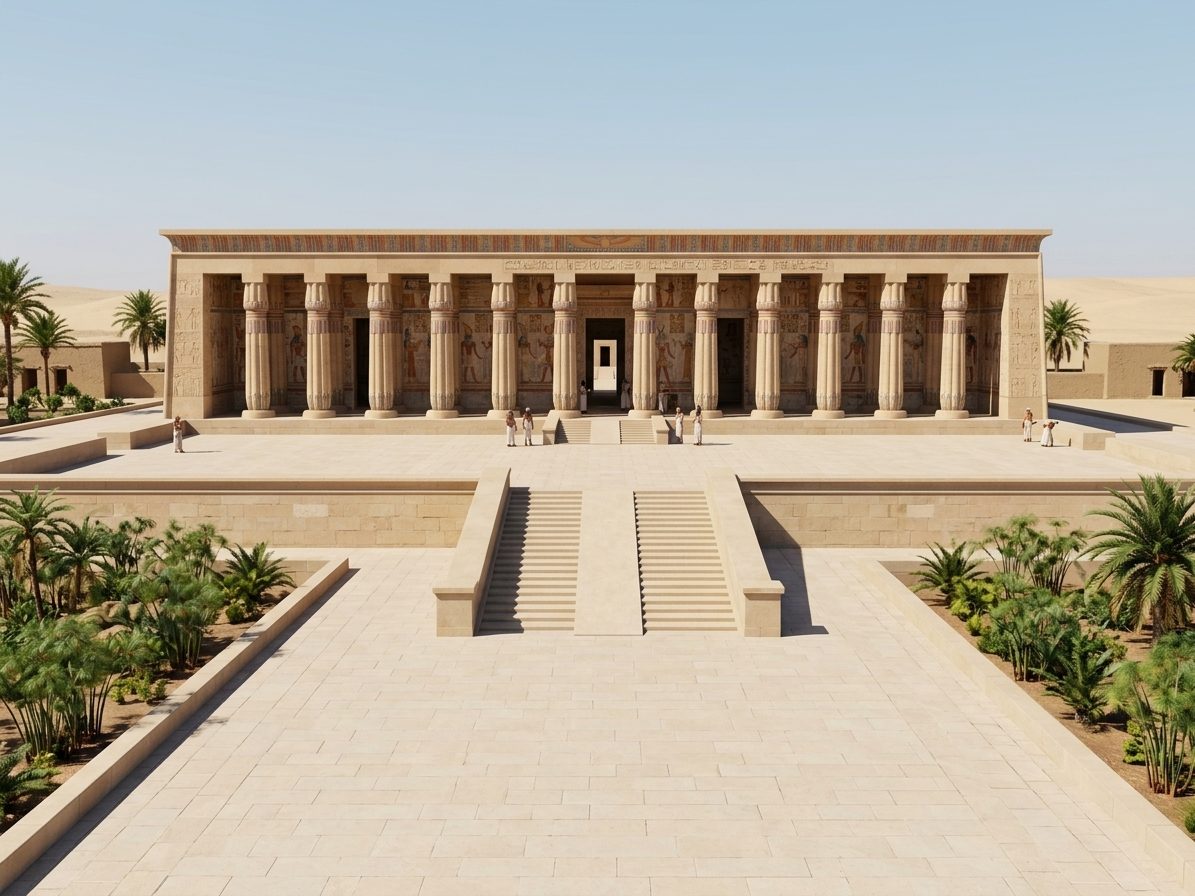
The earliest Egyptian writing, on small labels from a ruler's tomb at Abydos, is older than the First Dynasty - about as old as the first writing in Mesopotamia. Beside the hieroglyphs, scribes used a faster script, hieratic, written in ink on papyrus. A state able to organise thousands of workers, feed them and keep records of it all built the pyramids of the Old Kingdom, the rock-cut tombs of the Valley of the Kings and the great temples of Karnak, Luxor and Abu Simbel.
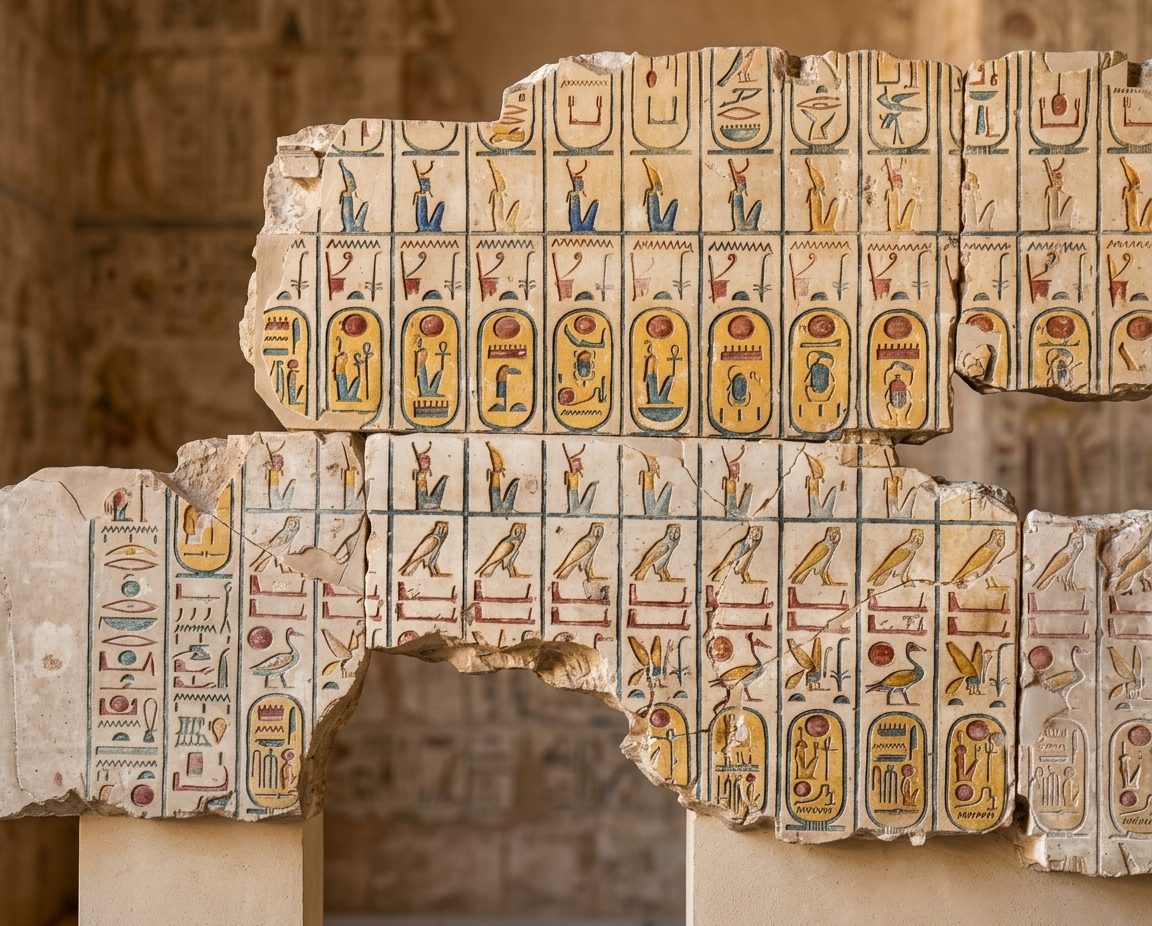
How the history is counted
Egyptian history is still divided into the dynasties set out by Manetho, an Egyptian priest who wrote a history of his country in Greek in the 3rd century BCE. Modern historians group the dynasties into "kingdoms" - times of a strong, united state - separated by "intermediate periods", when power split between rival centres or foreign rulers. Below, each period lists the pharaohs whose reigns shaped it.
Dates follow the chronology of Erik Hornung, Rolf Krauss and David Warburton (Ancient Egyptian Chronology, 2006), and for the Ptolemaic period, which their tables do not cover, they follow Günther Hölbl (2001). The earliest dates are the least certain: this chronology places the First Dynasty around 2900 BCE, while radiocarbon dating and some other chronologies put its start nearer 3100 BCE.
In the lists below, names in brackets are other names under which a king is known - a Greek form, another of his royal names or a name from later king lists. For the earliest kings these identifications are not certain.
Periods and pharaohs
Early Dynastic Period
C. 2900 – 2593 BCE · DYNASTIES 1–2
Upper and Lower Egypt become one kingdom. The kings are buried at Abydos and Saqqara, and Memphis grows into the seat of government.
Old Kingdom
2592 – 2118 BCE · DYNASTIES 3–8
The age of the pyramids: from Djoser's step pyramid at Saqqara to the Great Pyramid of Giza, built by a strong central state ruled from Memphis.
First Intermediate Period
2118 – 1980 BCE · DYNASTIES 9–11
Central power breaks down. Rival dynasties at Herakleopolis in the north and Thebes in the south compete for the country.
Middle Kingdom
1980 – 1760 BCE · DYNASTIES 11–12
Theban kings reunite Egypt. Nubia is conquered as far as the Second Cataract, and Middle Egyptian becomes the classical language of literature.
Second Intermediate Period
1759 – 1539 BCE · DYNASTIES 13–17
Royal power weakens under the many short reigns of the 13th Dynasty. The Hyksos, rulers of Western Asian origin, then hold the north from their capital at Avaris, while a Theban dynasty keeps the south and finally drives them out.
New Kingdom
1539 – 1077 BCE · DYNASTIES 18–20
Egypt's imperial age. Its armies reach the Euphrates and deep into Nubia, and its kings are buried in the Valley of the Kings, across the river from Thebes.
Third Intermediate Period
1076 – 664 BCE · DYNASTIES 21–25
Power is divided again: between the kings at Tanis and the priests of Amun at Thebes, then among Libyan dynasties, and finally under kings from Kush, in Nubia.
Late Period
664 – 332 BCE · DYNASTIES 26–31
A last native revival under the kings of Sais, two spells of Persian rule, and the final Egyptian dynasty, which fell in 343 BCE.
Ptolemaic Period
332 – 30 BCE
Alexander the Great takes Egypt. The Greek-speaking dynasty of his general Ptolemy rules from Alexandria until Cleopatra VII and the Roman conquest.