
Home · Ancient History · Ancient Egypt · Early Dynastic Period
Djet
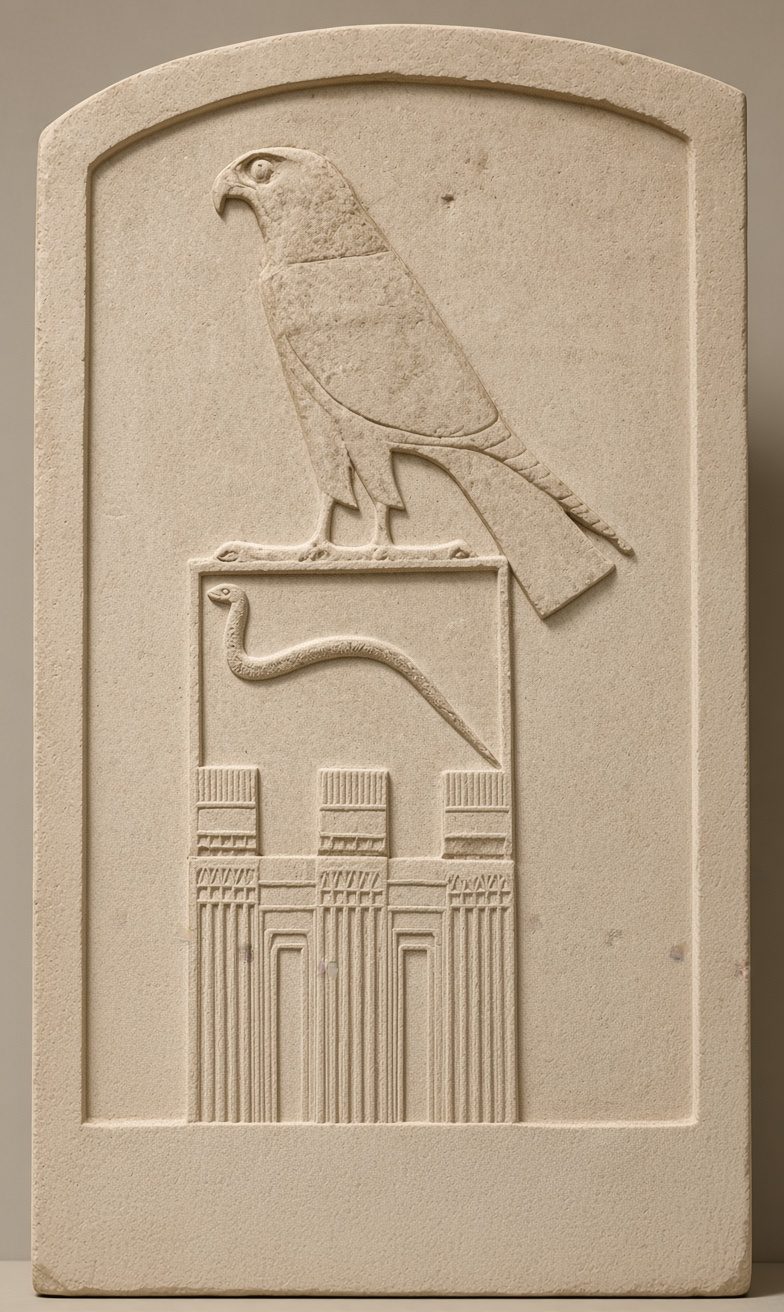
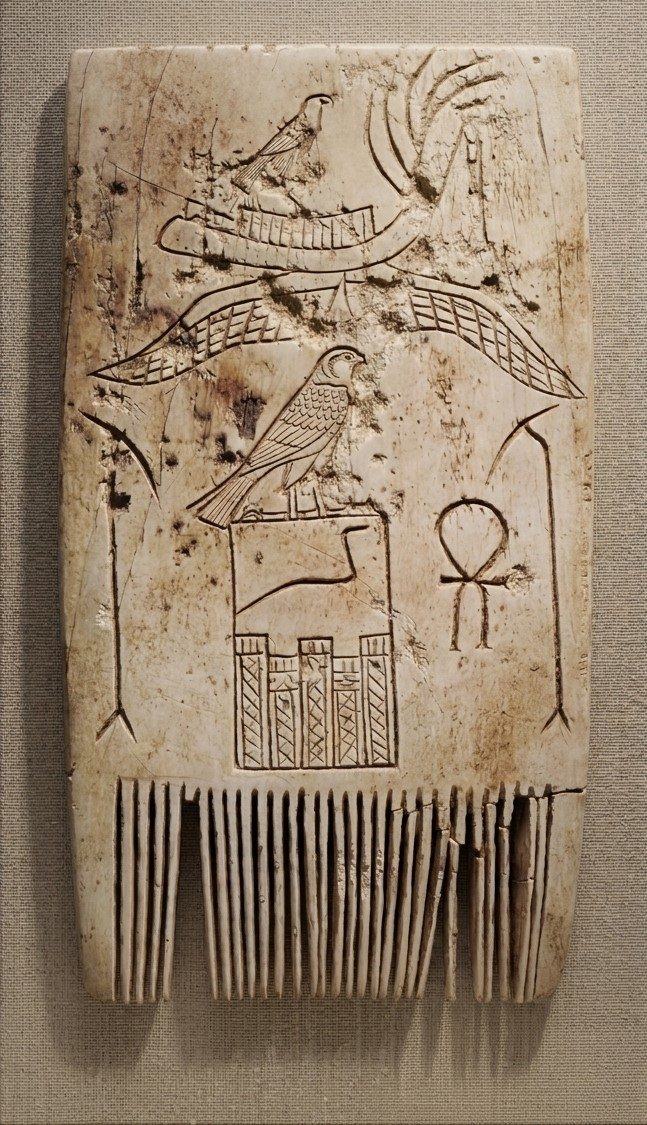
Djet, the fourth king of the First Dynasty, was the son of Djer and the husband of Merneith. His reign was short: the chronology used on this site gives 2822 to 2815 BCE, and the surviving labels suggest six to ten years. Little is known of its events, but two of his monuments are masterpieces of early Egyptian art: a stone stela with his name, now in the Louvre, and an ivory comb with the earliest known image of the sky as the outspread wings of a falcon.
- Reign
- 2822 - 2815 BCE, about 8 years (other estimates 6 to 10)
- Dynasty
- 1st
- Predecessor
- Djer, his father
- Queen
- Merneith, possibly Ahaneith
- Capital
- Probably Memphis
- Burial
- Tomb Z, Umm el-Qa'ab, Abydos
- Main sources
- The stela in the Louvre, the ivory comb, two year labels, seal impressions
- Names
- Horus name Djet, "serpent of Horus" (read Wadj, Zet or Uadji in older books), a second Horus name, Wadjet, on one object, Ita in the Abydos king list, in Manetho perhaps Uenephes, an uncertain identification
Path to the throne
THEME ONE
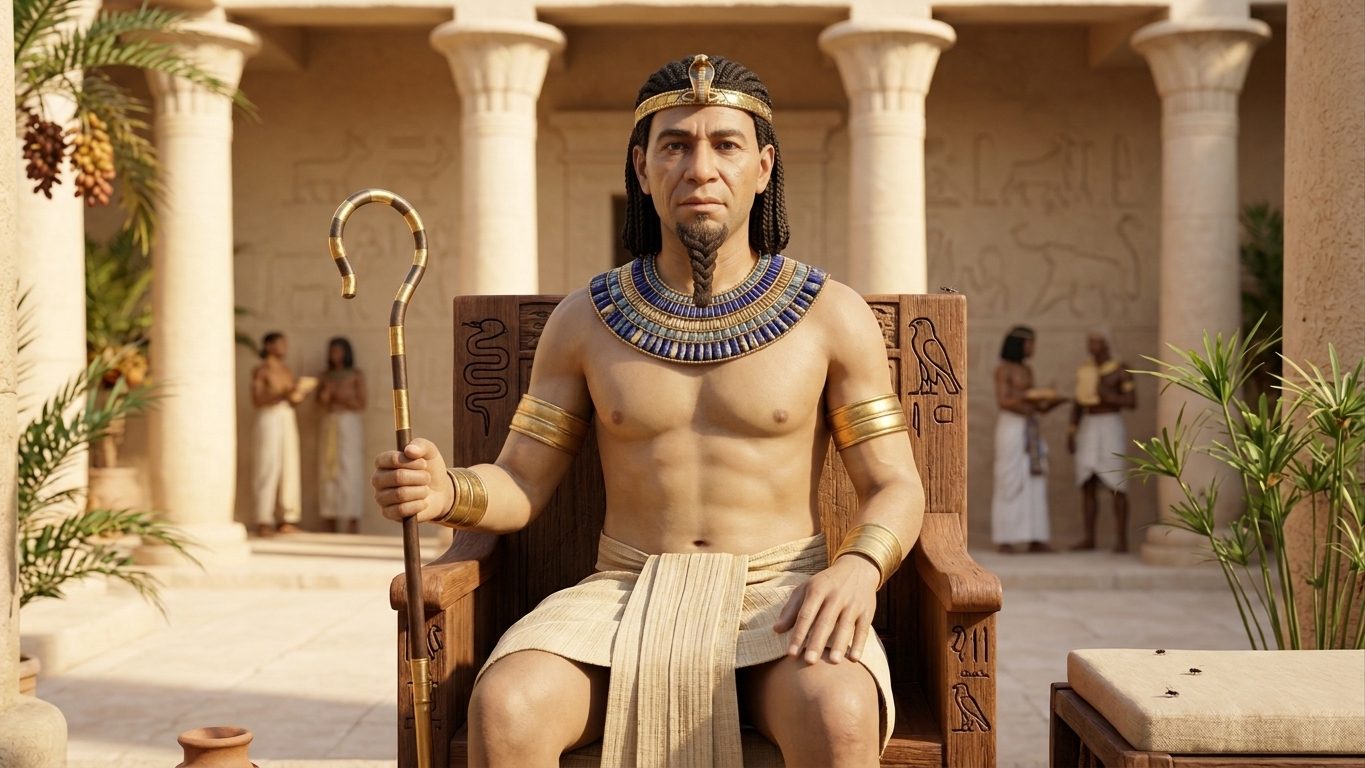
Djet was the son of Djer, his mother may have been Herneith or Nakhtneith, but this is not known. His wife Merneith may have been his sister or half-sister. Seal impressions show that the government he inherited carried on without a break: the official Amka, who had begun his career under Djer, became royal steward under Djet.
Reign and government
THEME TWO
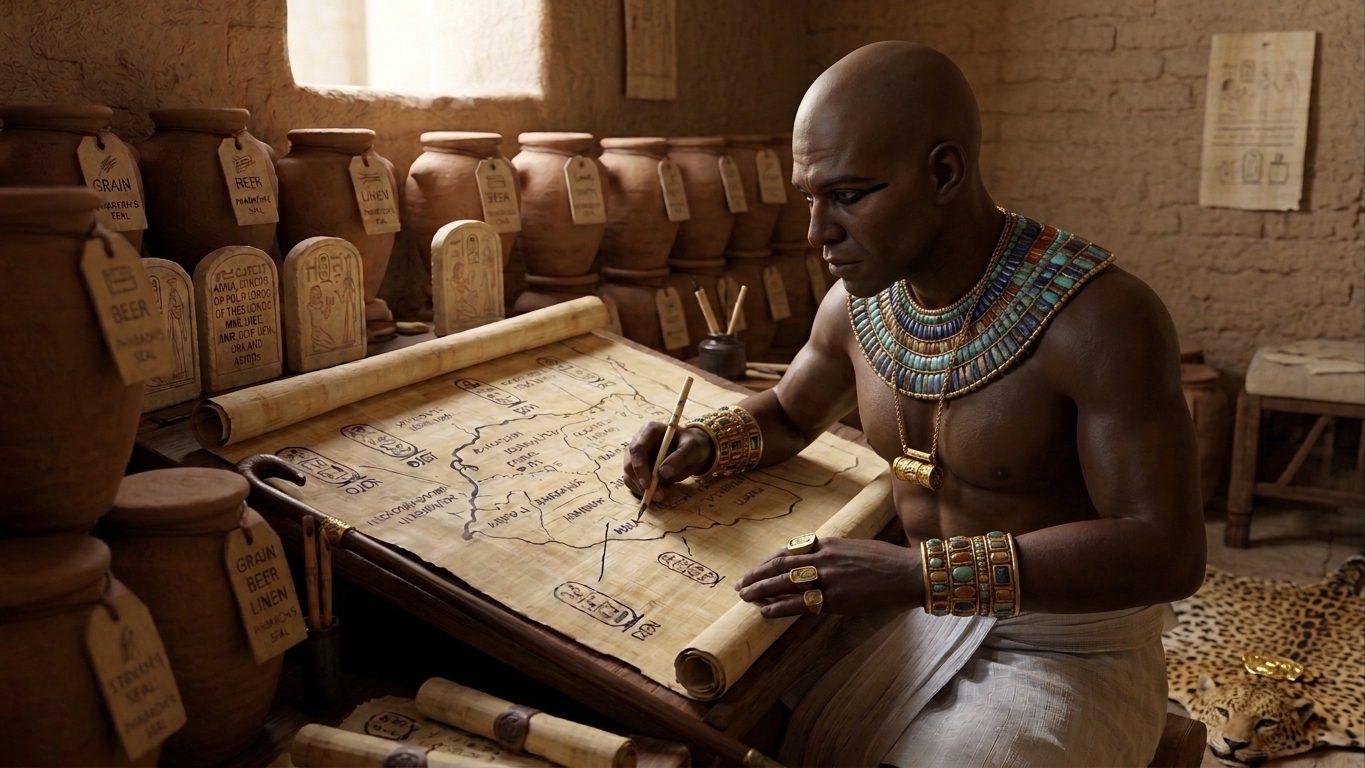
Only two year labels of Djet are known, and both are hard to read. One seems to mention the planning of a building, the "birth" of lotus buds and a ceremony in the shrine of the Two Ladies, the other a victory, the making of a statue and perhaps the founding of a fortress. A single festival of Sokar is attested, which fits a reign of six to ten years. Seal impressions and vessel fragments of his time point to active trade with Syria and Canaan.
Wars and foreign lands
THEME THREE
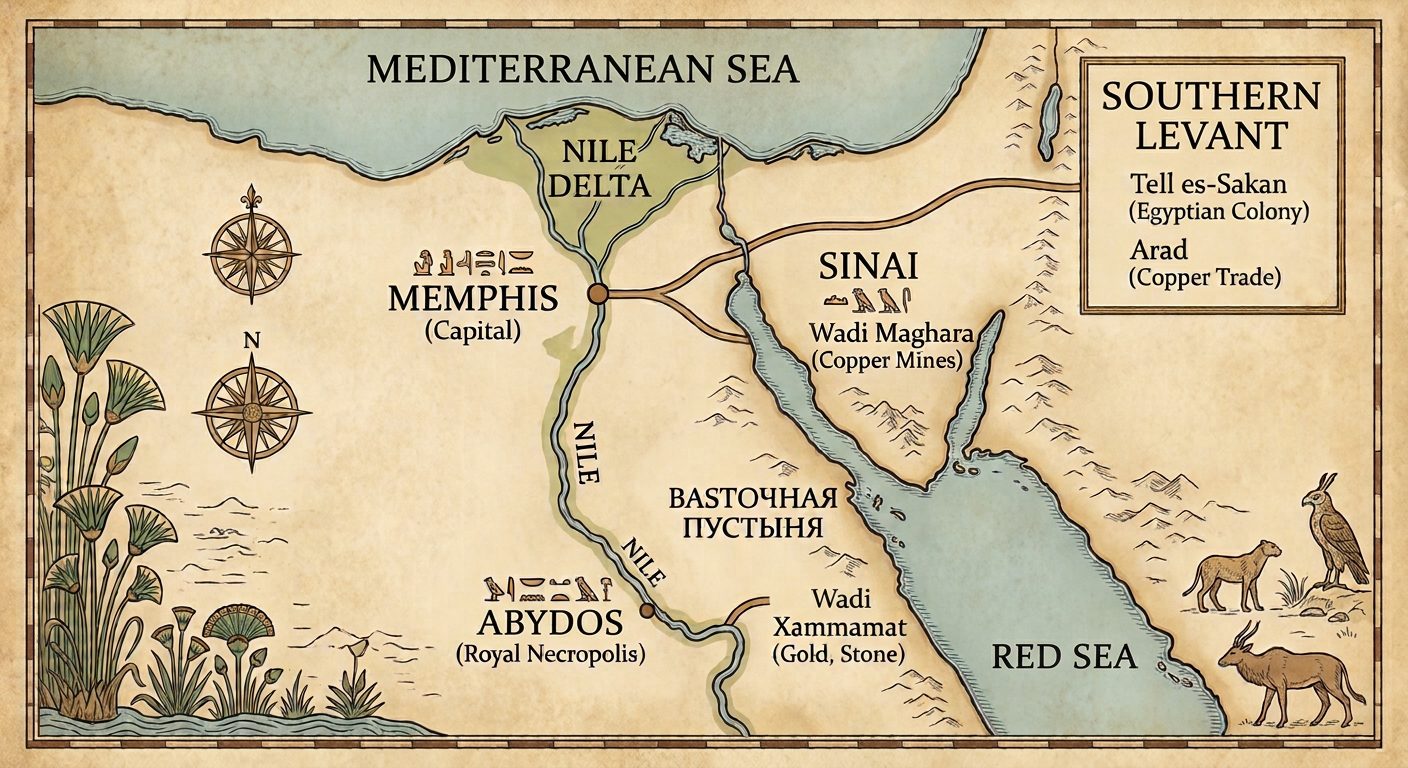
No campaign of Djet is recorded with certainty: one year label mentions a victory without saying over whom. A short rock inscription with his name, found in the Eastern Desert near Marsa Alam on the Red Sea, shows that Egyptian expeditions travelled there in his reign. Canaanite pottery in graves at Tarkhan and Saqqara shows that trade with the southern Levant continued.
Monuments and art
THEME FOUR
Djet's tomb at Umm el-Qa'ab, tomb Z, lies west of his father's. Beside it stood a stela with his name: a falcon above a serekh in which a serpent rises over the palace facade. Found by Émile Amélineau, it is now in the Louvre and is one of the finest pieces of early Egyptian relief. An ivory comb with his name, now in the Egyptian Museum in Cairo, shows the sky as the outspread wings of a falcon, together with a sacred boat.
Religion and beliefs
THEME FIVE
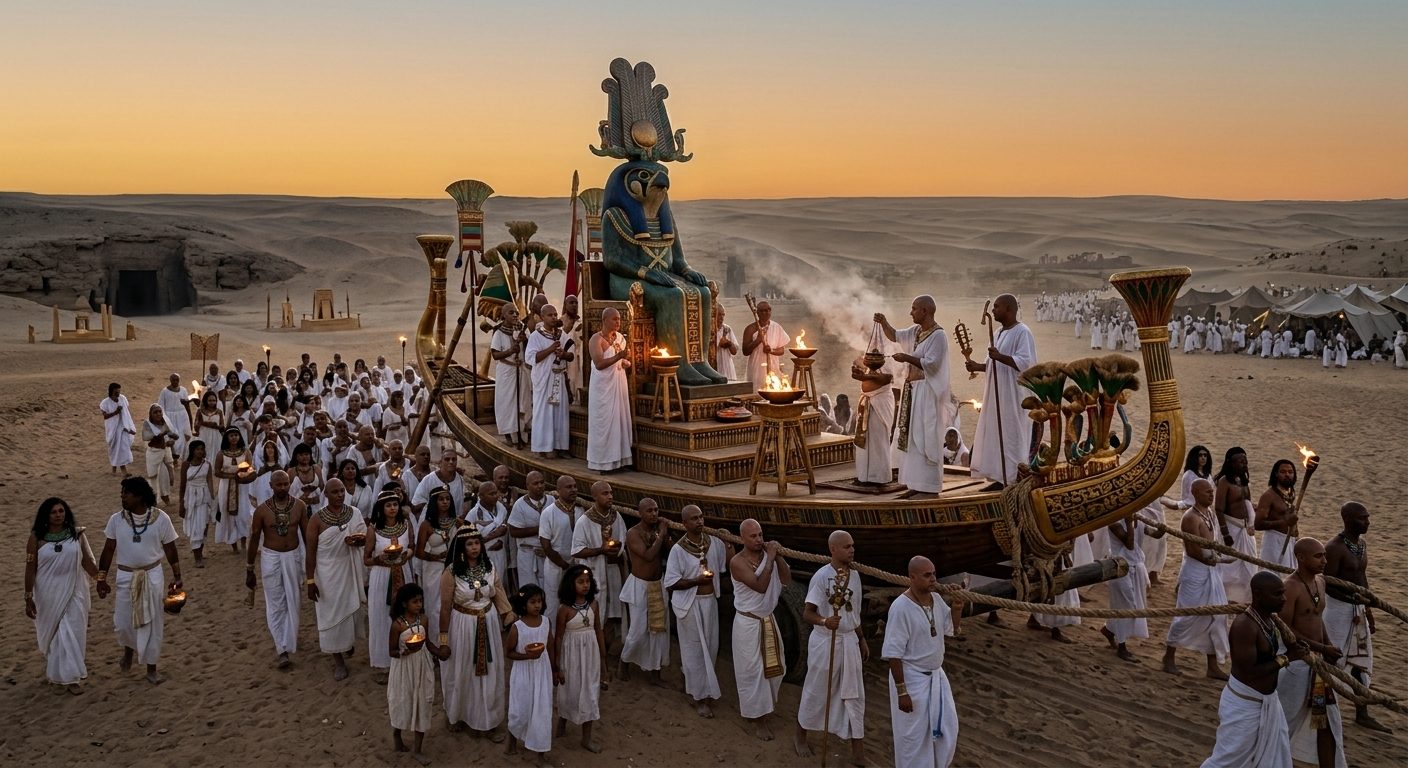
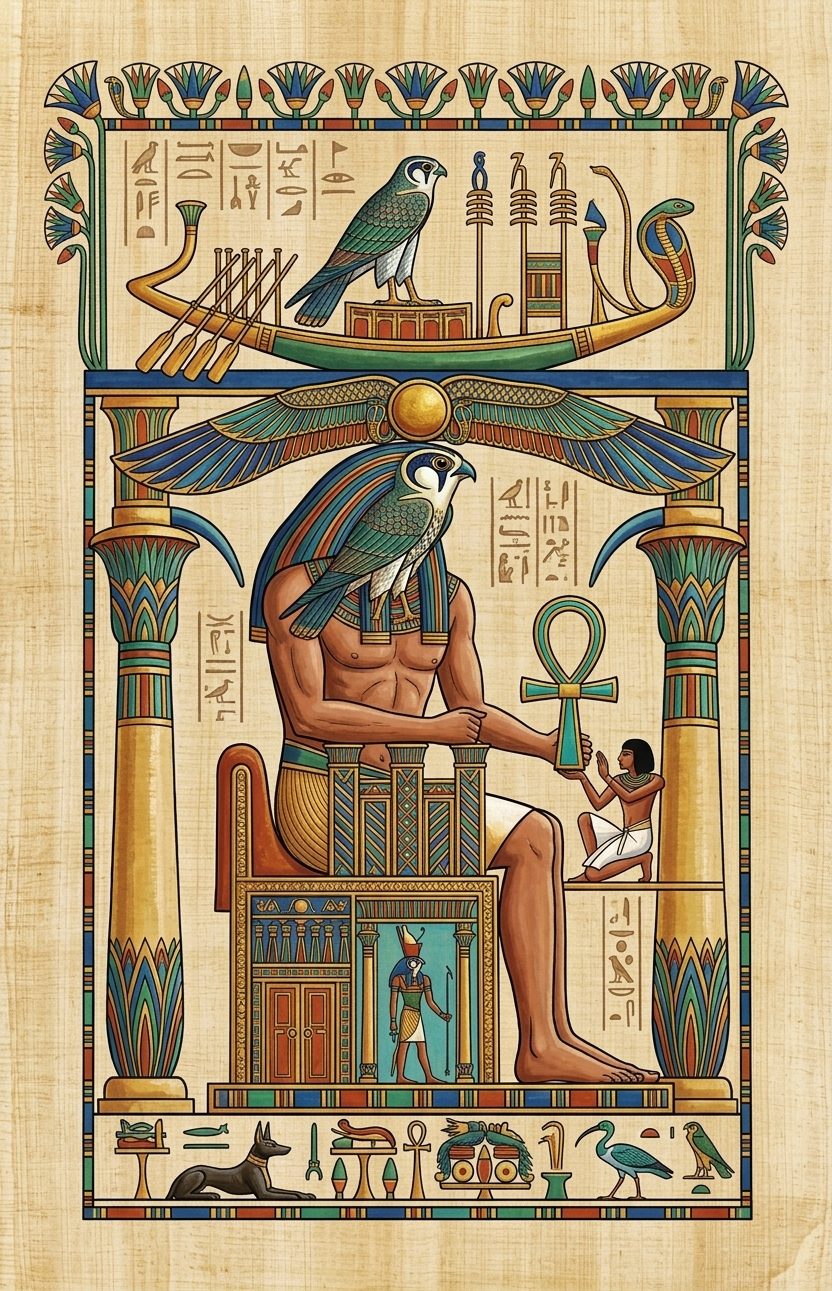
Djet's name links the king to the serpent, a protective power in Egyptian belief, whether it means "serpent" or "cobra" is debated. The ivory comb gives an early glimpse of Egyptian ideas about the world: the sky as a falcon, the god Horus, whose wings span the earth, crossed by a divine boat. A festival of Sokar, a god of the necropolis, is the only religious event of his reign that the labels record.
Death and legacy
THEME SIX
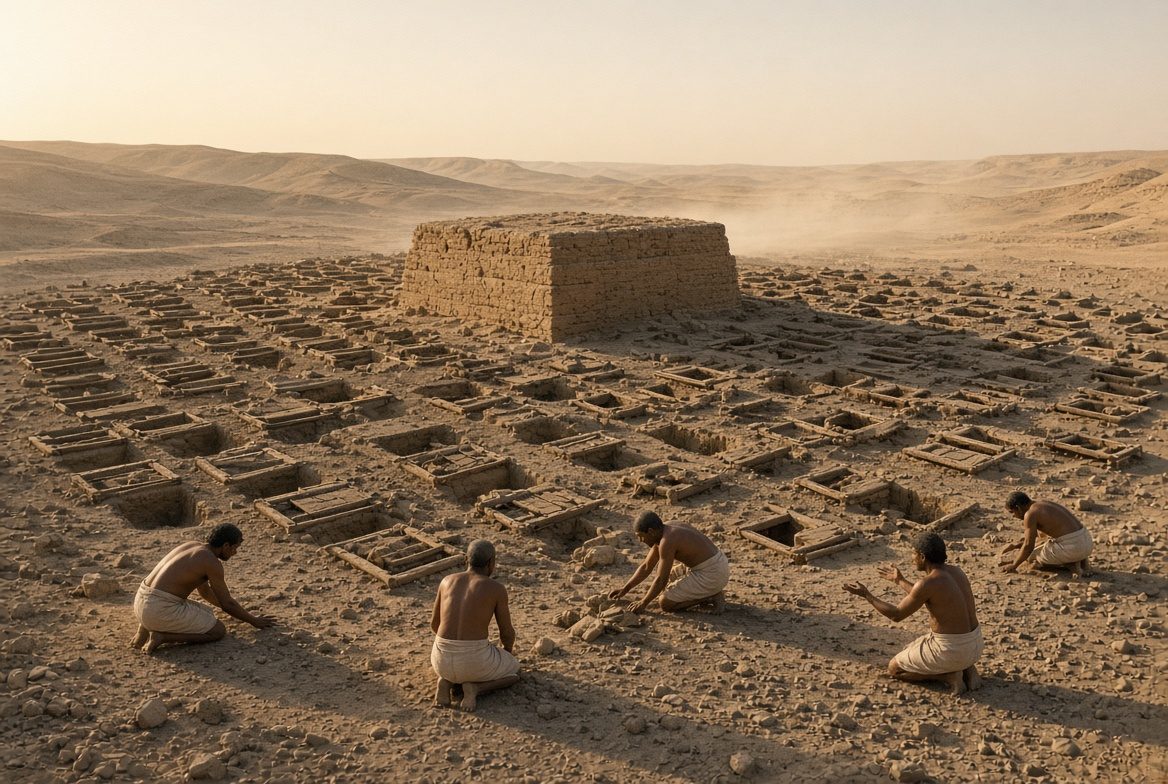
Djet seems to have left a young heir. His tomb was surrounded by 174 subsidiary graves, most of them retainers buried at his death. Like the other royal tombs at Abydos, it was later burned and then restored when the site became linked with the cult of Osiris. The throne passed to his son Den, but for the first years power seems to have been held by Den's mother, Merneith, whose own tomb at Abydos is as large as a king's.
Key dates
- 2822 BCEDjet succeeds his father Djer.
- 2822–2815 BCEA festival of Sokar is held, officials such as Amka stay in office.
- 2815 BCEDjet dies and is buried at Abydos, his young son Den succeeds him, with Merneith as regent.
- 1895–98Émile Amélineau excavates the royal tombs at Umm el-Qa'ab and finds the stela of Djet.