Home · Ancient History · Ancient Egypt · Early Dynastic Period
Semerkhet
Sehemkhet / Semerkhet, the seventh pharaoh of the First Dynasty, is dated c. 2810 - 2800 BCE by E. Hornung (2006). His reign is one of the best documented of the dynasty thanks to the Palermo Stone, but his legitimacy was long disputed, and he is missing from the Saqqara royal list.
- Reign
- c. 2810 - 2800 BCE (E. Hornung, 2006), about 8.5 years (Cairo fragment of the Palermo Stone)
- Dynasty
- 1st
- Predecessor
- Adjib (Anedjib)
- Successor
- Qa'a
- Horus name
- "Companion of the gods" or "Friend of the college of gods"
- Manetho
- Semempses, credited with 18 years (considered an exaggeration)
- Burial
- Tomb U, Umm el-Qa'ab, Abydos
- Main sources
- The Cairo fragment of the Palermo Stone, a year label from the tomb of Qa'a, seal impressions, stone vessels
Length of reign
THEME ONE
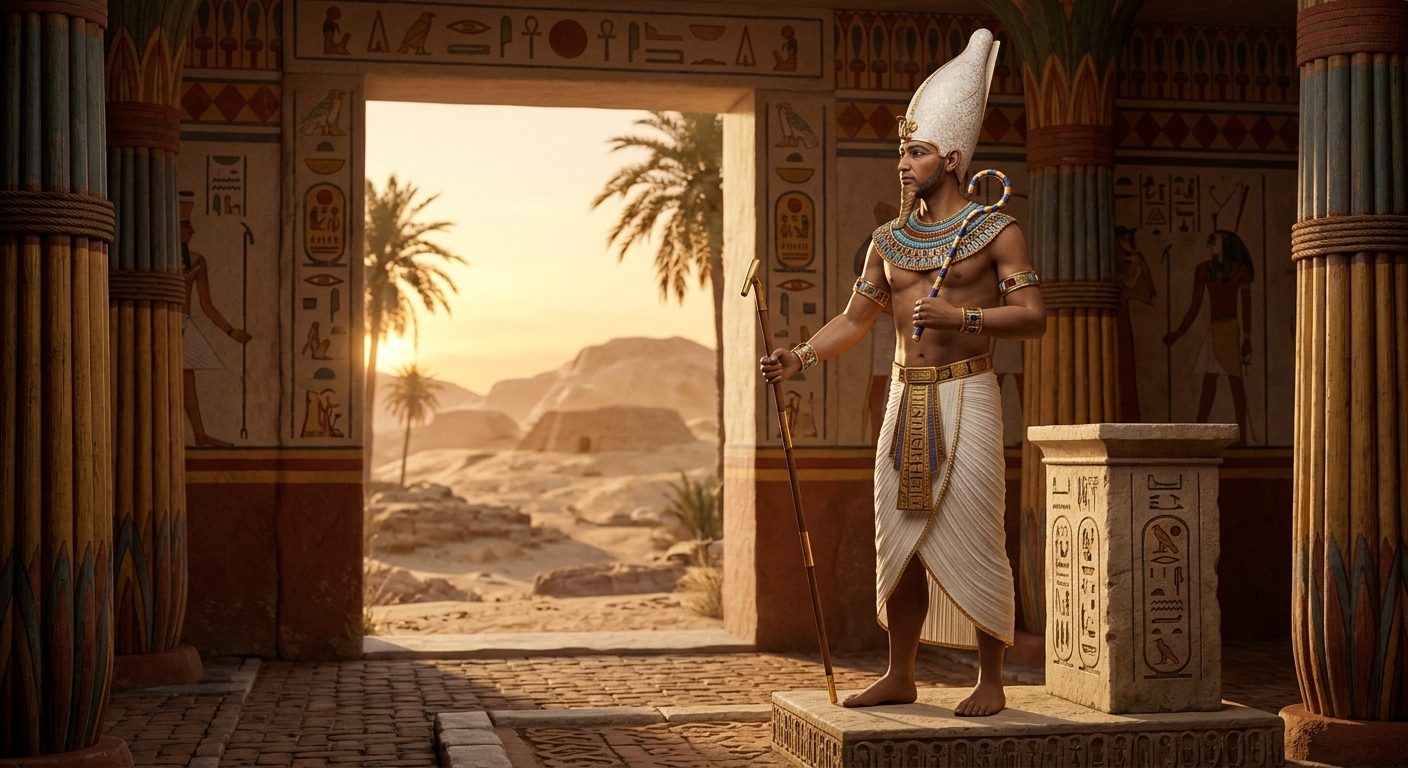
According to the Cairo fragment of the Palermo Stone, Semerkhet's reign is preserved in full, about 8.5 years. This is unique for the First Dynasty: these records are why we know his chronology so well. Manetho credits him with 18 years, which modern Egyptologists consider an exaggeration.
Dispute over legitimacy
THEME TWO
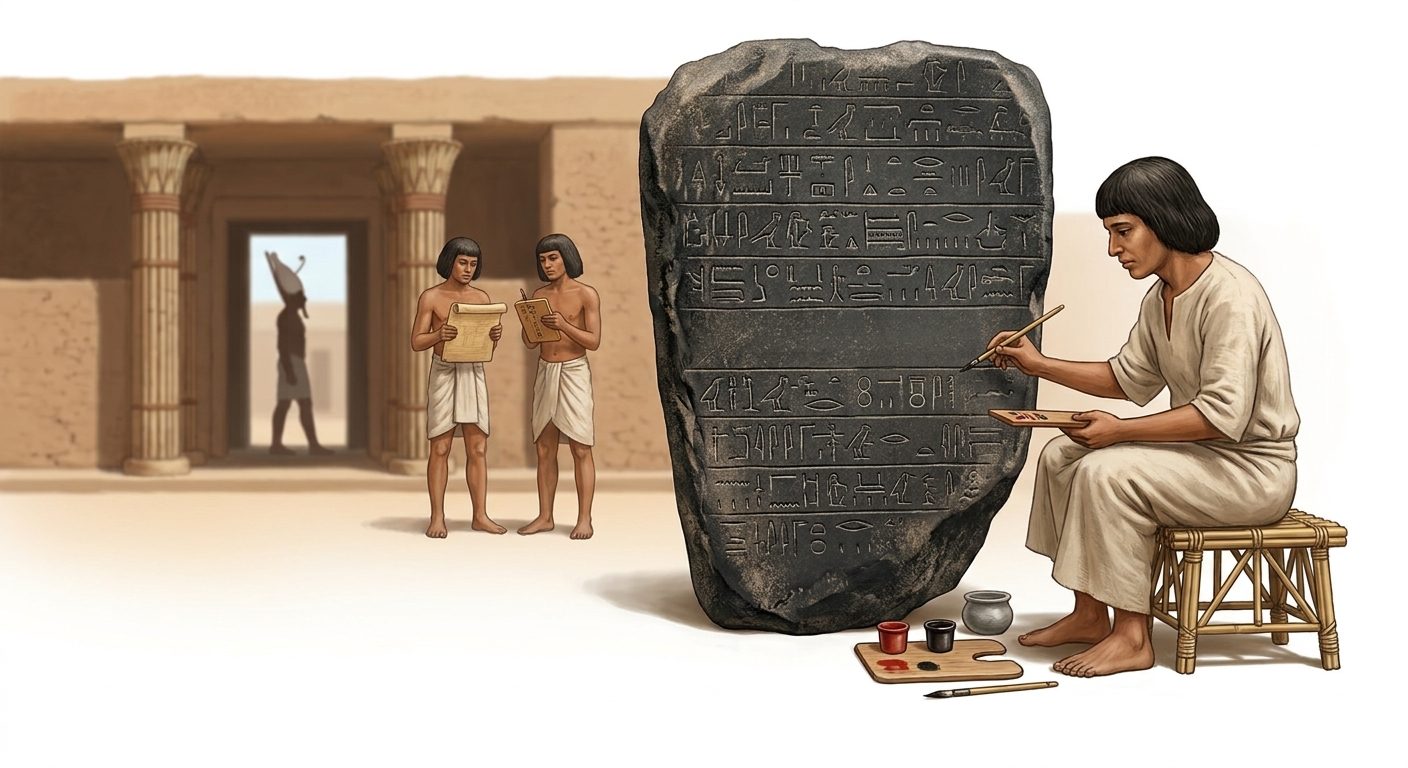
For a long time Egyptologists regarded Semerkhet as a usurper. In his tomb, stone vessels were found on which the name of his predecessor (Anedjib) had been erased and replaced with Semerkhet's name. Later, however, arguments in his favour appeared. For example, seal impressions from the necropolis of his successor Qa'a show that Qa'a recognised Semerkhet as the legitimate ruler. Rewriting a predecessor's vessels was also found under other First Dynasty pharaohs, so it was a common practice and not only a sign of usurpation. Semerkhet himself disappeared from the Saqqara royal list, perhaps another trace of the curse of memory imposed by later generations.
Religious ceremonies
THEME THREE
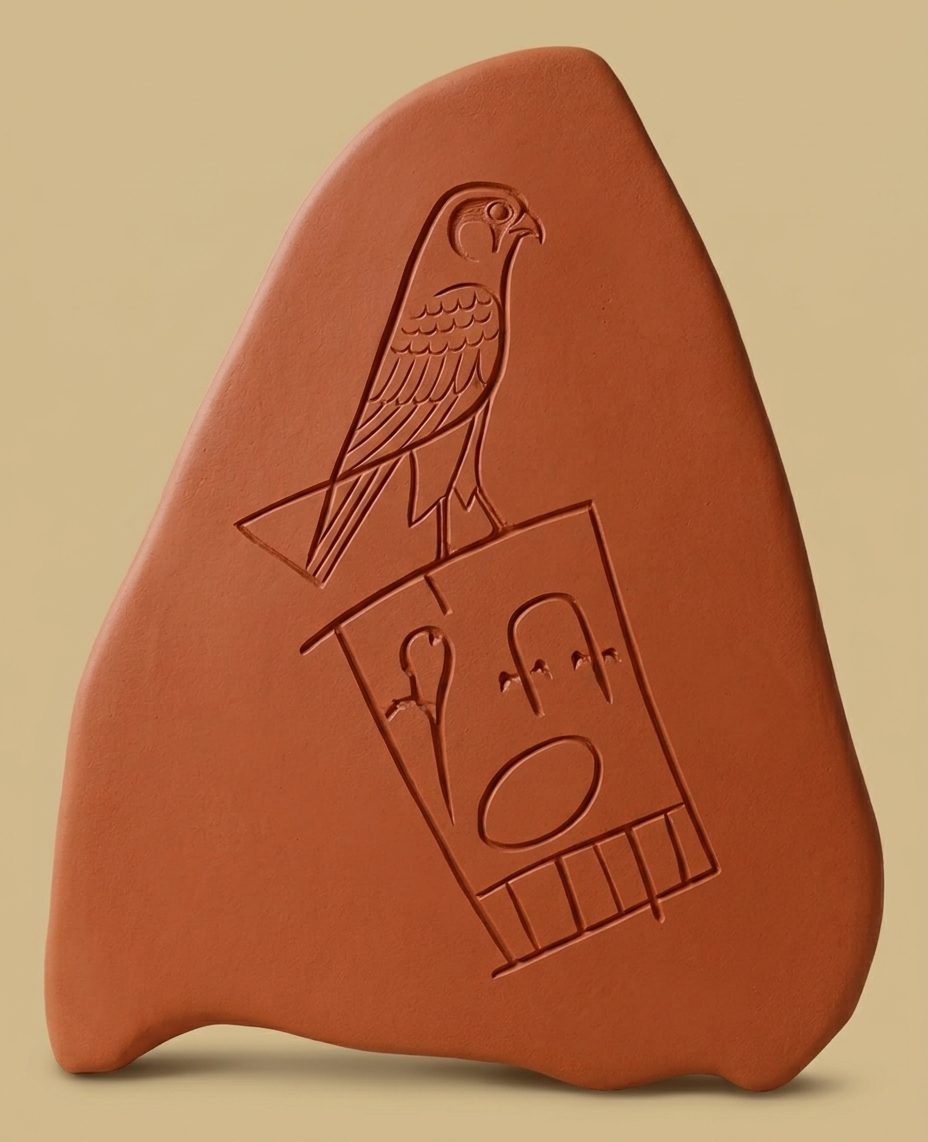
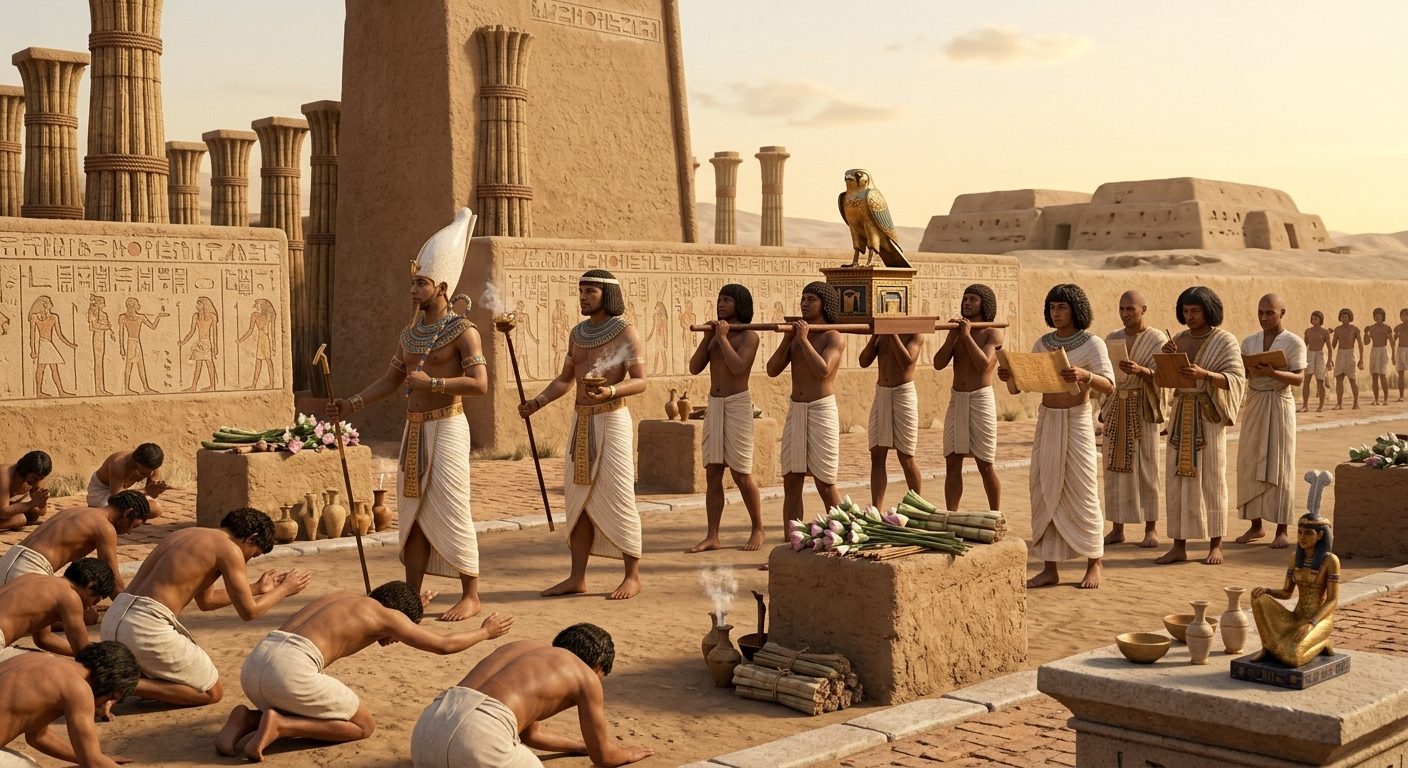
The annals, including the Palermo Stone, record mainly rituals for the years of his reign: the Following of Horus (a ritual procession), the pharaoh's appearance before his subjects, and the making and consecration of divine statues. This shows that the emphasis lay on maintaining the sacred order (ma'at) rather than on large military campaigns.
Administrative affairs
THEME FOUR
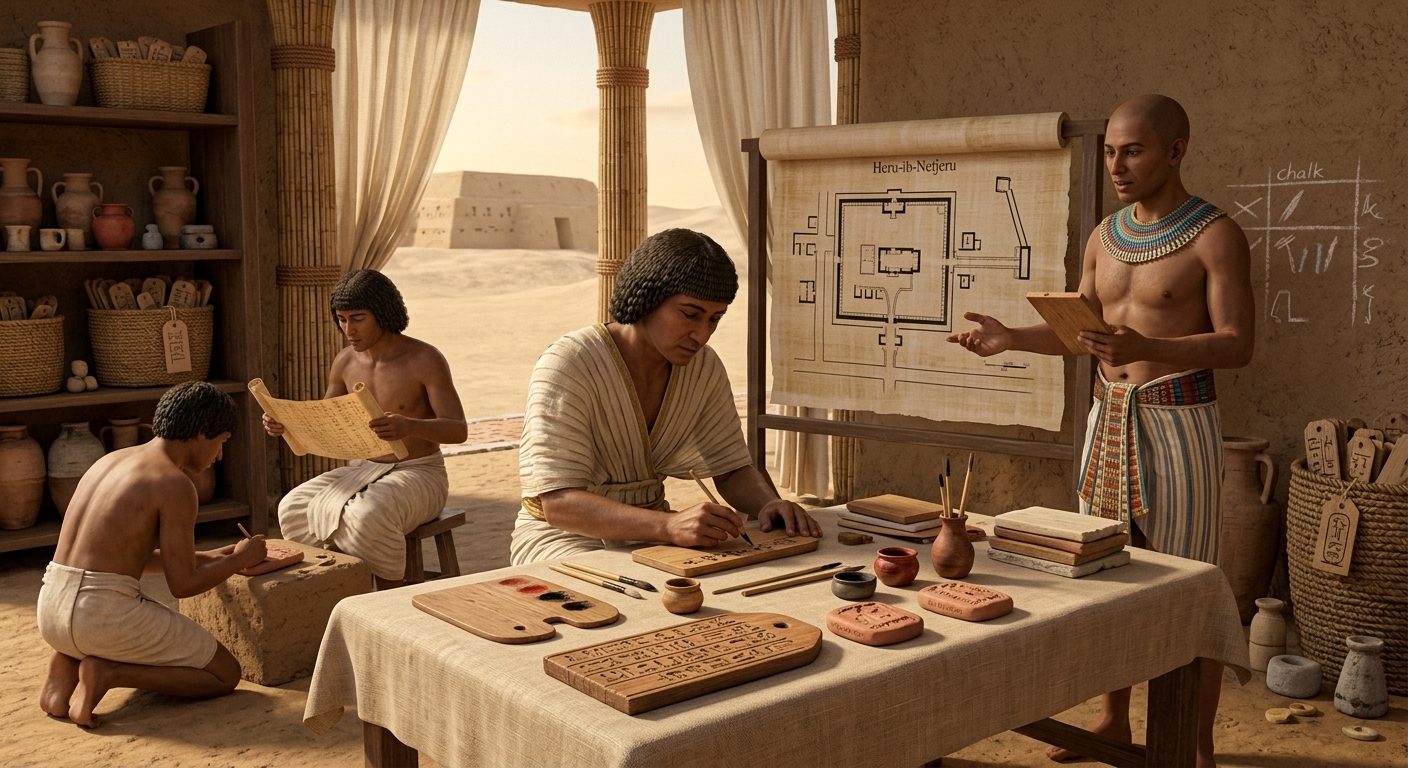
A year label from the tomb of Qa'a has survived, mentioning the planning of a structure called Heru-ib-Netjeru. Researchers believe it may have been a funerary enclosure at Abydos. Seals of the period also name new royal estates (for example Horus wep-het, Horus, judge of the divine community) and a private household (Hut-Ipti, house of the harem).
Trade
THEME FIVE
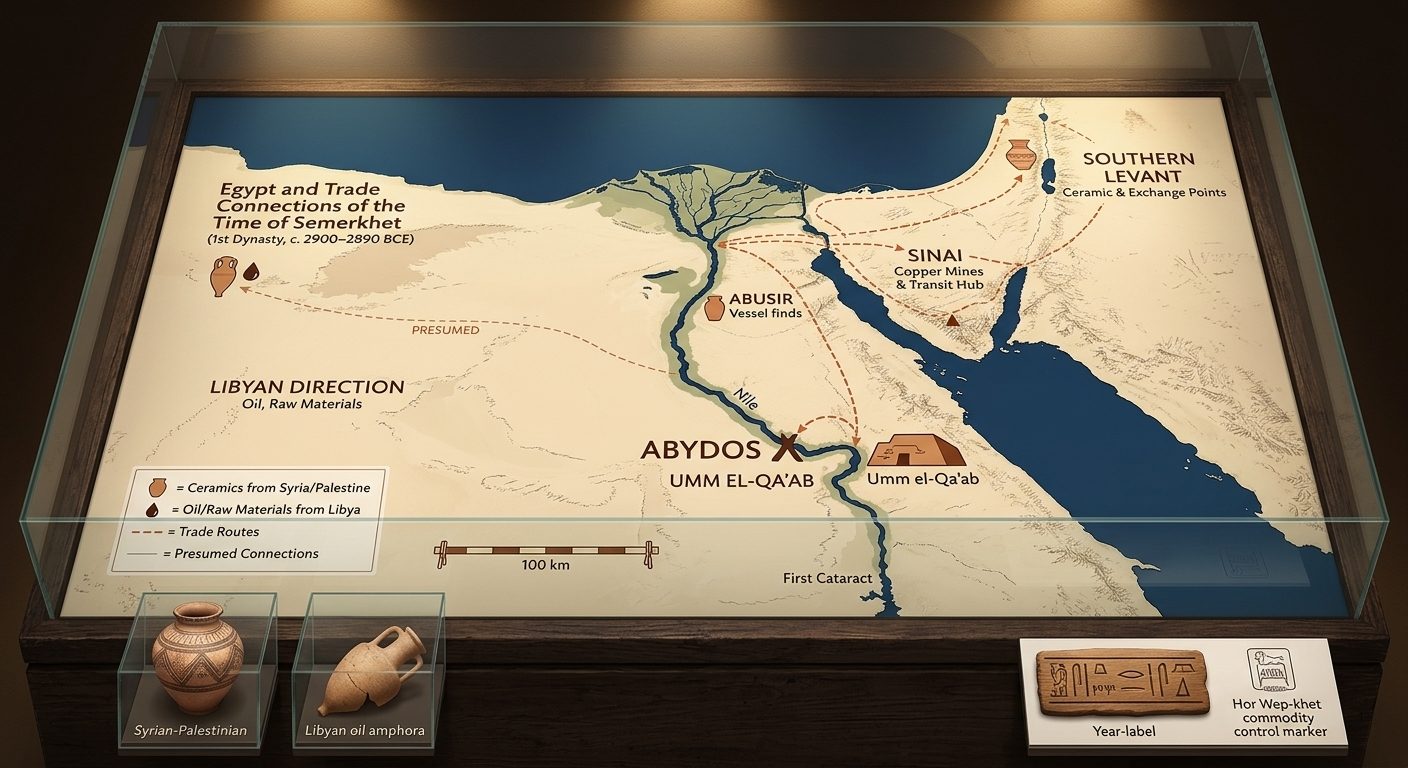
Semerkhet did not undertake large-scale foreign expansion, but he kept trade links, though on a smaller scale than in the middle of the First Dynasty. Fragments of Syro-Palestinian vessels were found in his tomb and in graves of Abusir of the same period. There is a suggestion that the oil mentioned on one label may have been imported from Libya.
Tomb
THEME SIX
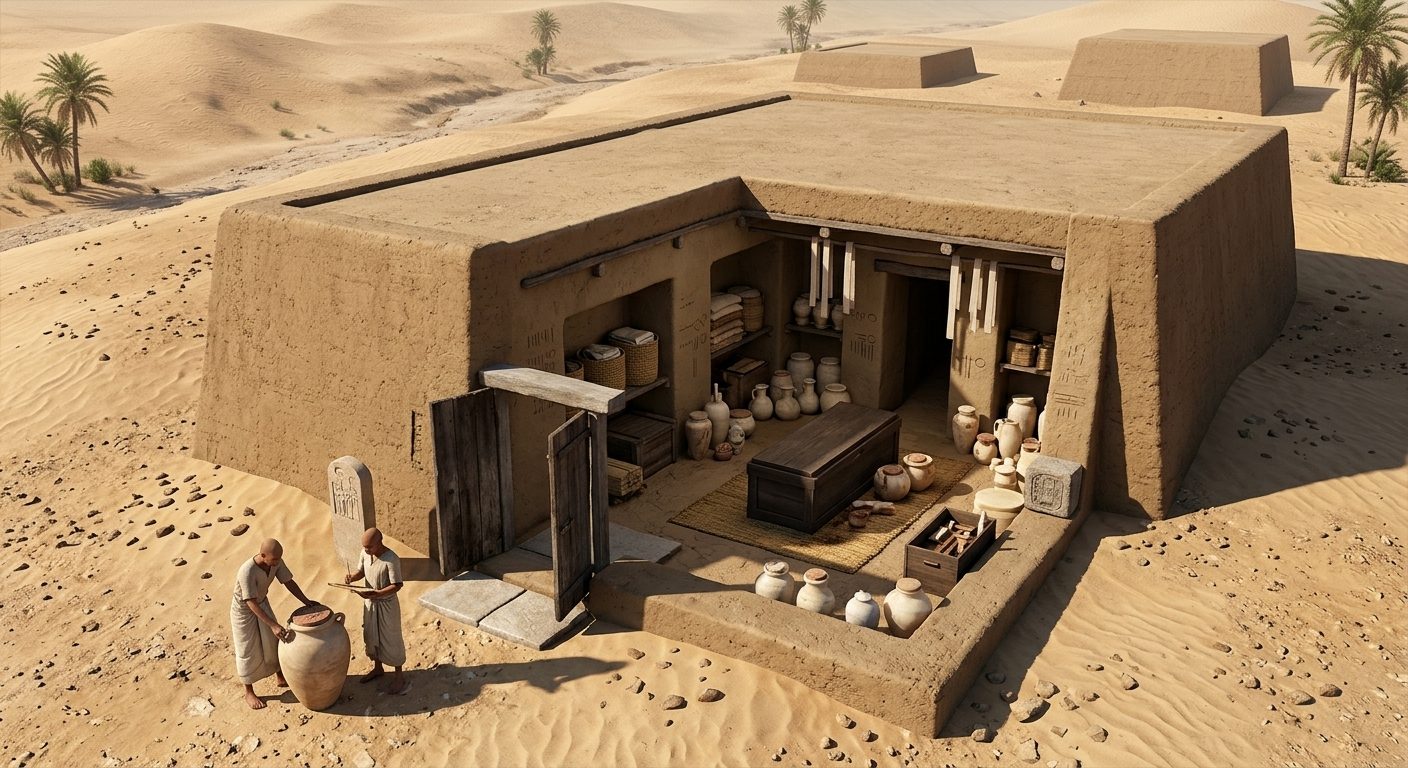
The tomb of Semerkhet, designated Tomb U, lies in the Umm el-Qa'ab necropolis at Abydos, the key royal cemetery of the Early Dynastic period. Overall, Semerkhet's era was a time when state institutions were gradually consolidated after the unification of Egypt, but also a period of some instability linked to the transfer of power.
Summary
THEME SEVEN
Semerkhet's reign was difficult: he had to consolidate power after a disputed transfer of the throne. Yet he ensured continuity. His successor Qa'a ruled on, and the dynasty did not break. His era was therefore more a time of stabilising and sustaining the basic institutions of the state than a time of great conquests.
Key dates
- c. 2810 - 2800 BCESemerkhet reigns, according to E. Hornung (2006).
- About 8.5 yearsLength of his reign, recorded on the Cairo fragment of the Palermo Stone.
- After his reignHis successor Qa'a continues the dynasty.