
Home · Ancient History · Ancient Egypt · Early Dynastic Period
Hotepsekhemwy
Hotepsekhemwy, the founder of the Second Dynasty, came to the throne around 2730 BCE in the chronology of E. Hornung (2006), which does not give the end of his reign. His name, "the two powers are at peace", and his seal impressions at the tomb of Qa'a point to a calm transfer of power. He was probably the first pharaoh to be buried at Saqqara, near Memphis, rather than at Abydos.
- Reign
- From c. 2730 BCE (E. Hornung, 2006), probably 25 or 29 years. The Turin Canon gives 95 years and Manetho 38, both regarded as exaggerations
- Dynasty
- 2nd (founder)
- Predecessor
- Qa'a (most likely)
- Successor
- Nebra (Raneb)
- Royal names
- Horus name Hotepsekhemwy, "the two powers are at peace", Nebty name Hotep (also read Sehotep). Later king lists: Bedjau in the Abydos list, corrupted forms such as Netjerbau in the Saqqara list and the Turin Canon
- Manetho
- Boethos, 38 years
- Burial
- Probably Gallery Tomb A, Saqqara
- Main sources
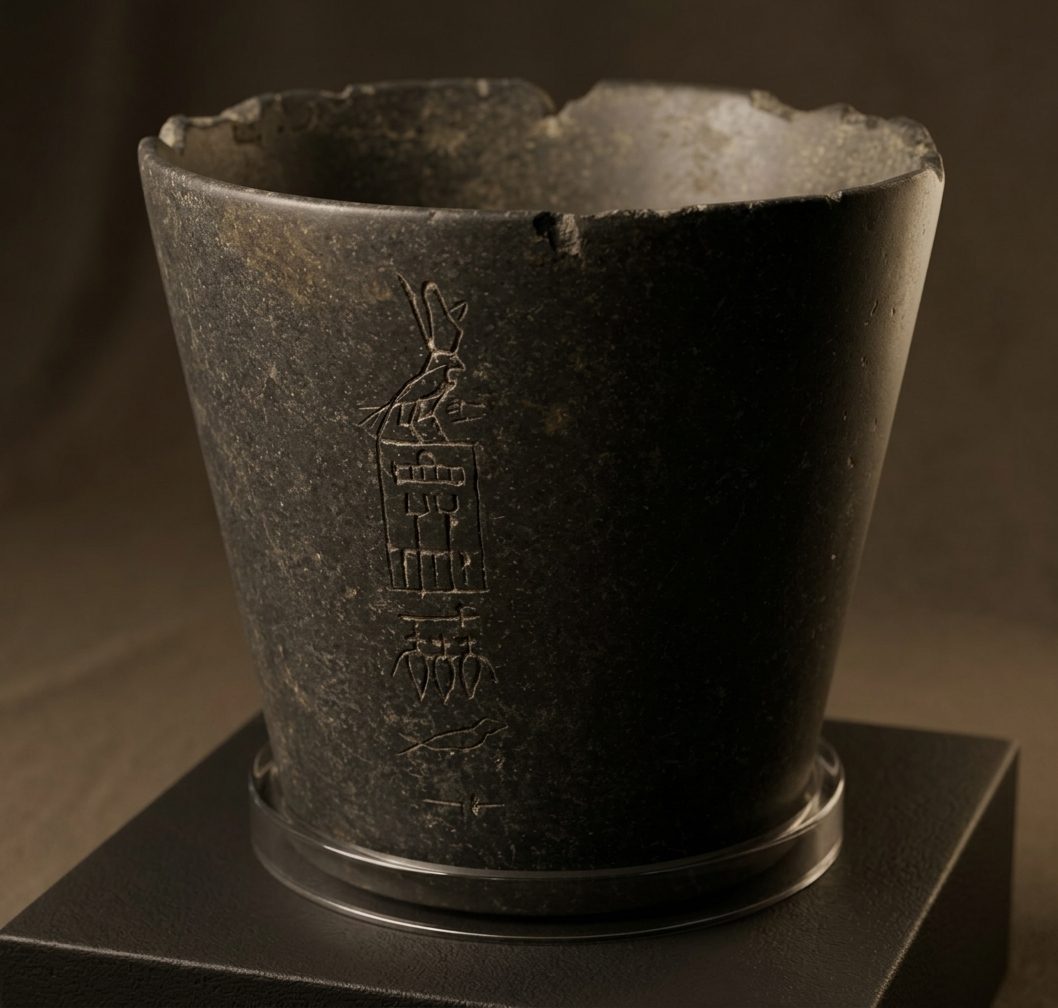
- Seal impressions from Abydos and Saqqara, stone vessels, a bone cylinder in the Brooklyn Museum, the statue of a kneeling priest that lists the first three pharaohs of the dynasty, Manetho
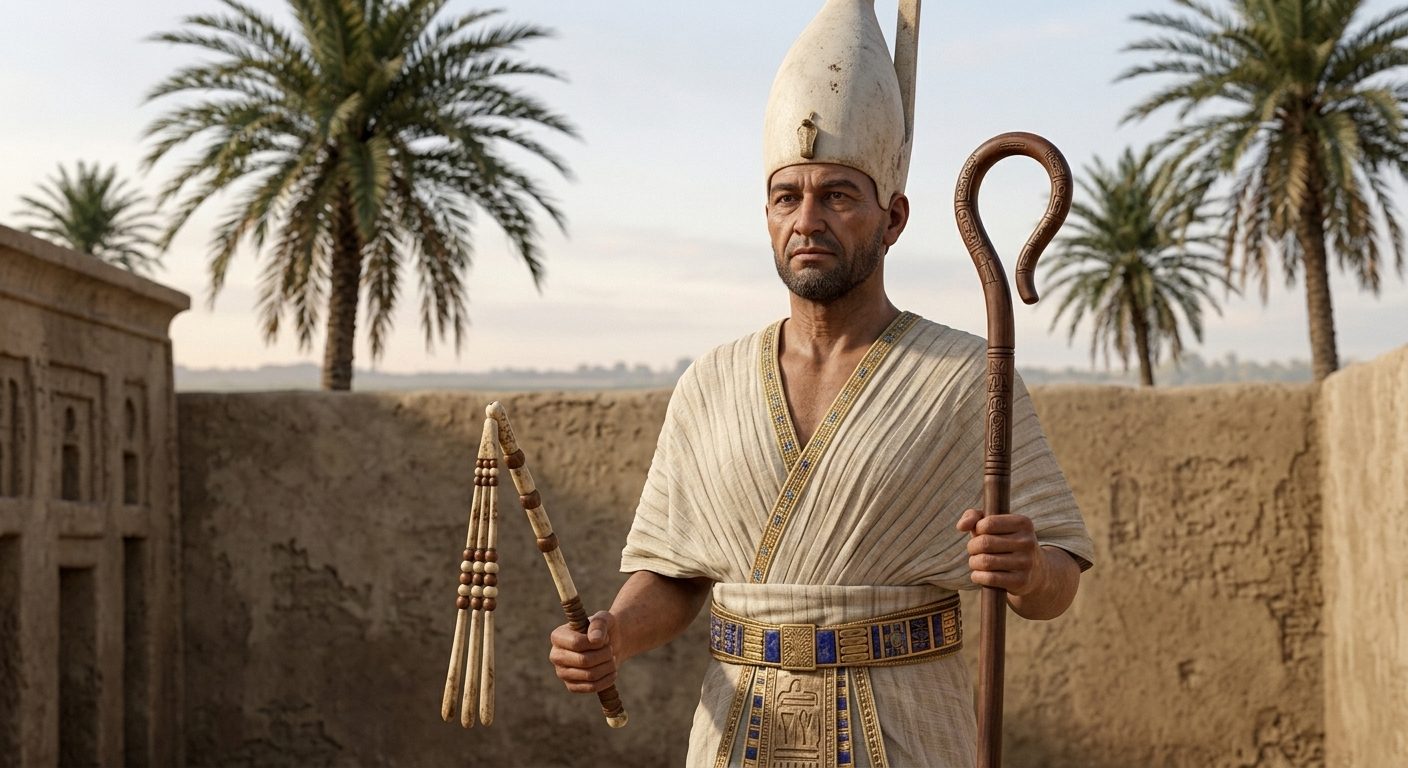
A new dynasty
THEME ONE
Manetho, an Egyptian priest of the 3rd century BCE, begins a new dynasty with Hotepsekhemwy, but the evidence shows no sharp break with the First Dynasty. Clay seal impressions with his name were found at the entrance of Tomb Q at Abydos, the tomb of Qa'a. They suggest that Hotepsekhemwy buried his predecessor or restored his tomb, an act that strengthened the claim of a new ruler. He was probably not Qa'a's son, and according to one version he married a princess of the old royal line. Some Egyptologists think that the end of the First Dynasty was troubled and that one or two short-lived rulers, known as Sneferka and "Horus Bird", came between the two pharaohs. If so, Hotepsekhemwy brought the strife to an end.
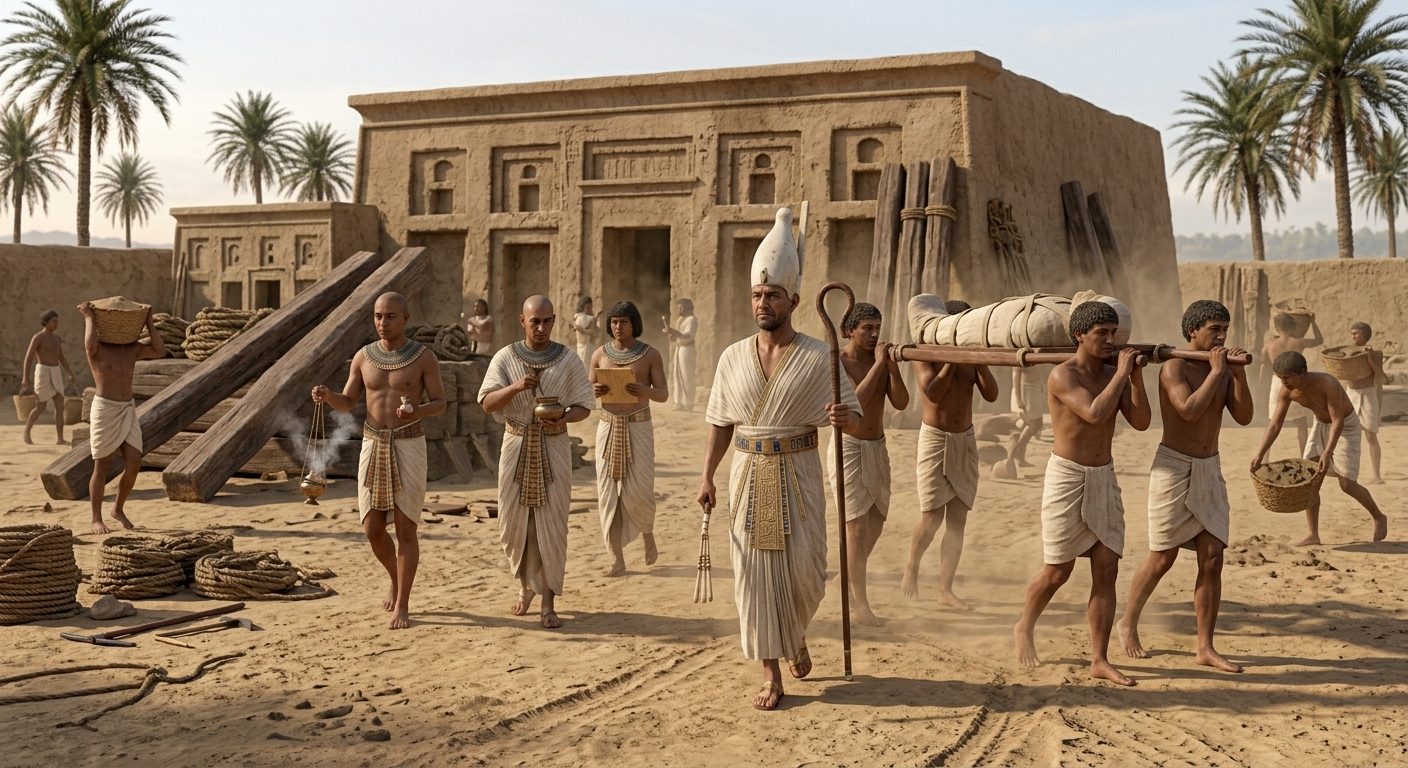
The meaning of his names
THEME TWO
His Horus name is usually translated as "the two powers are at peace" or "Horus, who has reconciled the two powers". The two powers may be Upper and Lower Egypt, or the gods Horus and Seth, and many Egyptologists see a political programme in the name. His Nebty name, Hotep, expresses the same idea of peace. From his reign on, the Horus name and the Nebty name were often written in the same way. The later king lists, compiled more than a thousand years after him, remember him under distorted names. The Abydos list calls him Bedjau, "the smelter", probably a misreading of his real name in the cursive hieratic script, and Manetho turned this into the Greek Boethos.
Length of reign
THEME THREE
How long Hotepsekhemwy ruled is not known for certain. The Turin Canon, a list of rulers written on papyrus in the 13th century BCE, gives him 95 years, and Manetho 38. Egyptologists treat both figures as errors or exaggerations and credit him with 25 or 29 years. Nabil Swelim noted that no inscription from his reign mentions a Sed festival, the jubilee usually held after 30 years of rule, so his reign was probably shorter than that. According to reconstructions of the royal annals on the Palermo Stone, he and his successor Nebra ruled for about 39 years together.
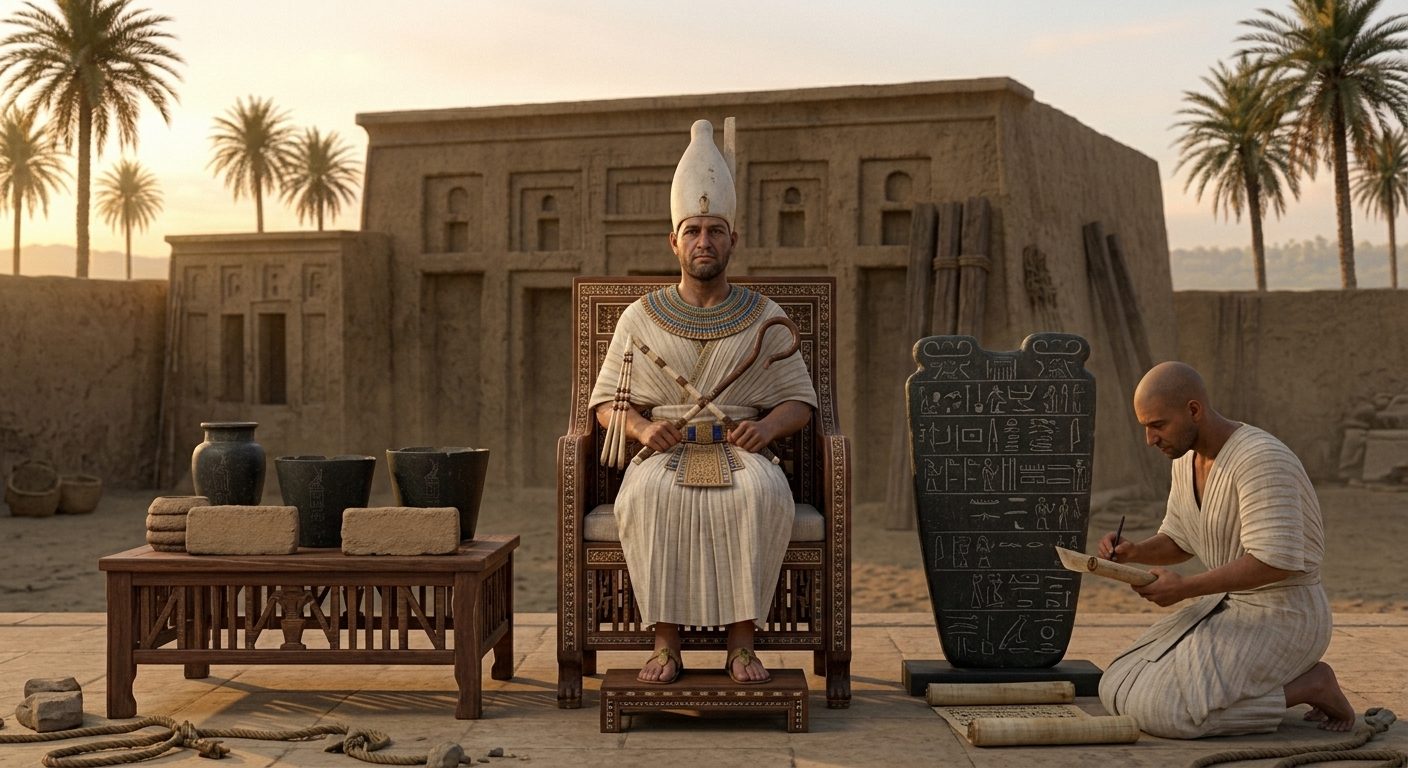
Residence, temples and estates
THEME FOUR
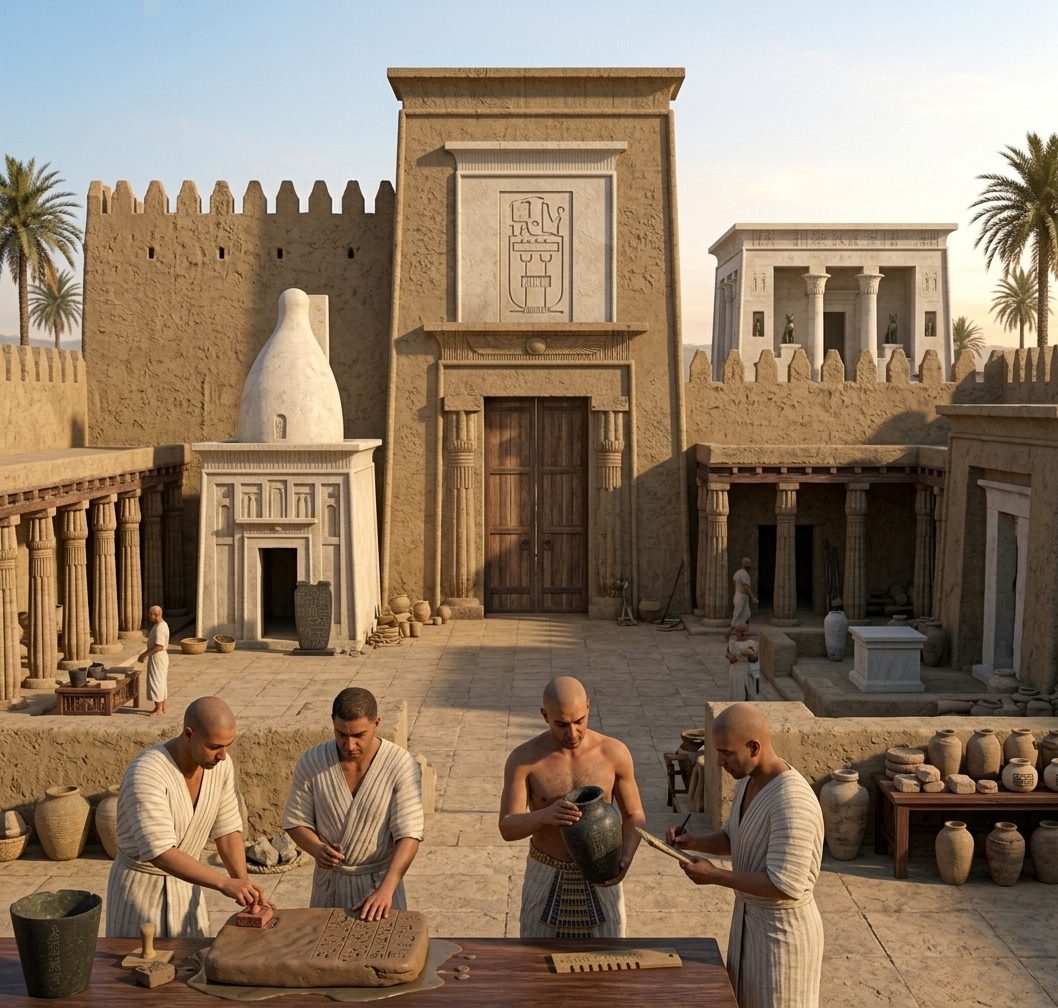
Seal impressions and stone vessels name the buildings of his reign. They mention a new royal residence called "Horus, the shining star", a temple of the little-known god Netjer-akhty near Buto in the Delta, a chapel of the White Crown, the crown of Upper Egypt, and a foundation of the goddess Bastet. In the same period the dated year labels of ivory and wood, so typical of First Dynasty tombs, disappear from the royal burial equipment, and no such label can be securely dated to his reign. Why the custom ended is not known.
The chasm at Bubastis
THEME FIVE
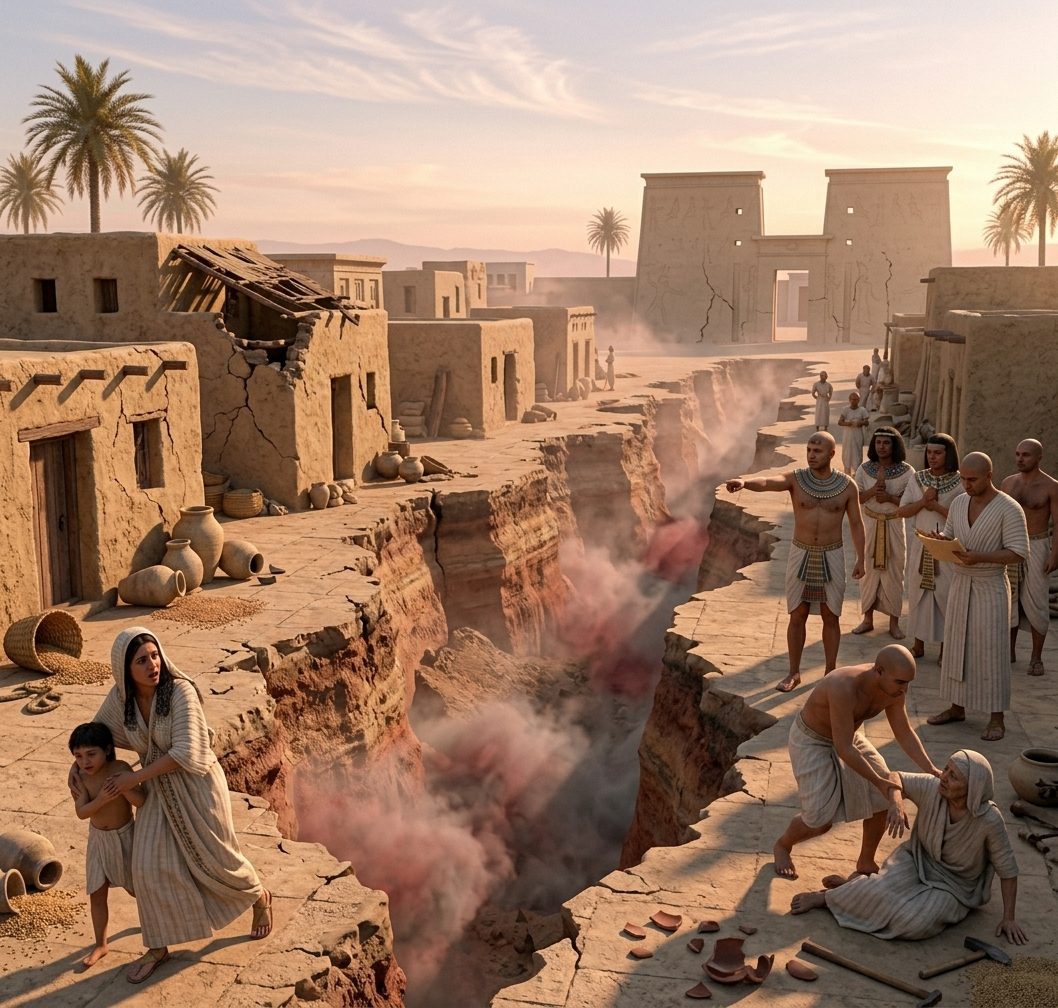
Manetho records that in the reign of Boethos a chasm opened at Bubastis and many people perished. Bubastis lay in the eastern Nile Delta. Manetho wrote in the 3rd century BCE, more than two thousand years after these events, but some Egyptologists think that the story may preserve the memory of a real earthquake, since the region is seismically active.
Tomb at Saqqara
THEME SIX
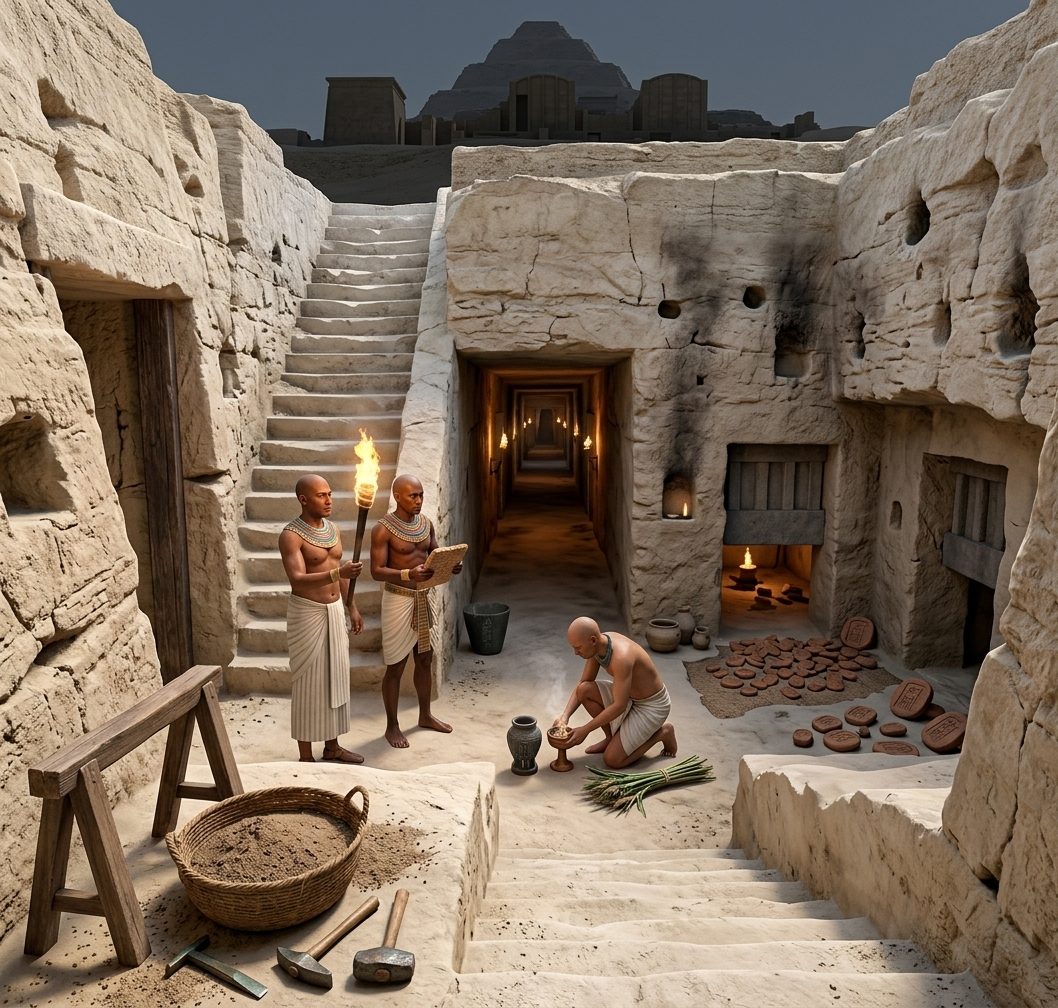
The pharaohs of the First Dynasty were buried at Abydos, in Upper Egypt. Hotepsekhemwy was probably the first to choose Saqqara, the necropolis of Memphis, a sign that the centre of royal power had moved north. His tomb is most likely Gallery Tomb A, a huge maze of corridors and rooms cut into the rock, which lies beneath the area of the later pyramid complex of Unas, a pharaoh of the Fifth Dynasty. A long stairway leads down to a central gallery with many side rooms, closed by stone portcullises, and to the burial chamber. Excavations since the early 20th century, beginning with Alessandro Barsanti, have found many seal impressions with his name there. Seals of his successor Nebra were found as well, so the tomb may have been completed by Nebra or shared by the two pharaohs. Its superstructure has not survived.
Summary
THEME SEVEN
Hotepsekhemwy opened the Second Dynasty without breaking with the past. He buried or honoured his predecessor, took a name that spoke of peace and moved the royal burial ground to Saqqara. His name is found on objects from Abydos, Saqqara, Giza and Badari, among them a bone cylinder now in the Brooklyn Museum. A small granite statue of a kneeling priest from Memphis, long known as Hetepdief and now in the Egyptian Museum in Cairo, shows his name first, followed by those of Nebra and Nynetjer, and so confirms the order of the first three pharaohs of the dynasty.
Key dates
- c. 2730 BCEHotepsekhemwy becomes pharaoh, according to E. Hornung (2006).
- Start of his reignSeal impressions with his name are left at the tomb of Qa'a in Abydos.
- 25 or 29 yearsLength of his reign as estimated by Egyptologists.