Home · Ancient History · Ancient Egypt · Early Dynastic Period
Nynetjer
Nynetjer, the third pharaoh of the Second Dynasty, reigned from 2700 to 2660 BCE in the chronology of E. Hornung (2006). His reign of about forty years is the best documented of the dynasty thanks to the royal annals of the Palermo Stone. He left one of the earliest known statues of a securely identified pharaoh and a vast rock-cut tomb at Saqqara. After his death the unity of the country seems to have been shaken.
- Reign
- 2700 – 2660 BCE (E. Hornung, 2006), about 40 years. The Turin Canon gives 96 years and Manetho 47
- Dynasty
- 2nd
- Predecessor
- Nebra (Raneb), possibly his father
- Successor
- Uncertain: Weneg (Wadjenes) in the later king lists, Peribsen in the chronology used on this site
- Royal names
- Horus name Nynetjer, "he who belongs to the god" or "godlike", Nebty name Nynetjer, golden name Ren-nebu, "golden offspring". Later king lists: Banetjer (Abydos), Banetjeru (Saqqara), Netjerren (Turin)
- Manetho
- Binothris, 47 years
- Burial
- Gallery Tomb B, Saqqara
- Main sources
- The Palermo Stone and the Cairo fragments of the royal annals, a statue in Leiden, stone vessels and seal impressions, Manetho
A long reign
THEME ONE
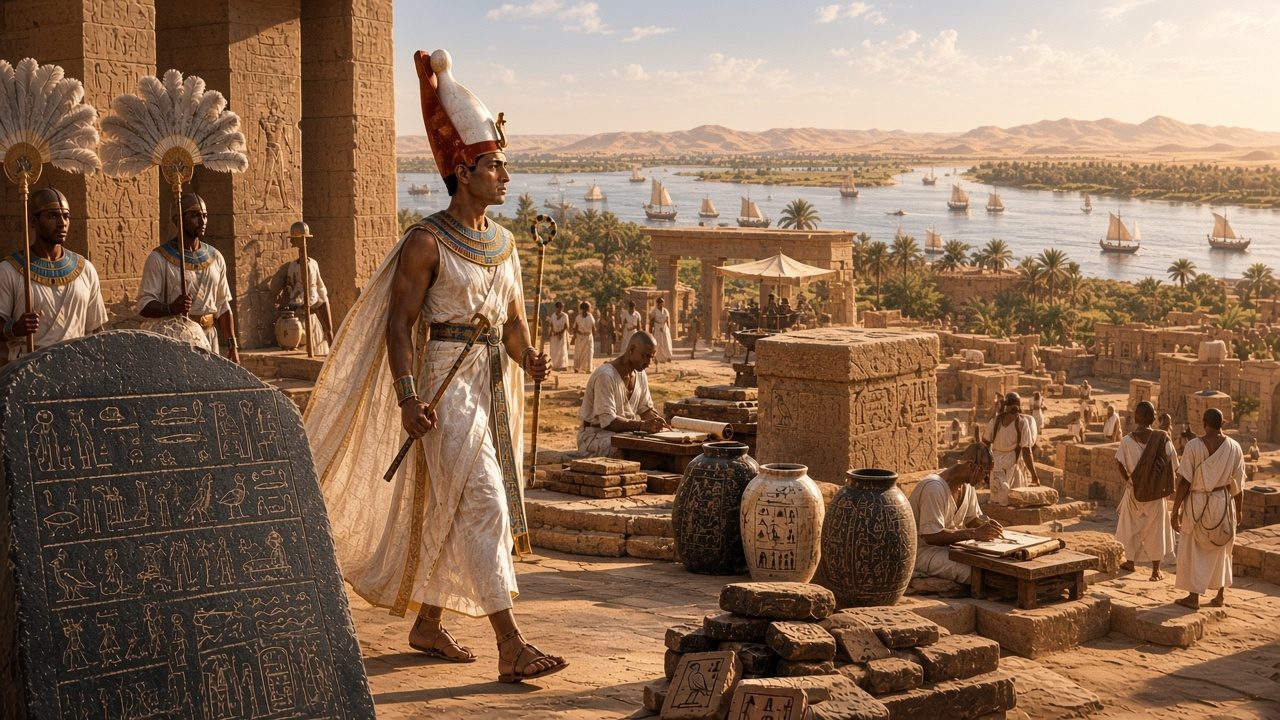
Nynetjer is one of the longest-reigning pharaohs of the Early Dynastic period. The Turin Canon gives him 96 years, a figure no one accepts, and Manetho, who calls him Binothris, 47. Egyptologists estimate between 38 and 49 years, most often about 40. The absolute dates depend on the chronology: Jürgen von Beckerath placed his reign around 2785 – 2742 BCE, while E. Hornung, followed on this site, dates it 2700 – 2660 BCE.
The annals of the Palermo Stone
THEME TWO
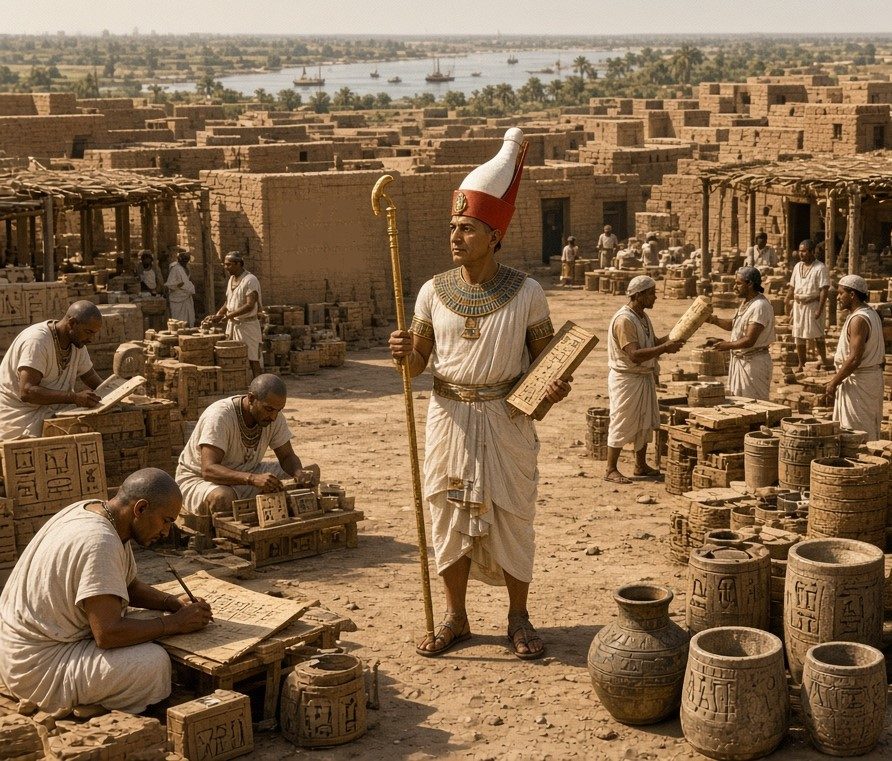
The Palermo Stone is a fragment of royal annals carved in the Fifth Dynasty, which list for every year of a reign its main events and the height of the Nile flood. For Nynetjer, the records of roughly his 6th to 20th years survive. They list a regular "Following of Horus", a royal journey through the country every second year that was linked with counting the country's wealth for taxes, appearances of the pharaoh, the stretching of the cord for new buildings, two runs of the Apis bull and festivals of Sokar, the god of the Memphite necropolis. In his 13th year the annals record the "hacking up" of places called Shem-Ra and Ha, the "north land". Some Egyptologists see in this a campaign in the Delta, perhaps to put down a revolt in Lower Egypt.
State and administration
THEME THREE
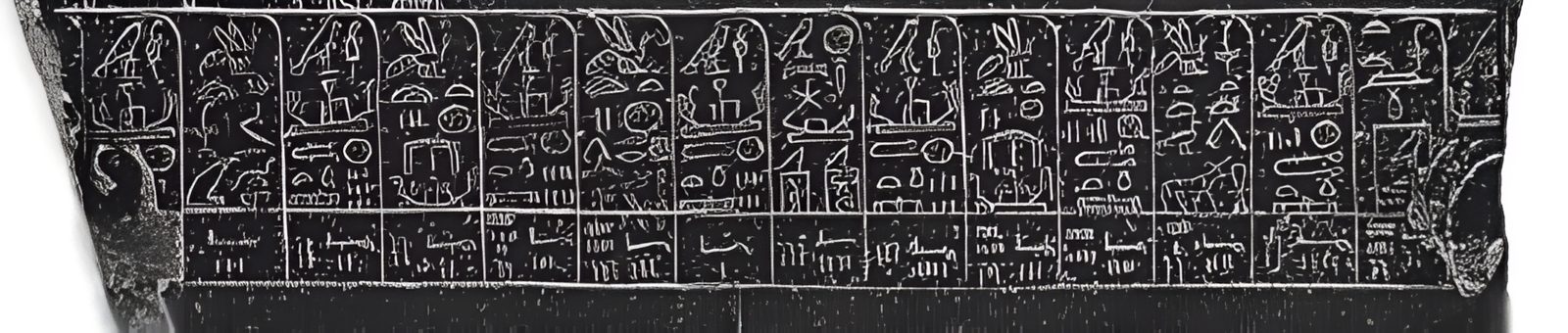
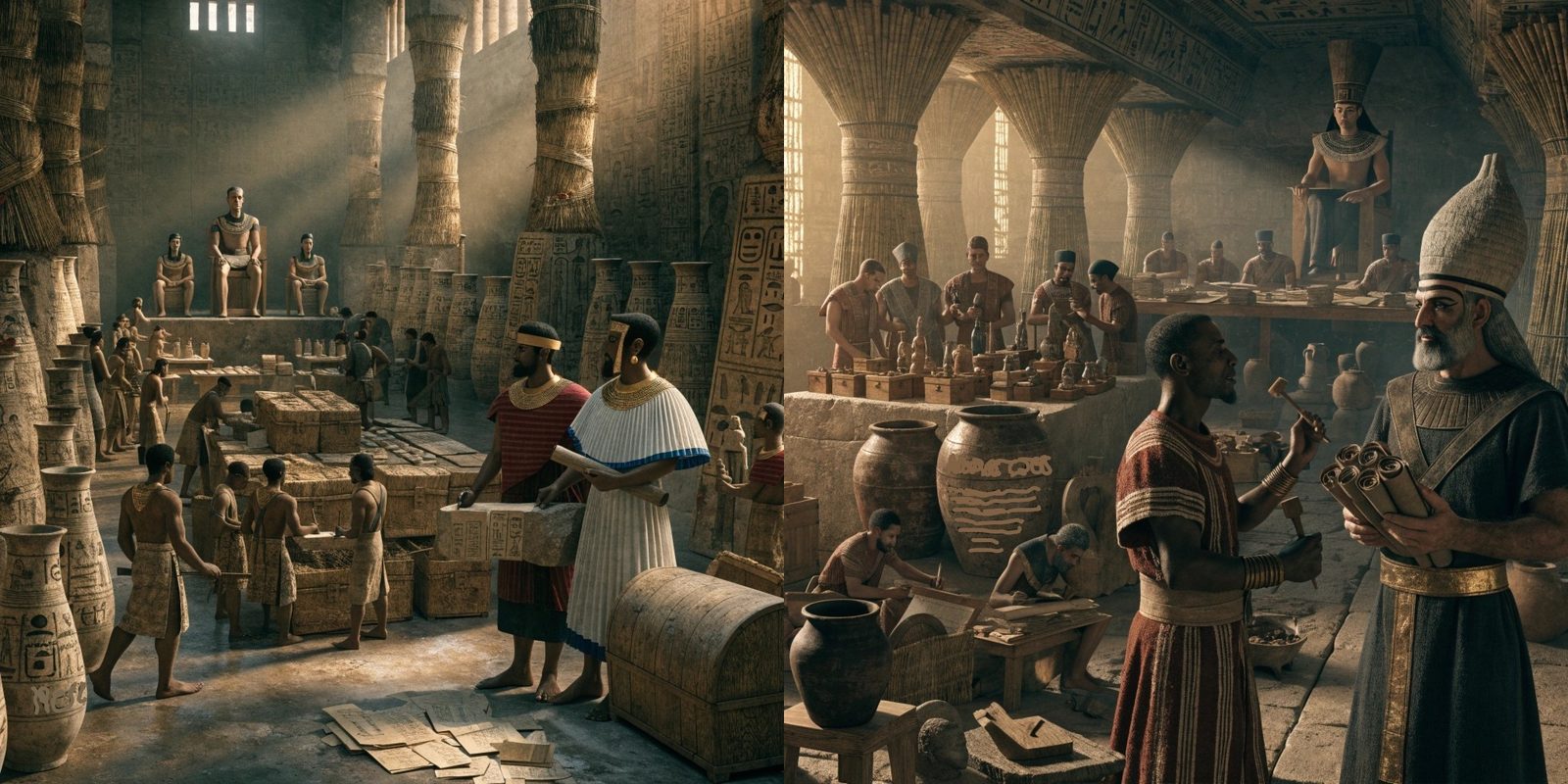
The records of his reign suggest that the state was becoming better organised. The counts linked with the Following of Horus may have grown into a fuller census of the country's wealth. According to Jochem Kahl, the treasury was reorganised into several new institutions. Ink inscriptions on jars may be the earliest evidence of the provinces later called nomes, although some scholars date these signs to the end of the dynasty. Among the officials of his time are Ruaben, an overseer of sculptors, and perhaps Menka, possibly the earliest known holder of the titles of a vizier.
Women and the throne
THEME FOUR
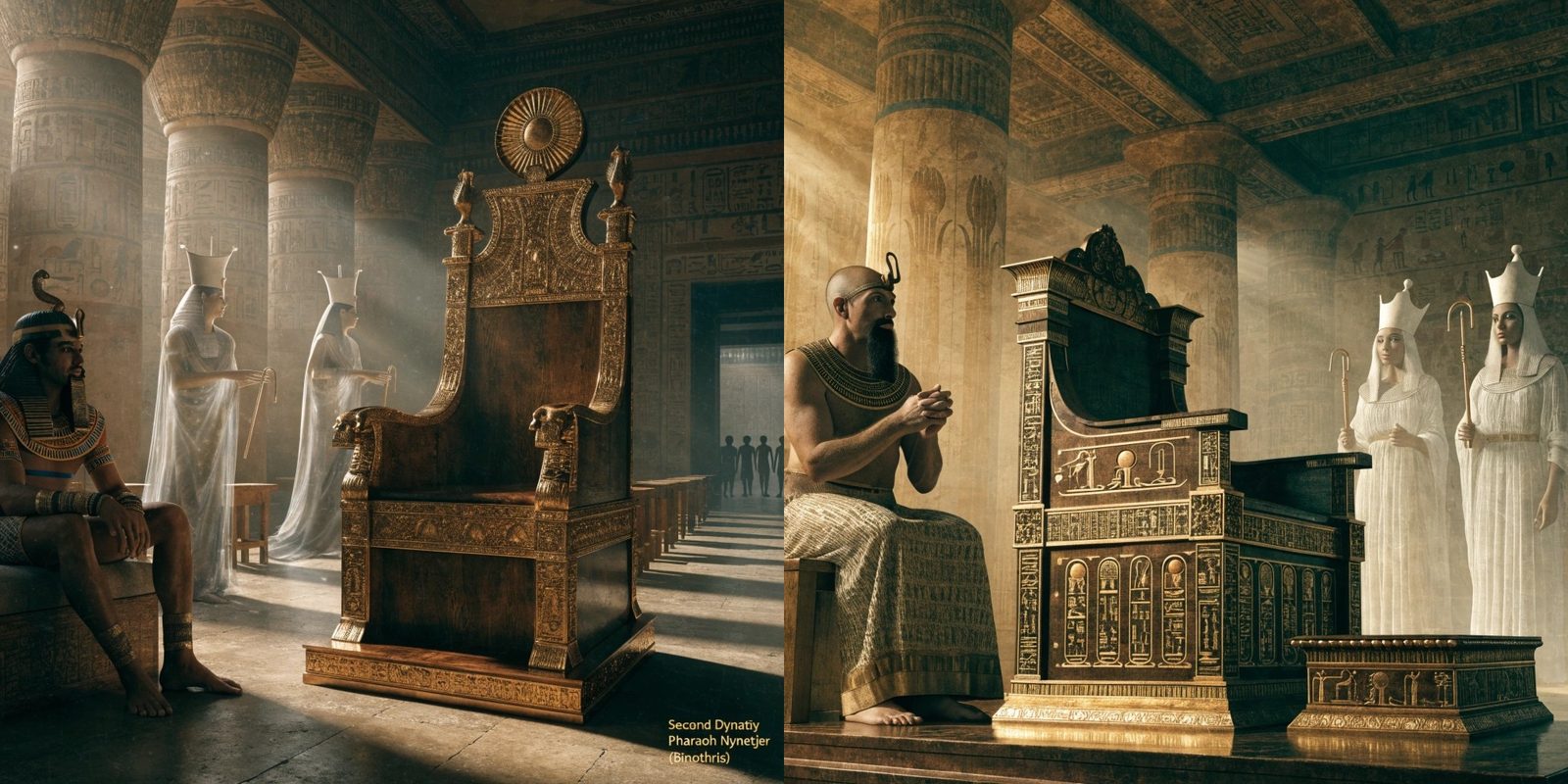
Manetho writes that in the reign of Binothris it was decided that women might hold the royal office. We do not know what lies behind this remark. The Egyptologist Walter Bryan Emery linked it to powerful queens of the First Dynasty such as Neithhotep and Merneith, who governed for the young Den. No woman is known to have ruled in Nynetjer's own time.
The statue in Leiden
THEME FIVE
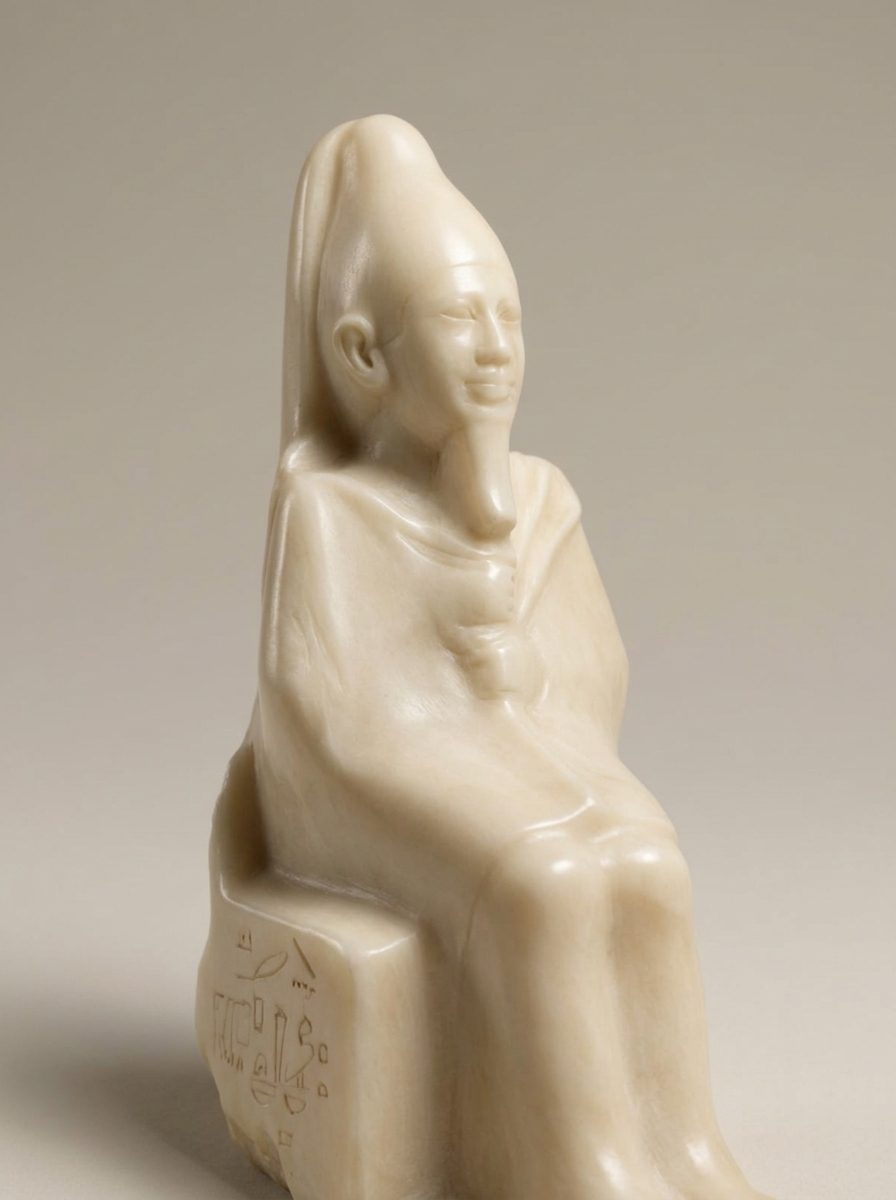
A statue in the National Museum of Antiquities in Leiden shows Nynetjer in the robe of the Sed festival, the jubilee of royal renewal. Long described as alabaster, it was identified in 2017 as quartzite. Toby Wilkinson calls it the earliest sculpture in the round of a securely identified Egyptian pharaoh. Nynetjer also used a golden name, Ren-nebu, "golden offspring", which Egyptologists regard as a forerunner of the Golden Horus name that later became part of the royal titulary.
Gallery Tomb B at Saqqara
THEME SIX
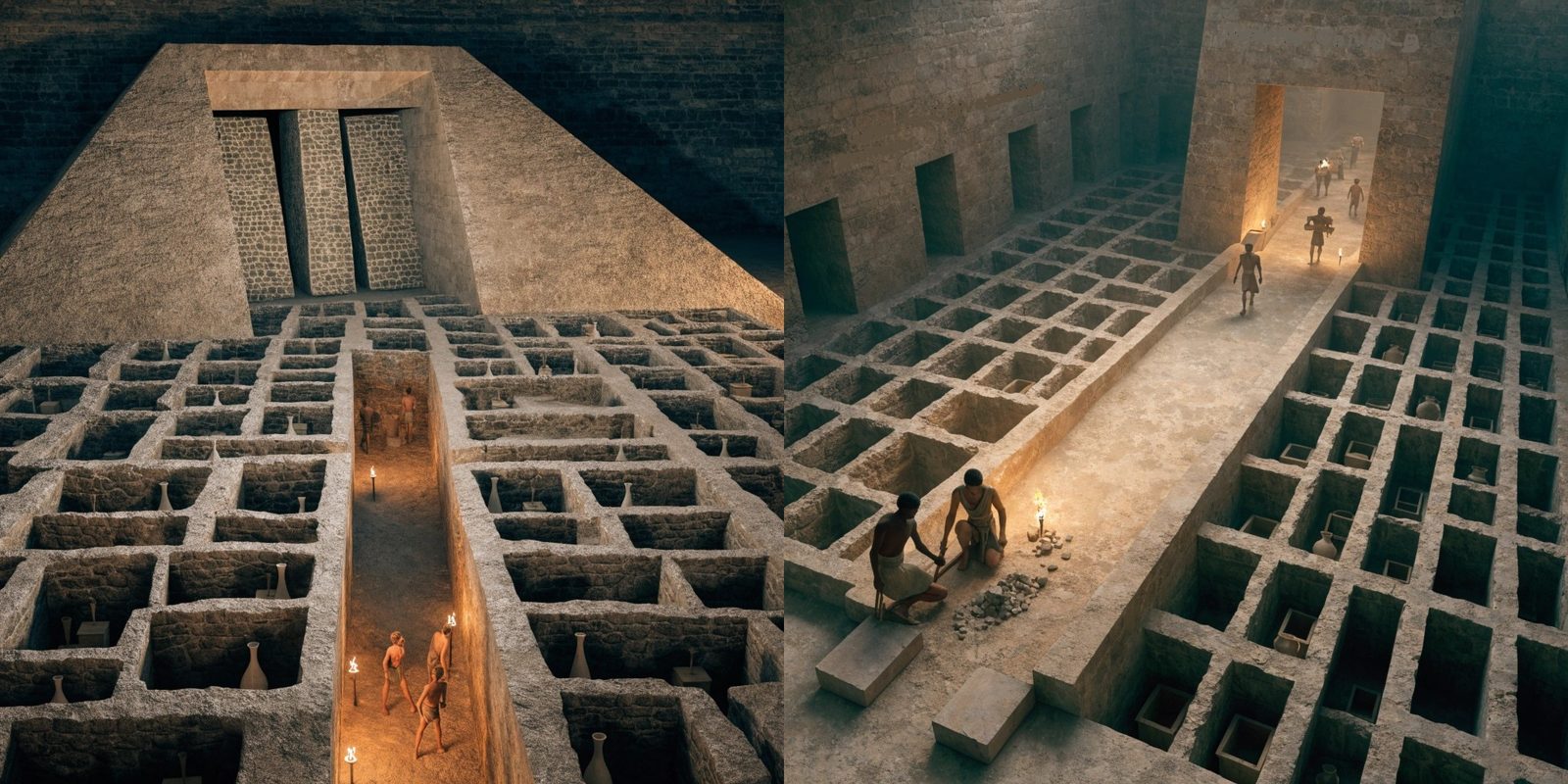
Nynetjer was buried at Saqqara in Gallery Tomb B, identified in 1938 by Selim Hassan from seal impressions. Peter Munro and Günter Dreyer confirmed the attribution, and in the 2000s and 2010s the German Archaeological Institute, with Claudia Lacher-Raschdorff, studied the tomb in detail. A ramp about 25 metres long, closed by stone portcullises, leads to galleries cut 5 to 6 metres below the surface and to a maze of more than 150 small rooms. The plan may imitate a royal residence, with rooms arranged like houses and courtyards. In the galleries the excavators found some 560 sealed wine jars. The tomb resembles Gallery Tomb A of Hotepsekhemwy nearby, which shows how closely Nynetjer followed the model of his predecessors.
Summary
THEME SEVEN
Nynetjer's long reign was a time of strong central government, active cults and a growing administration. Yet the annals hint at conflicts in the north, and after his death the later king lists and the monuments of the time no longer agree. The lists name Wadjenes and Senedj after him, while contemporary objects name Weneg, Nubnefer, Peribsen and Sekhemib. Many Egyptologists believe that the country was divided between rival rulers until Khasekhemwy reunited it. Others think it was only a reorganisation of the state.
Key dates
- 2700 BCENynetjer becomes pharaoh, according to E. Hornung (2006).
- 13th yearThe Palermo Stone records the "hacking up" of Shem-Ra and Ha in the north.
- 2660 BCEDeath of Nynetjer and burial in Gallery Tomb B at Saqqara.