
Home · Ancient History · Ancient Egypt · Early Dynastic Period
Khasekhemwy
Khasekhemwy, the last pharaoh of the Second Dynasty, reigned from 2610 to 2593 BCE in the chronology of E. Hornung (2006). He reunited the country after a period of division and was the only pharaoh to place both Horus and Seth above his name. He built in stone at Hierakonpolis, El-Kab and Abydos, left two of the earliest seated statues of a pharaoh and the largest tomb of the royal cemetery at Abydos. His wife Nimaathap was remembered as the mother of the next pharaoh, probably Djoser.
- Reign
- 2610 – 2593 BCE (E. Hornung, 2006), about 18 years according to the Palermo Stone. Manetho gives 30 years and the Turin Canon 27
- Dynasty
- 2nd (last pharaoh)
- Successor
- Djoser (Netjerikhet), probably his son, the first pharaoh of the 3rd Dynasty
- Royal names
- Horus name Khasekhem, "the power has appeared", later Horus-and-Seth name Khasekhemwy, "the two powers have appeared". Later king lists: Djadjay (Abydos), Bebti (Saqqara, Turin)
- Manetho
- Cheneres, 30 years
- Burial
- Tomb V, Umm el-Qa'ab, Abydos
- Main sources
- The Palermo Stone, two statues from Hierakonpolis (Oxford and Cairo), stone vessels, seal impressions, his tomb and funerary enclosure at Abydos
From Khasekhem to Khasekhemwy
THEME ONE
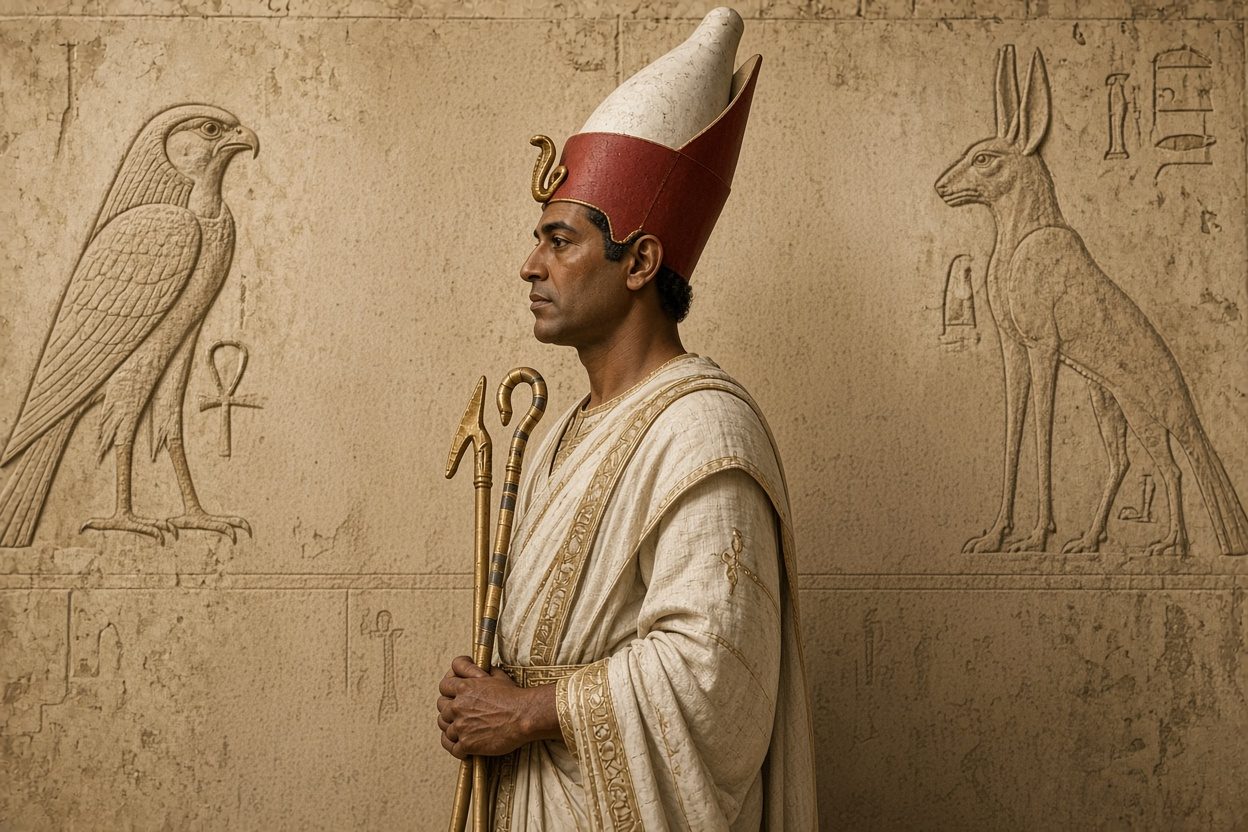
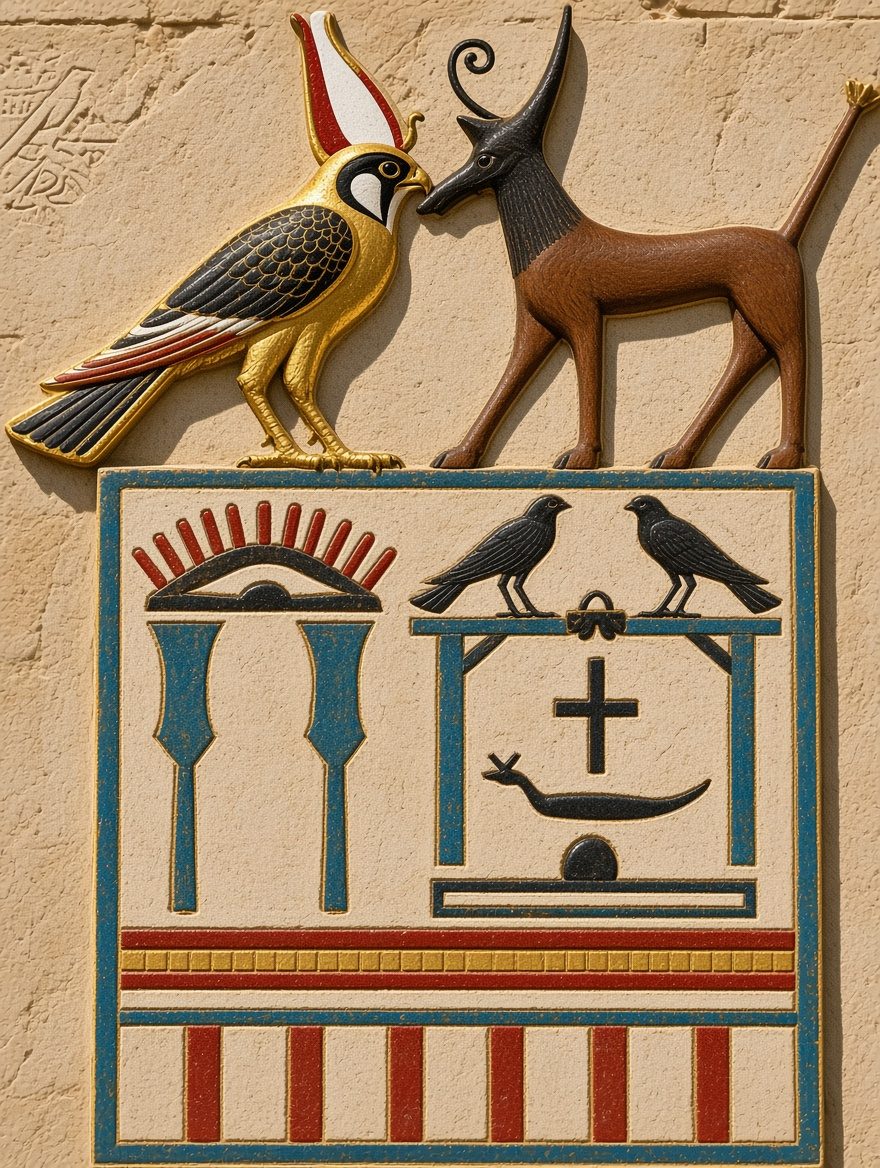
Early in his reign the pharaoh appears as Khasekhem, "the power has appeared", with the falcon of Horus alone above his name. Later he took the name Khasekhemwy, "the two powers have appeared", and placed both Horus and Seth above the serekh, something no other pharaoh did. A fuller form adds that the two lords are at peace in him. Most Egyptologists believe that Khasekhem and Khasekhemwy were one and the same ruler and that the change of name marked the end of the conflict between the followers of Horus and of Seth and the reunification of Egypt.
War with the north
THEME TWO
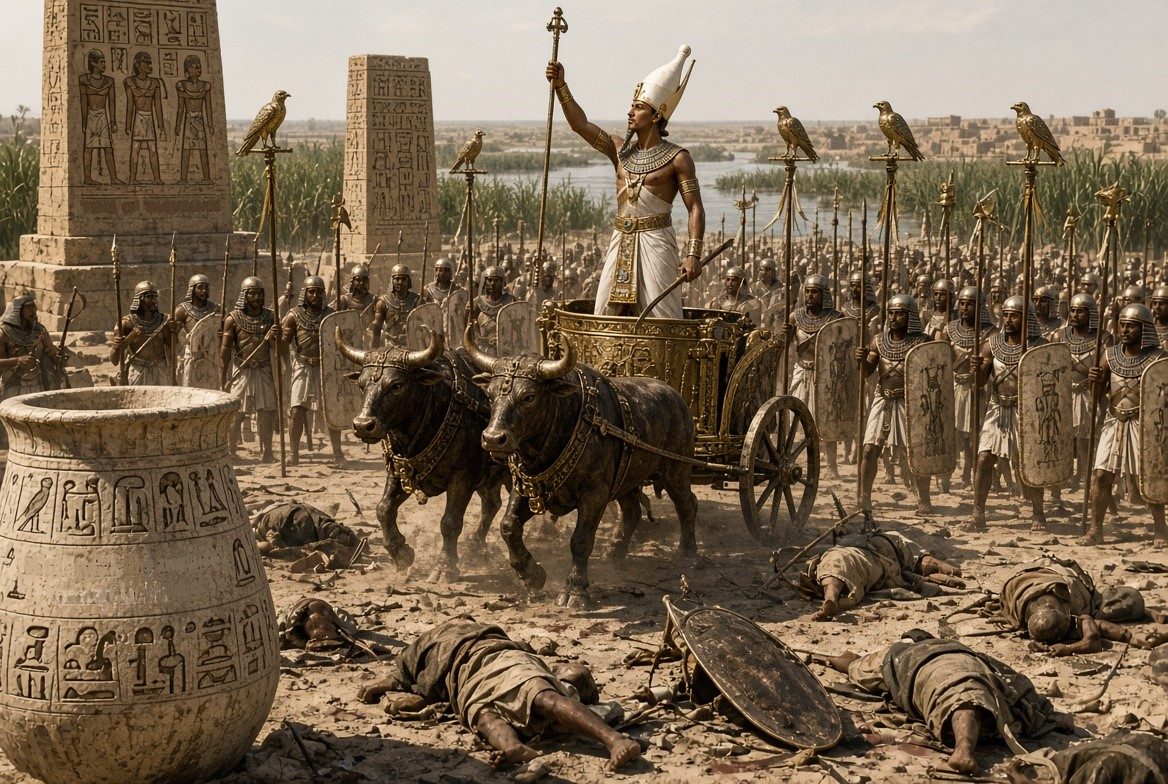
Stone vessels from Hierakonpolis, the old royal city of Upper Egypt, are inscribed with the words "fighting the northern enemy within Nekheb". The bases of two seated statues of the pharaoh from the same site show the bodies of slain enemies, with a count of the dead in the tens of thousands. Egyptologists link these records with a campaign against rebels in the north, probably in the Delta, perhaps the conflict that ended the division of the country. The image of the pharaoh triumphing over his enemies would remain a central theme of royal art for nearly three thousand years.
Early royal statues
THEME THREE
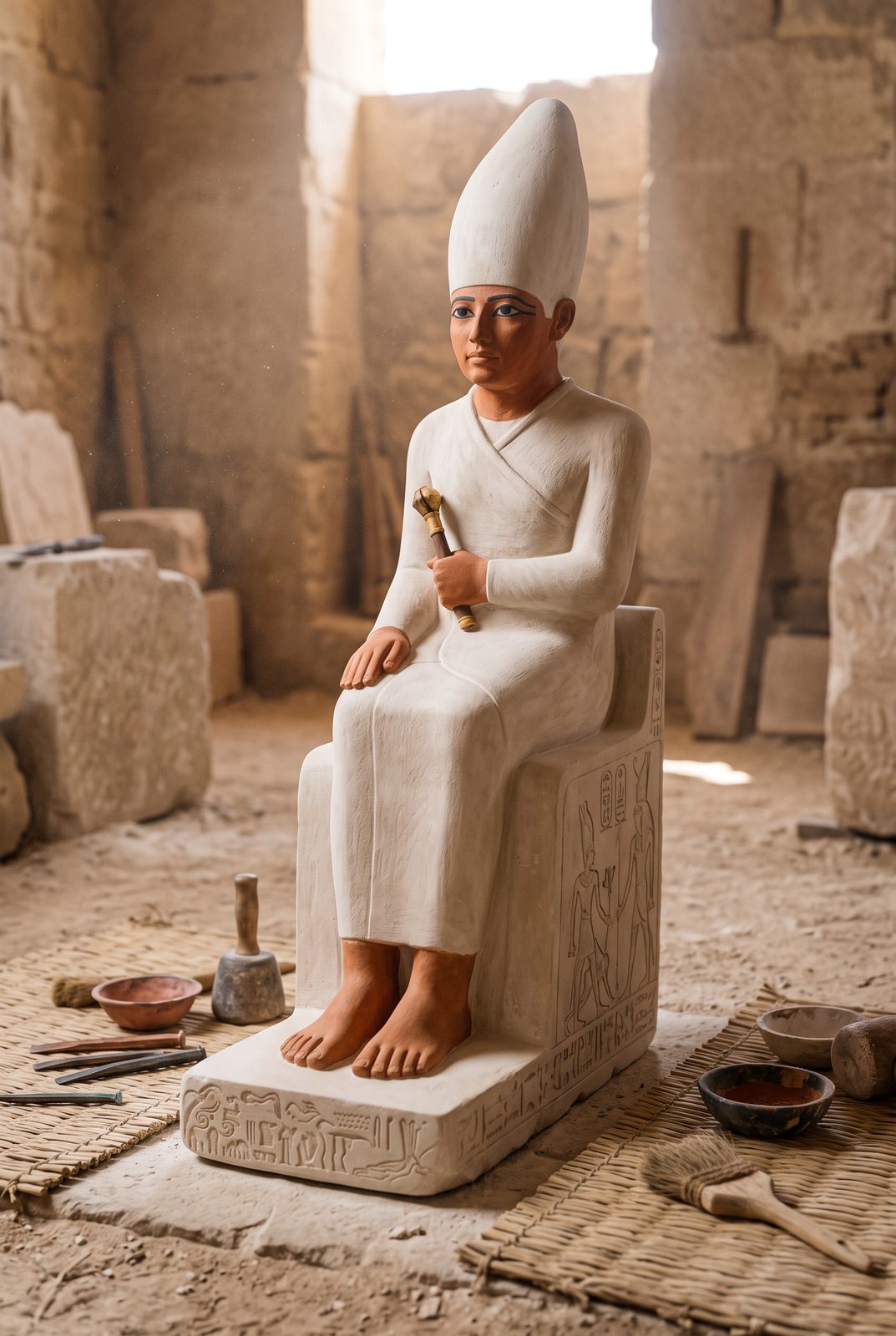
Two seated statues of Khasekhemwy were found at Hierakonpolis. One, of limestone, is in the Ashmolean Museum in Oxford, the other in the Egyptian Museum in Cairo. Both show the pharaoh wearing the White Crown of Upper Egypt and the cloak of the Sed festival. They are among the earliest royal statues of this size and quality, and they announce the great sculpture of the Old Kingdom.
Building in stone
THEME FOUR
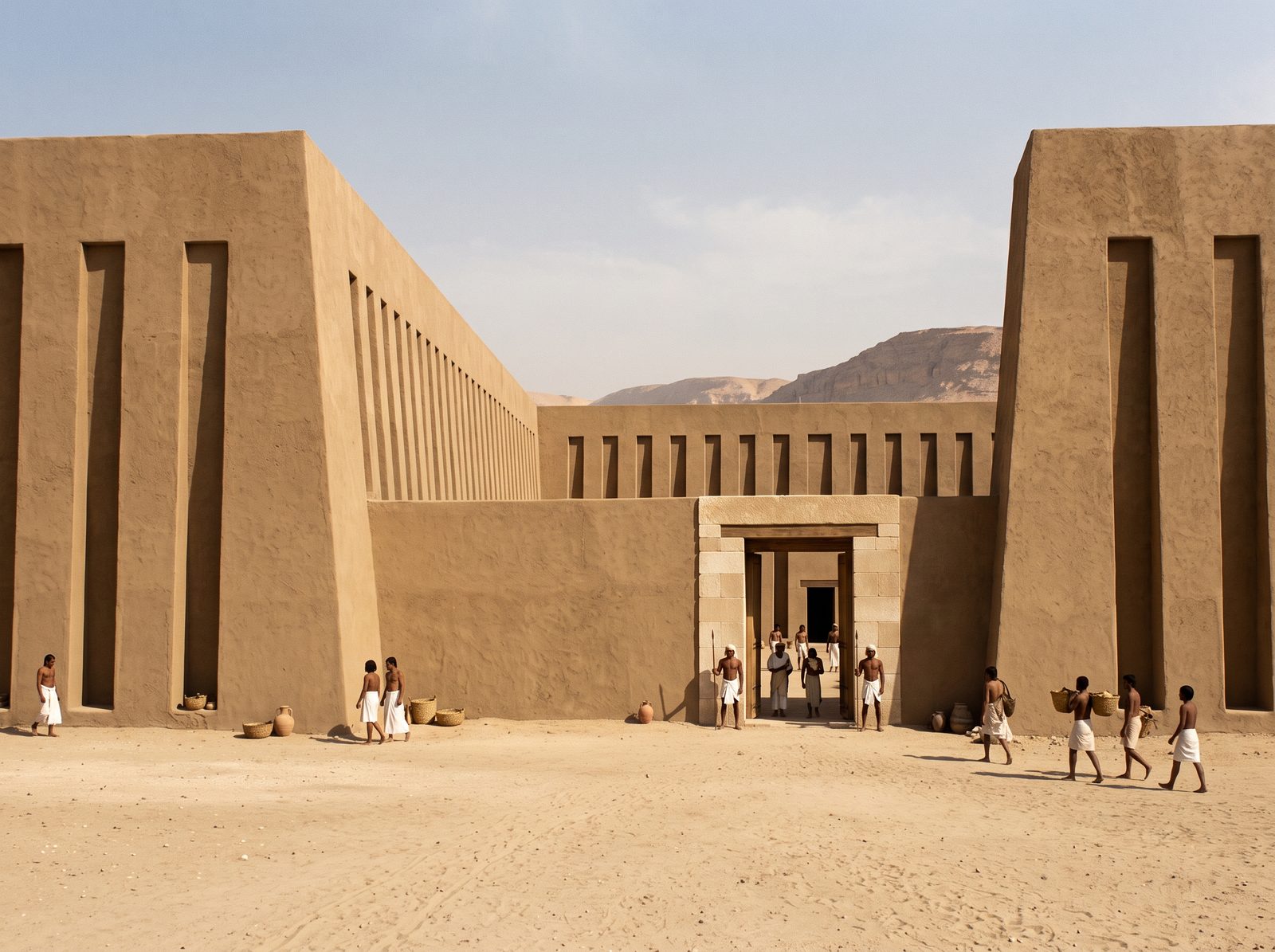
Khasekhemwy was a great builder. At Hierakonpolis he built a large mud-brick enclosure, often called the "Fort", and granite door elements with his Horus-and-Seth name come from the temple of Horus there. He also built in stone at El-Kab. At Abydos he raised the Shunet ez-Zebib, a huge funerary enclosure of mud brick whose walls still stand to a great height today. He may also have begun the vast enclosure known as Gisr el-Mudir at Saqqara. His use of stone on a larger scale prepared the way for the step pyramid of his successor Djoser.
Queen Nimaathap
THEME FIVE
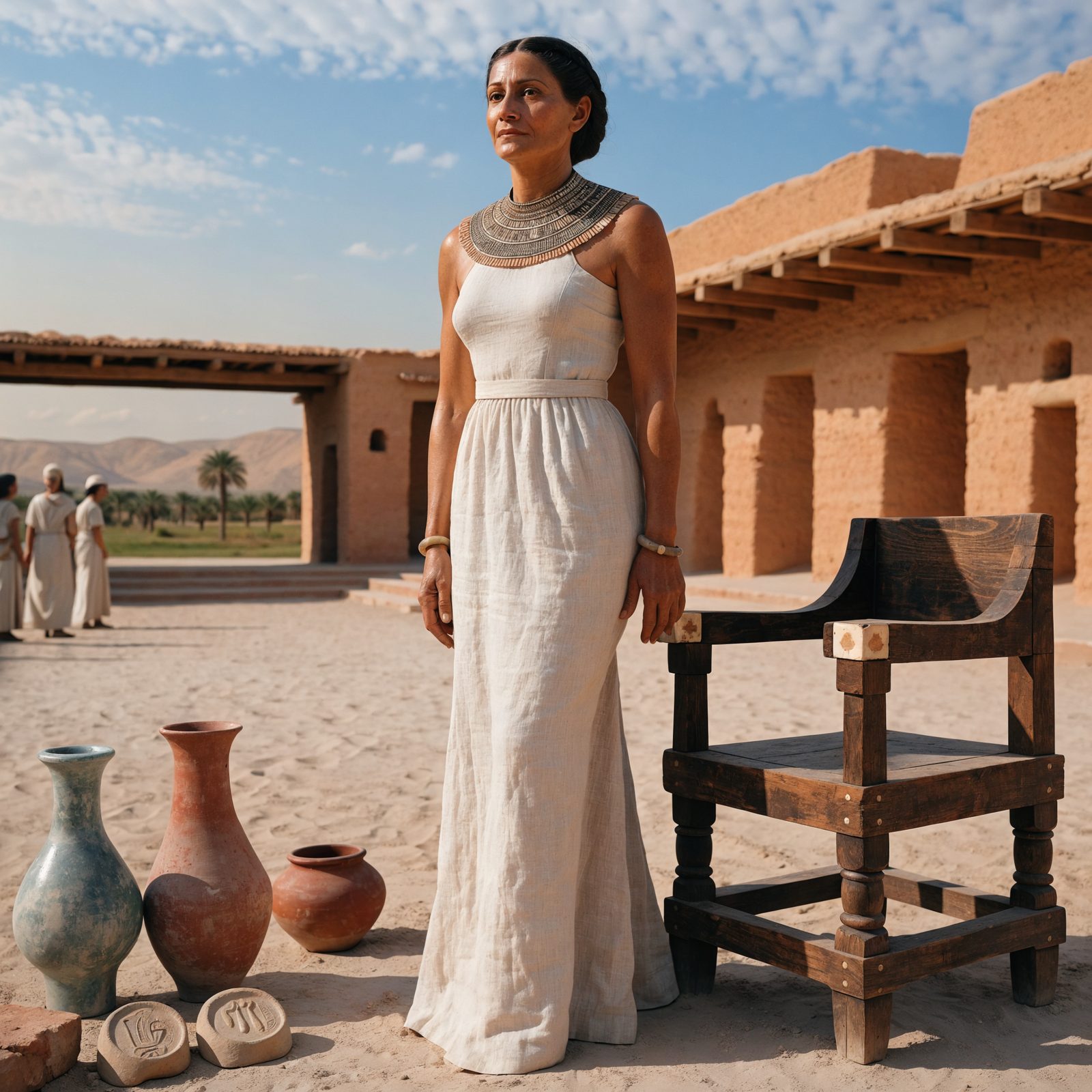
Khasekhemwy's wife was Queen Nimaathap, perhaps a princess from Lower Egypt whose marriage helped to seal the reconciliation of the two halves of the country. Seals from the reign of Djoser call her "mother of the king", and most Egyptologists think that she was the mother of Djoser, the first pharaoh of the Third Dynasty, and of his wife Hetephernebty. Other pharaohs of the early Third Dynasty, such as Sanakht, Sekhemkhet and Khaba, may also have been sons of Khasekhemwy, but this is uncertain.
Tomb V at Abydos
THEME SIX
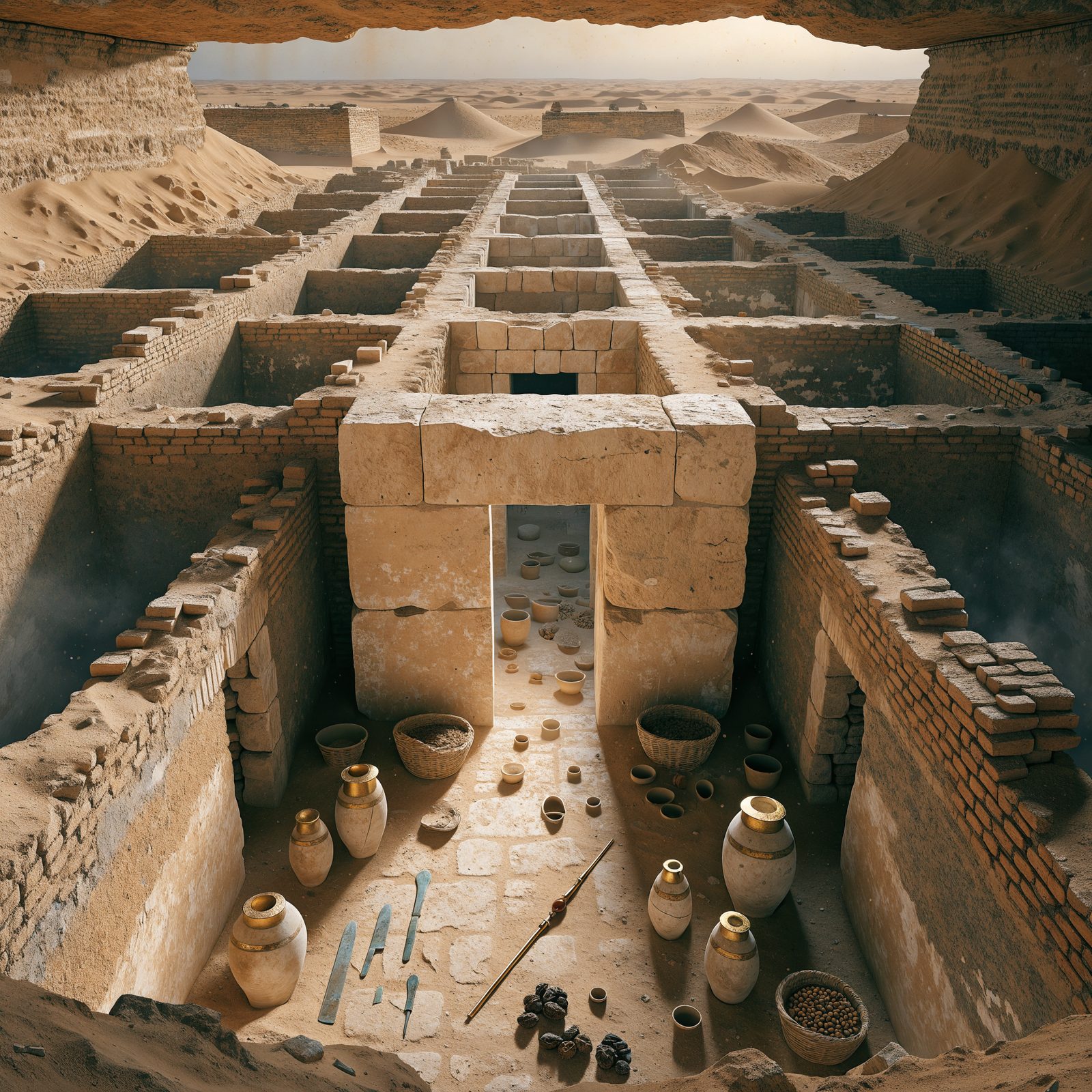
Khasekhemwy was buried at Umm el-Qa'ab in Abydos, in Tomb V, the last and largest royal tomb of this cemetery. It is trapezoidal, about 70 metres long and 10 to 17 metres wide, with 58 rooms. Its central burial chamber is built of dressed limestone and was long considered the oldest stone building in the world. Although robbed in antiquity, the tomb still held a sceptre of gold and sard, small stone vessels with lids of gold leaf, copper tools and vessels, pottery, grain and fruit.
Summary
THEME SEVEN
Khasekhemwy closed the Second Dynasty and the whole Early Dynastic period. He restored the unity of Egypt, reconciled Horus and Seth in his name, built on a new scale and left a stable state to his successor. With Djoser and the step pyramid at Saqqara, the age of the pyramids, the Old Kingdom, began.
Key dates
- 2610 BCEKhasekhemwy becomes pharaoh, according to E. Hornung (2006).
- During his reignCampaign against the northern enemy and reunification of Egypt.
- 2593 BCEDeath of Khasekhemwy and burial in Tomb V at Abydos. Djoser succeeds him.