Home · Ancient History · Ancient Egypt · Old Kingdom
Djoser
Djoser, the first pharaoh of the Third Dynasty, reigned from 2592 to 2566 BCE in the chronology of E. Hornung (2006). In his own time he was called by his Horus name Netjerikhet, "divine of body", and the name Djoser is known only from much later sources. He was probably the son of Khasekhemwy and Queen Nimaathap. His official Imhotep is credited with the step pyramid at Saqqara, the earliest colossal stone building in Egypt, and with his reign the Old Kingdom, the age of the pyramids, began.
- Reign
- 2592 – 2566 BCE (E. Hornung, 2006). The Turin Canon gives 19 years, Manetho 29, and T. Wilkinson's reconstruction of the royal annals 28
- Dynasty
- 3rd (first pharaoh)
- Predecessor
- Khasekhemwy, probably his father. The later king lists put a king Nebka before him
- Successor
- Sekhemkhet
- Royal names
- Horus name Netjerikhet, "divine of body". The name Djoser, "the holy one", appears only in sources written centuries after his death
- Manetho
- Tosorthros, 29 years
- Burial
- Step pyramid, Saqqara
- Main sources
- His pyramid complex at Saqqara with its statues and reliefs, seal impressions from the tomb of Khasekhemwy and from Beit Khallaf, the royal annals (Palermo Stone and Cairo fragment), rock inscriptions in Sinai, the Famine Stela of the Ptolemaic period
The founder of the Third Dynasty
THEME ONE
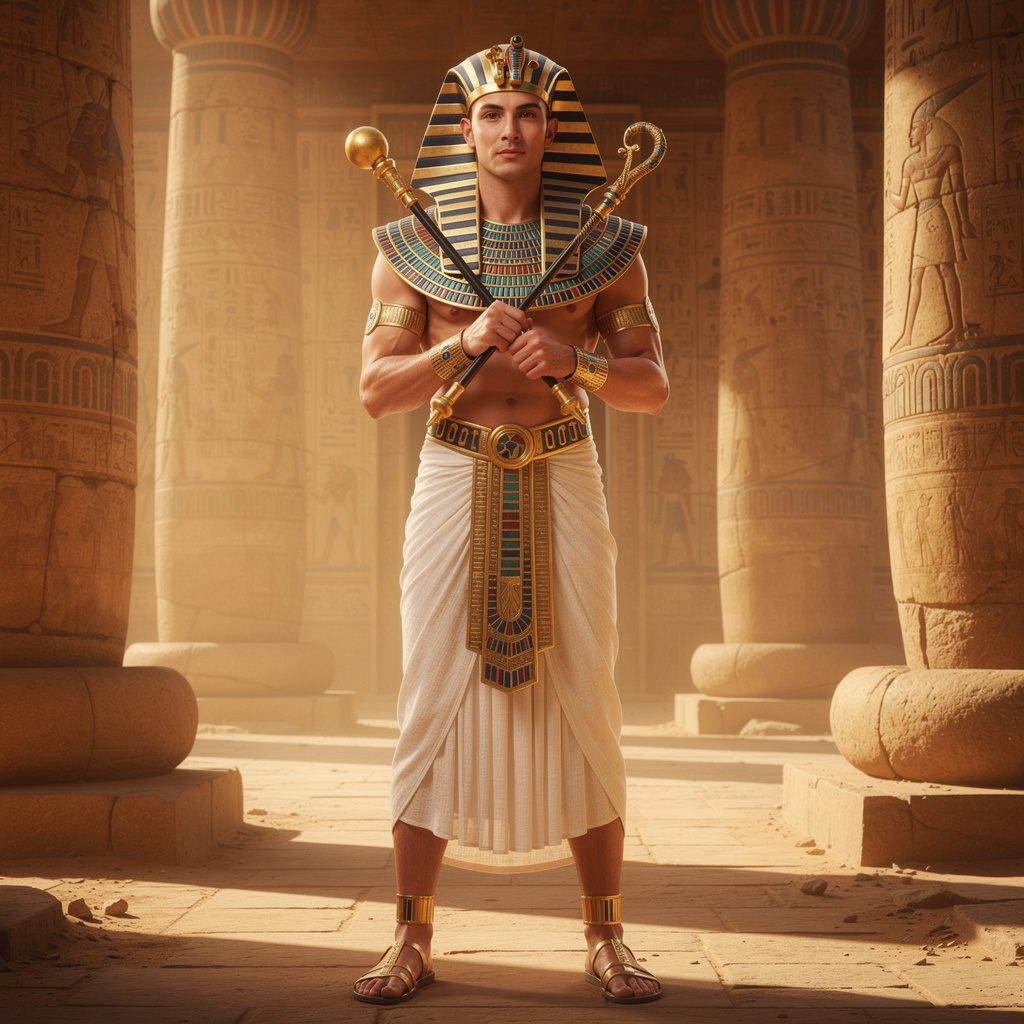
Seal impressions with Djoser's name were found at the entrance to the tomb of Khasekhemwy at Abydos, which shows that he buried his predecessor and most likely succeeded him directly. A seal from Khasekhemwy's tomb calls Queen Nimaathap "mother of the king's children", and in a tomb at Beit Khallaf from Djoser's reign she is called "mother of the dual king". Djoser was therefore probably her son and Khasekhemwy's. The king lists of Abydos and Turin, written some 1,300 years later, put a king Nebka at the head of the dynasty, but most Egyptologists today regard Djoser as its founder.
Imhotep
THEME TWO
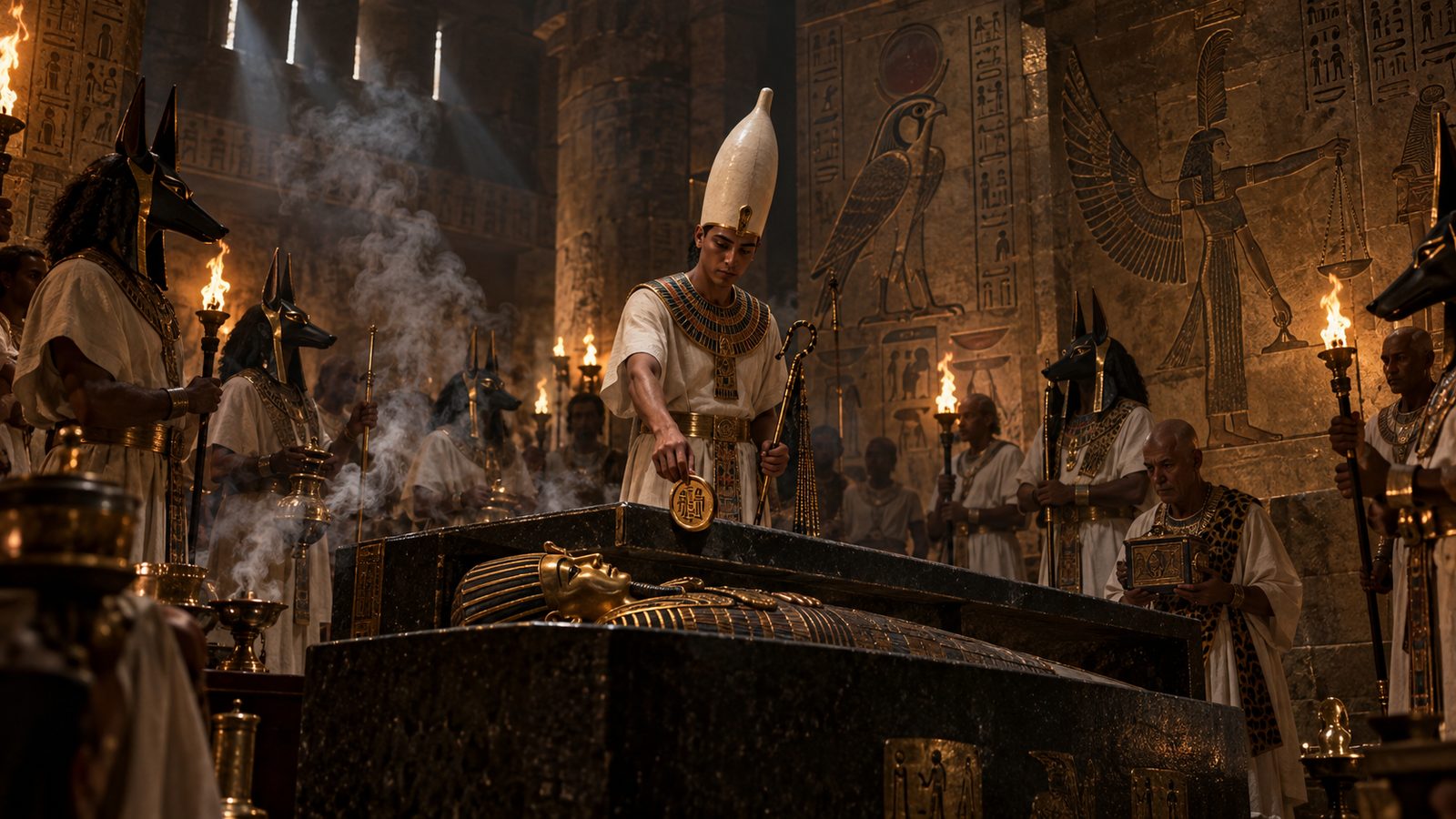
The most famous man of Djoser's reign was Imhotep. The base of a statue of the pharaoh found in the pyramid complex gives his name with the titles of chancellor of the king of Lower Egypt, administrator of the great palace and high priest of Heliopolis. Most Egyptologists credit him with the design of the step pyramid, and Manetho remembered this reign for the invention of building in hewn stone. The name Imhotep also appears on the enclosure wall of the pyramid of Djoser's successor Sekhemkhet. About two thousand years later he was worshipped as a god of wisdom and medicine, whom the Greeks identified with Asclepius.
The step pyramid
THEME THREE
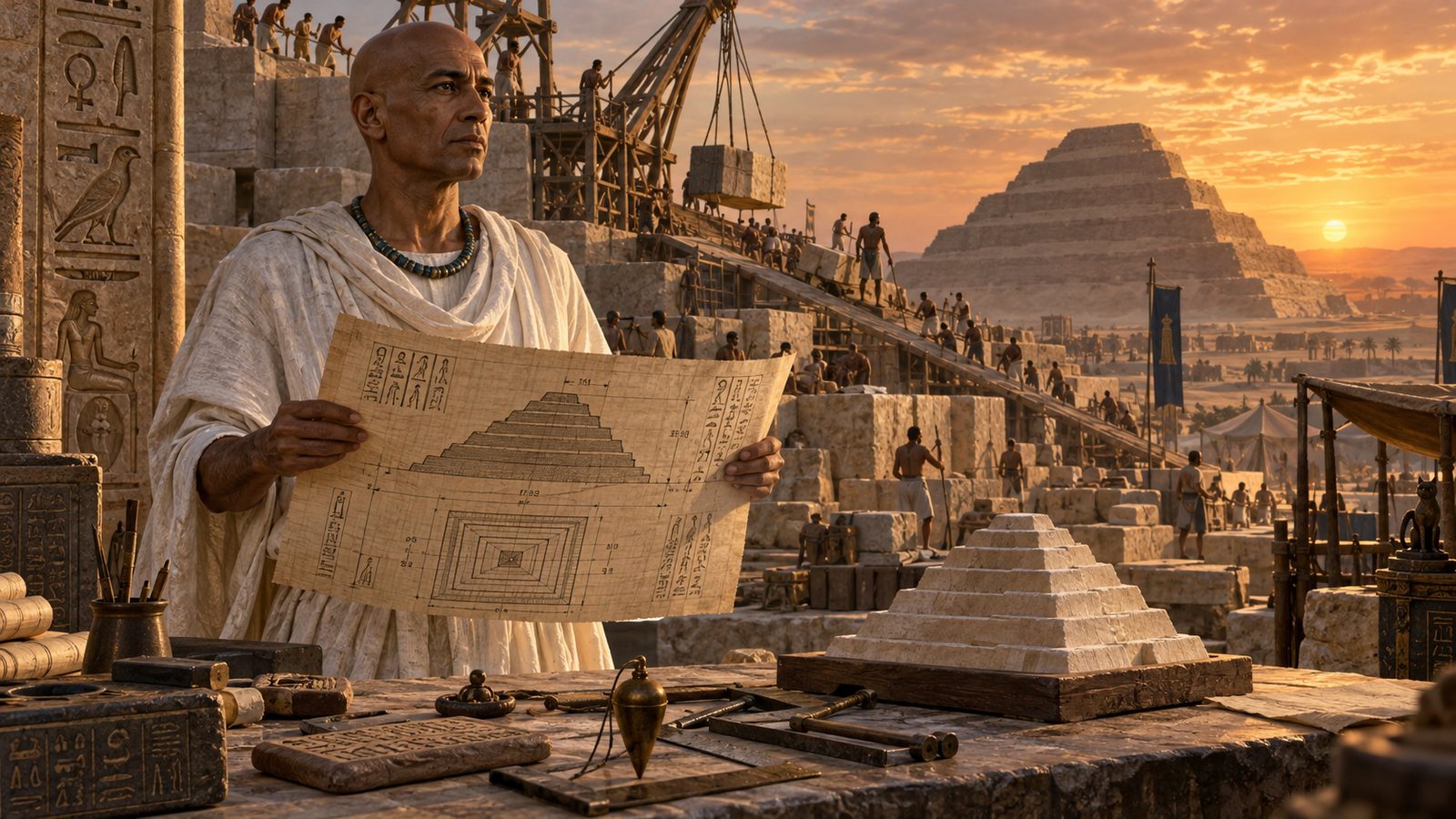
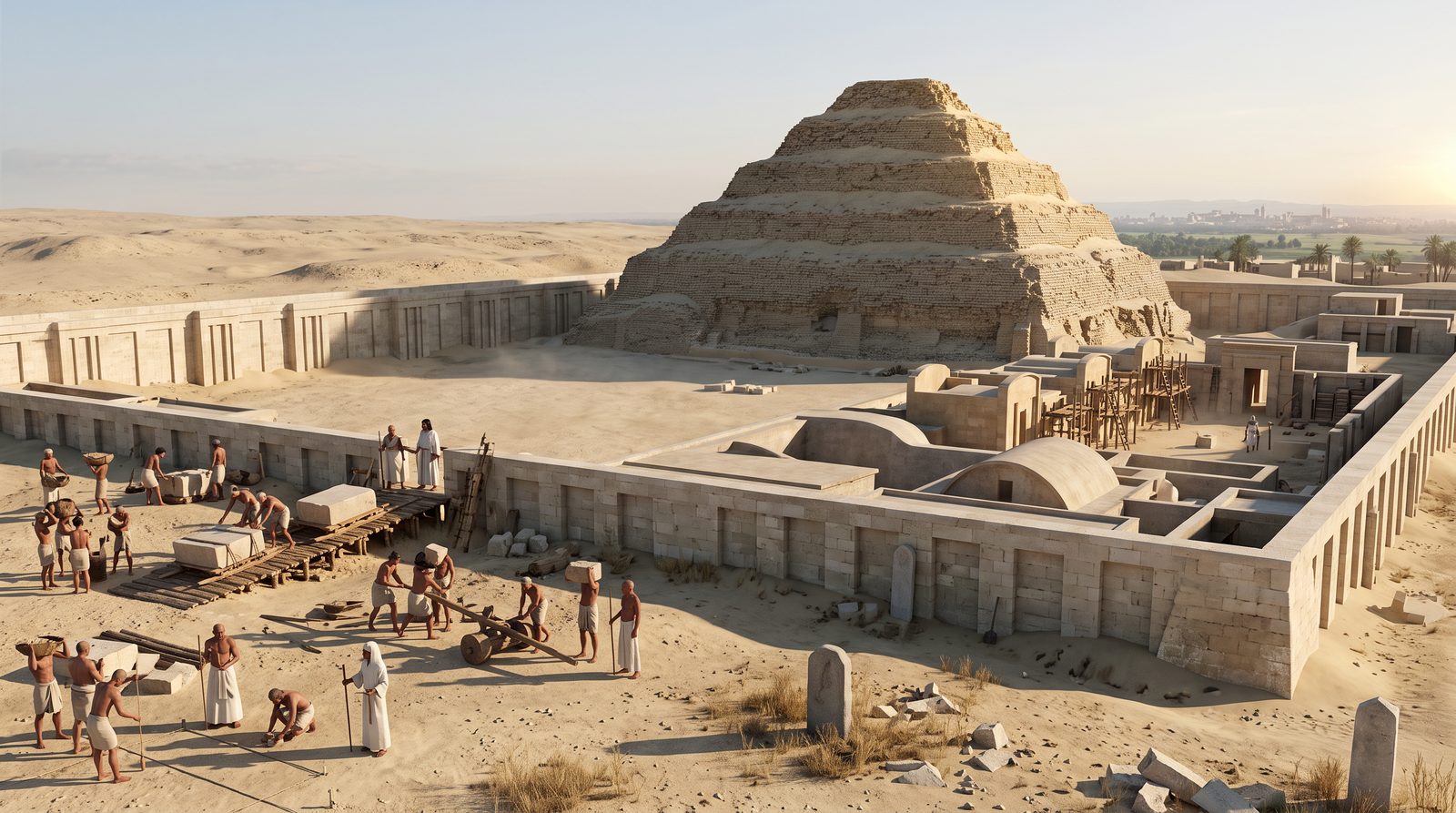
Djoser's tomb at Saqqara began as a square stone mastaba about 63 metres long and 8 metres high. It was enlarged several times, then turned into a pyramid of four steps and finally of six. The finished building measured about 121 by 109 metres at the base, rose to about 60 metres and was cased in fine white limestone. Never before had such a large building been raised entirely of stone, and its form prepared the way for the pyramids of the next dynasty. A shaft 28 metres deep led to the granite burial chamber, around which lay nearly six kilometres of corridors and galleries.
A palace for eternity
THEME FOUR
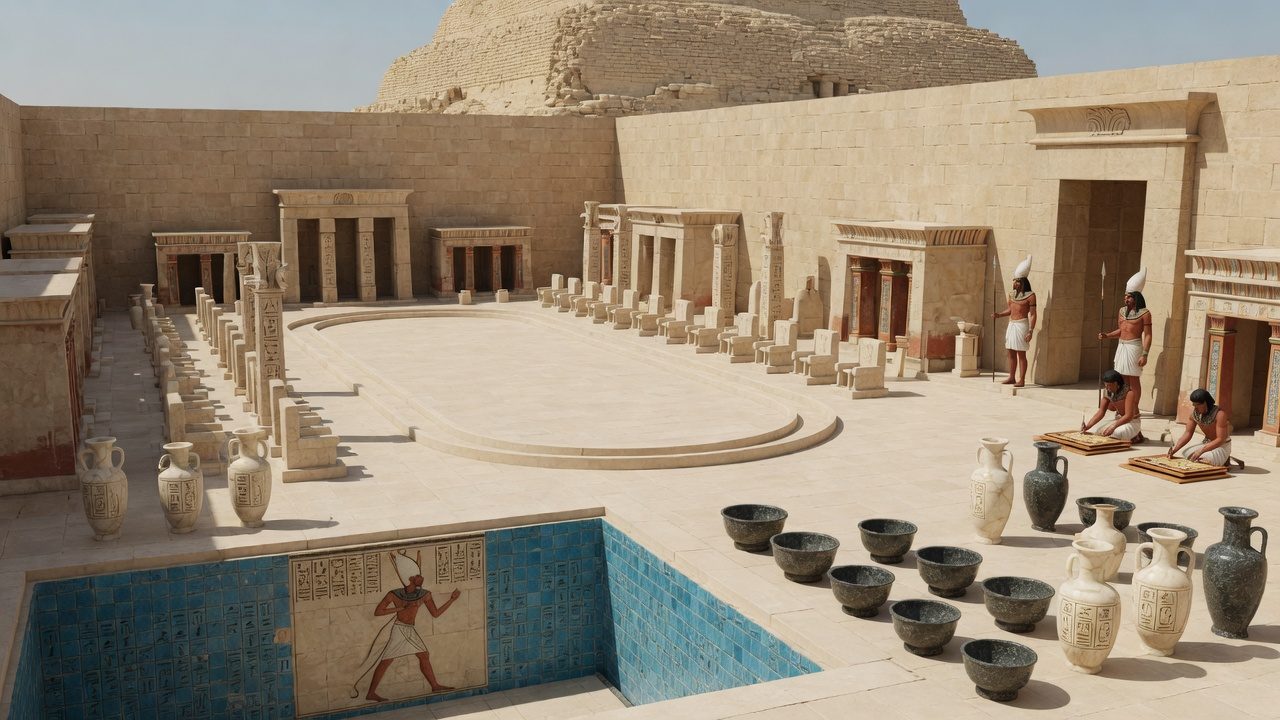
The pyramid stands in a complex of about 15 hectares, surrounded by a limestone wall 10.5 metres high and over 1.6 kilometres long, with fourteen false gates and only one real entrance. Inside are courts and stone copies of the buildings of the Sed festival, the jubilee that renewed the pharaoh's power, so that he could celebrate it for ever. Under the pyramid and the South Tomb, rooms lined with blue faience tiles imitate walls of reed mats, and reliefs show the pharaoh running the ritual course of the festival. In the galleries under the pyramid more than 40,000 stone vessels were found, many with the names of earlier pharaohs such as Den, Semerkhet, Nynetjer and Sekhemib.
The statue in the serdab
THEME FIVE
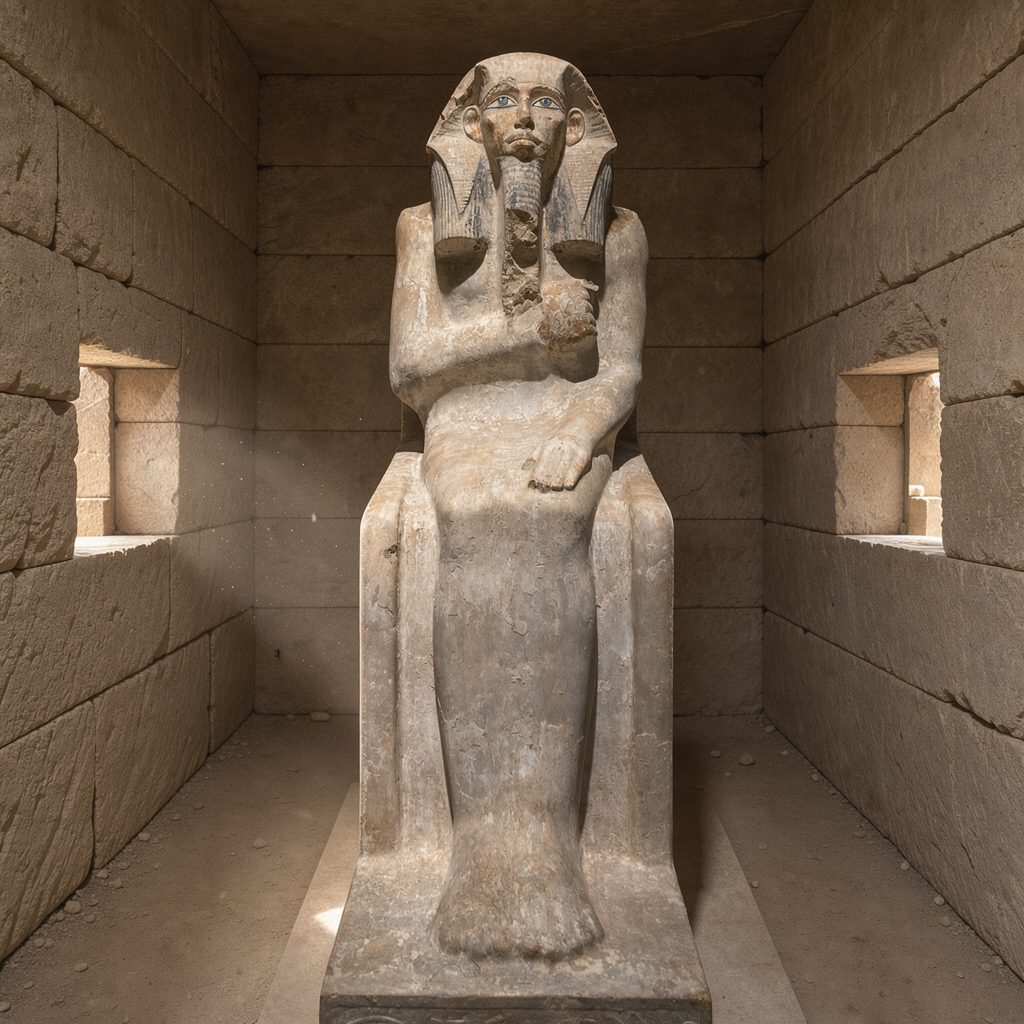
On the north side of the pyramid, in a small closed chamber called a serdab, stood a painted limestone statue of the seated pharaoh. Through two holes in the front wall it could "look" at the rites performed in the temple. Found in 1924–1925, it is one of the oldest life-size Egyptian statues and is now in the Egyptian Museum in Cairo, while a cast stands in its place at Saqqara. Djoser wears a long ceremonial cloak and a heavy wig under the royal headcloth, and his feet rest on the nine bows, the symbol of Egypt's enemies.
Sinai, the south and the Famine Stela
THEME SIX
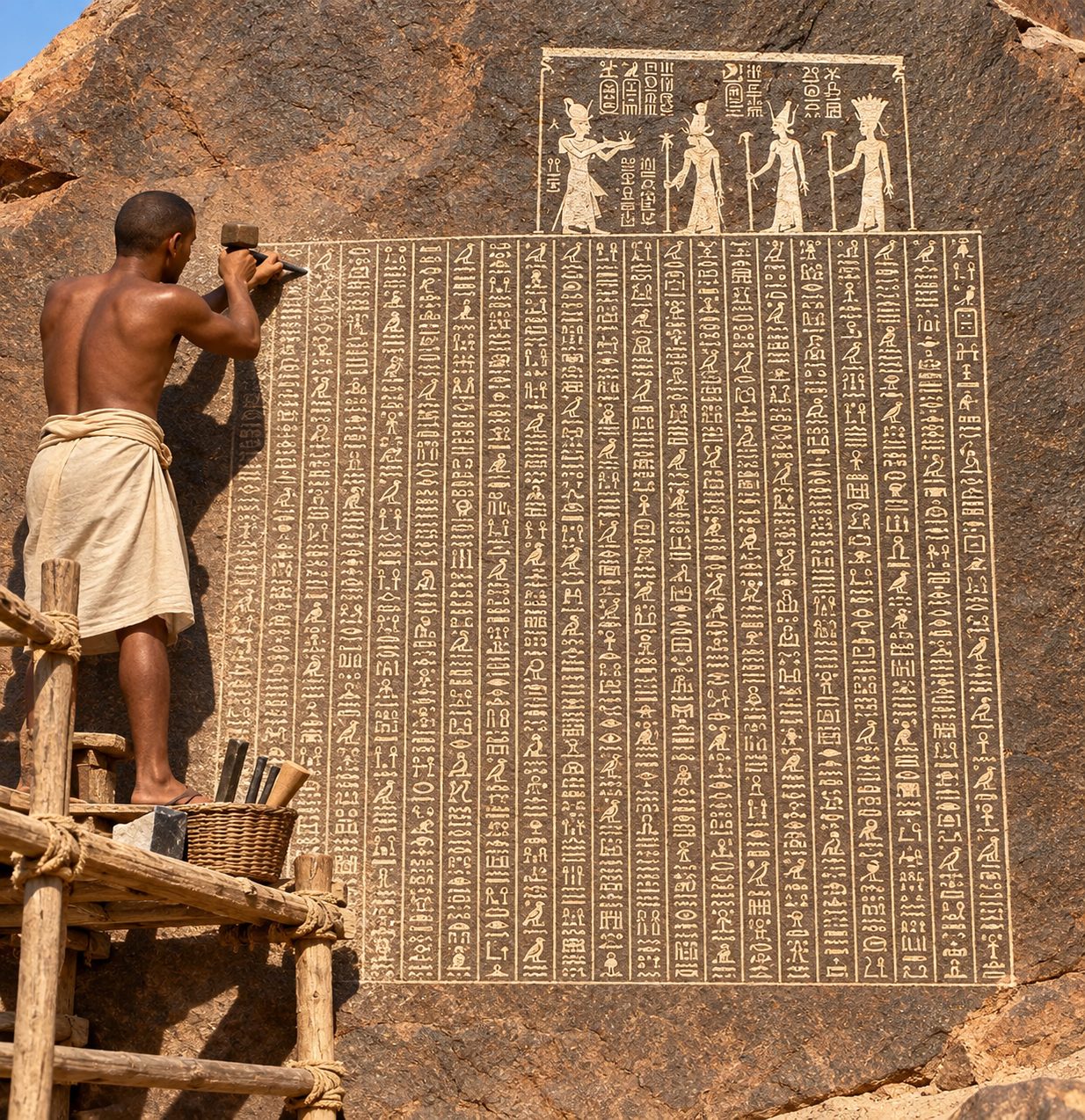
Rock inscriptions at Wadi Maghareh in Sinai show that Djoser sent expeditions there for turquoise and copper. Fragments of reliefs with his name come from Heliopolis and Gebelein, and he may have fixed the southern border of Egypt at the First Cataract. Djoser was remembered for a very long time. On Sehel Island near Aswan, priests of the Ptolemaic period carved the Famine Stela, which tells how in the eighteenth year of his reign the Nile had failed to flood for seven years, how Imhotep sought the cause and how the god Khnum of Elephantine promised that the river would rise again.
Summary
THEME SEVEN
Djoser opened the Third Dynasty and the Old Kingdom. In his reign royal building passed from mud brick to stone, and the first pyramid, the model for all later ones, rose at Saqqara. His monuments show a state able to organise work on a scale never seen before, and the pharaoh remained a revered figure for more than two thousand years.
Key dates
- 2592 BCEDjoser becomes pharaoh, according to E. Hornung (2006), and buries Khasekhemwy at Abydos.
- During his reignThe step pyramid is built at Saqqara, the first pyramid in Egypt.
- 2566 BCEDeath of Djoser and burial in the step pyramid. Sekhemkhet succeeds him.