
Home · Ancient History · Ancient Egypt · Old Kingdom
Djedefre
Djedefre, also read Radjedef, was a son of Khufu and the third pharaoh of the Fourth Dynasty. In the chronology of E. Hornung (2006) he reigned from 2482 to 2475 BCE. He completed his father's burial at Giza and then chose a new site for his own pyramid, on a high plateau at Abu Rawash. He was the first pharaoh to call himself "Son of Ra", a title every pharaoh used after him.
- Reign
- 2482 – 2475 BCE (E. Hornung, 2006). The Turin Canon gives 8 years. A builders' note of the 11th cattle count on a block from Khufu's boat pit may date from his reign and would point to a longer rule, but this is disputed
- Dynasty
- 4th
- Predecessor
- Khufu, his father
- Successor
- Khafre, his brother. A little-known pharaoh Baka (Bikheris) may have reigned briefly before or after Khafre
- Royal names
- Horus name Kheper, "he who has come into being". Birth name Djedefre, "he endures like Ra". The first pharaoh with the title "Son of Ra"
- Manetho
- Ratoises, 25 years, placed after Menkaure
- Burial
- His pyramid at Abu Rawash, about 8 km north of Giza
- Main sources
- His pyramid complex at Abu Rawash, fragments of his statues, among them a quartzite head now in the Louvre, the blocks over Khufu's boat pit, the Turin Canon, tombs of his family at Giza
Son and heir of Khufu
THEME ONE
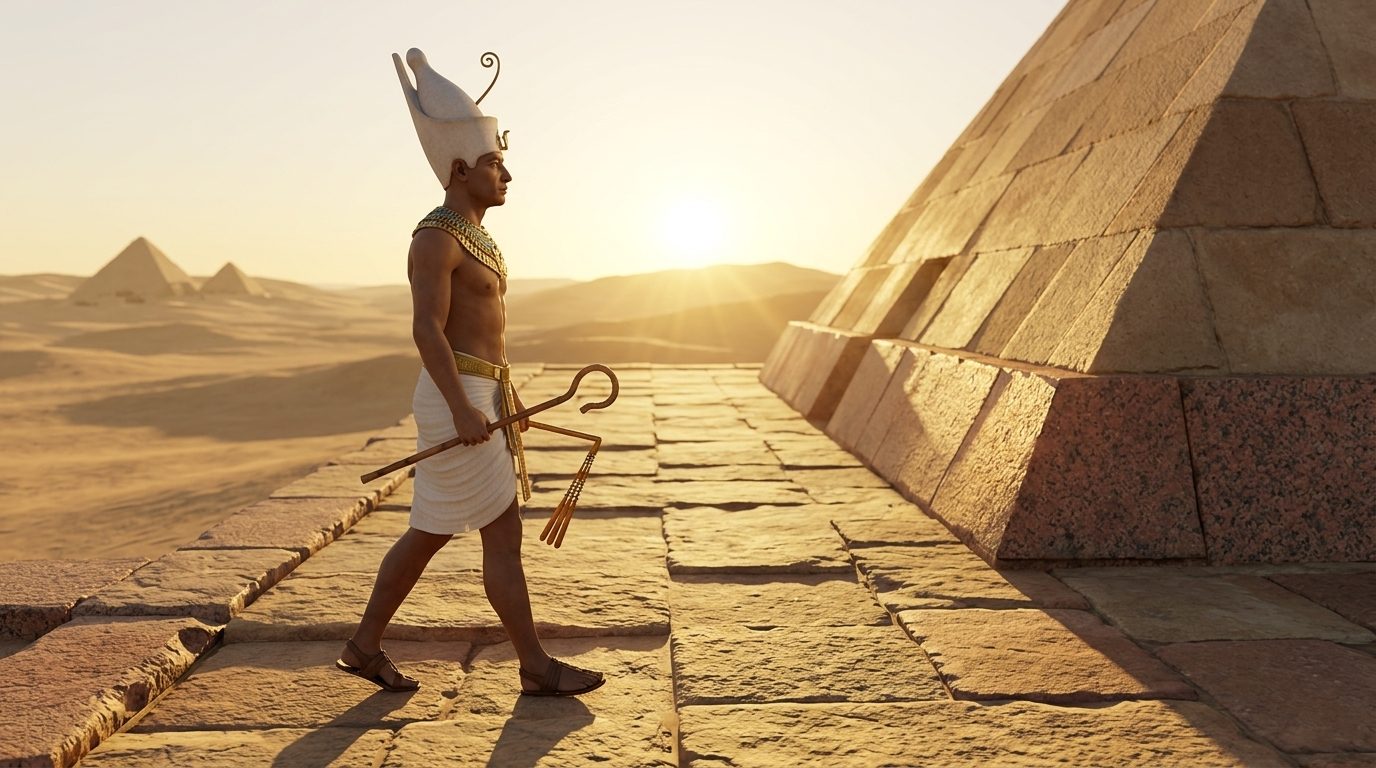
Djedefre was a son of Khufu, but the name of his mother is not known. An elder brother, Kawab, seems to have died before their father, and this may be why Djedefre became heir. His wives probably included Khentetka and his sister Hetepheres II, who may earlier have been married to Kawab. Several sons and a daughter, Neferhetepes, are attributed to him, but most of these family links are uncertain.
The burial of his father
THEME TWO
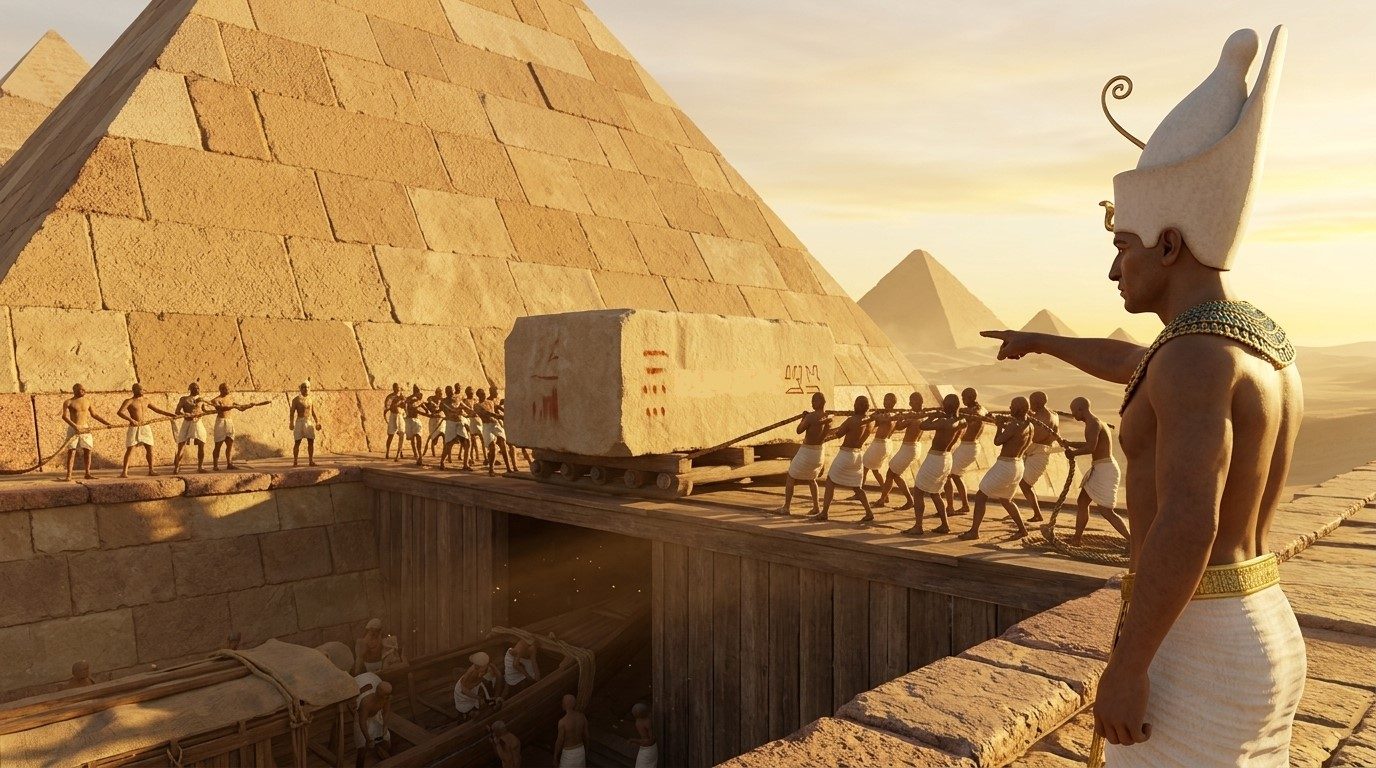
One of the first duties of a new pharaoh was to bury his predecessor. At the foot of the Great Pyramid lay a pit holding Khufu's great cedar boat, sealed with huge limestone blocks. Many of these blocks carry painted builders' notes with the name of Djedefre, so it was his workmen who closed the pit. This shows that he completed his father's funeral, which speaks against the old idea of a bitter quarrel over the throne.
The first Son of Ra
THEME THREE
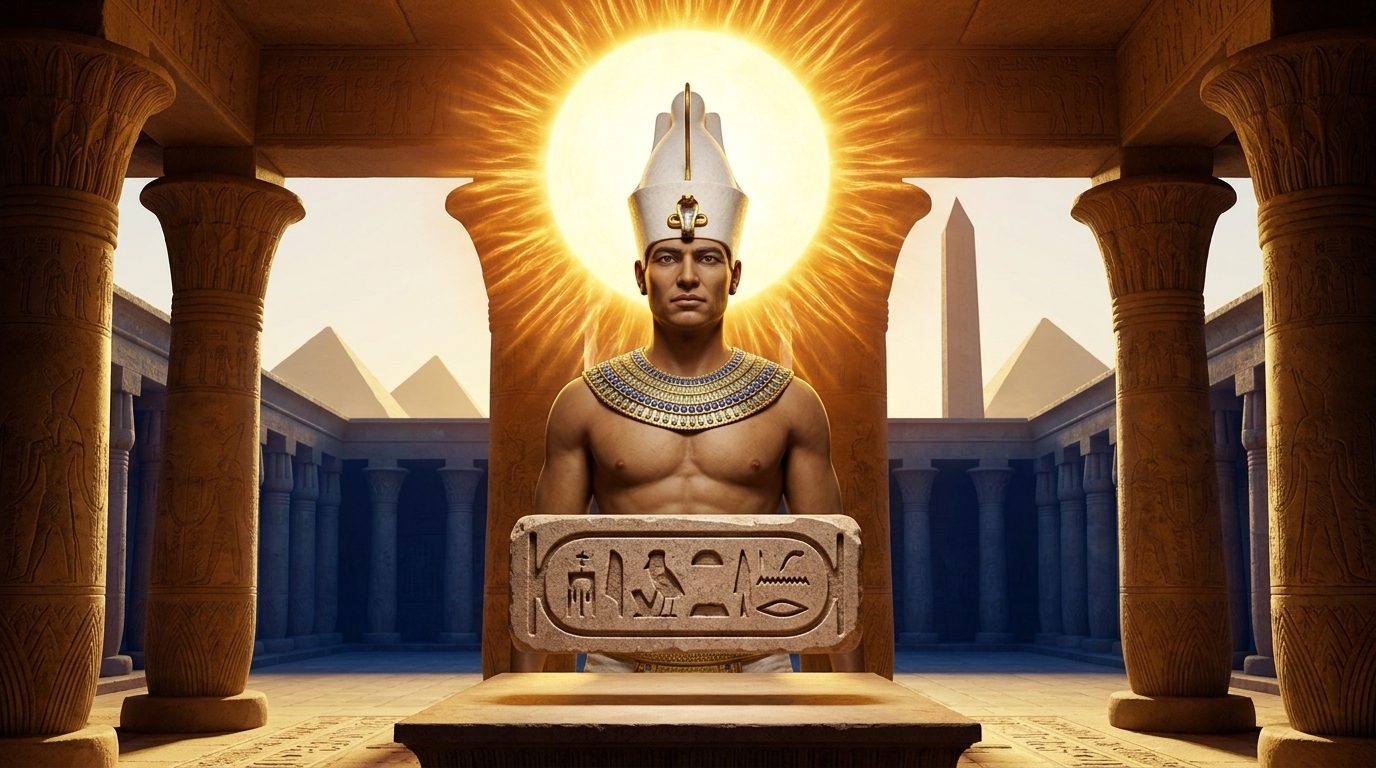
Djedefre is the first pharaoh known to have used the title "Son of Ra" before his name, and the first to join the sun god's name to his own in a cartouche. His name means "he endures like Ra". The title shows how important the sun cult of Heliopolis had become, and it became a fixed part of the royal titles for the rest of Egyptian history. His brother Khafre and the pharaohs of the Fifth Dynasty went even further in their devotion to Ra.
A pyramid at Abu Rawash
THEME FOUR
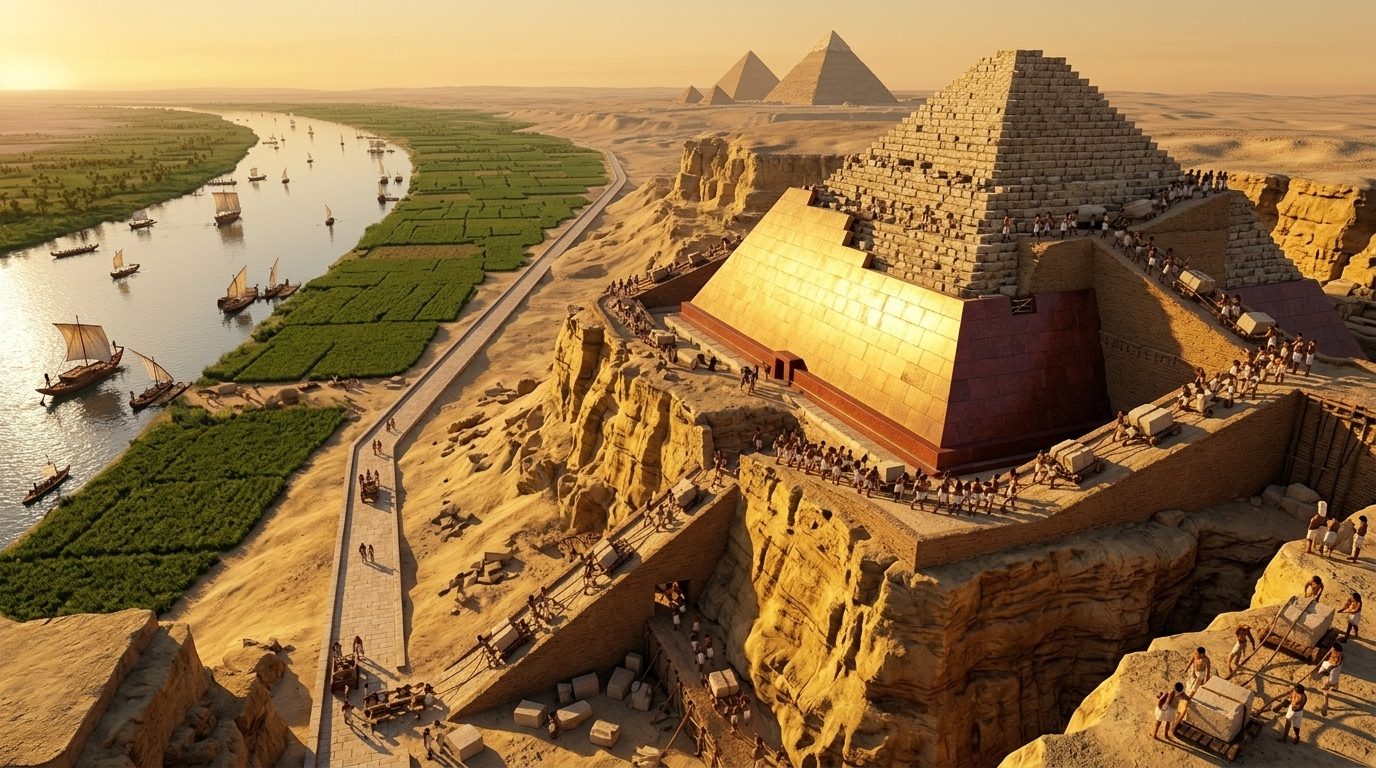
Djedefre did not build at Giza but about 8 km to the north, on a high plateau at Abu Rawash. Thanks to the height of the site his pyramid would have stood higher above the valley than any other. Its base measured about 106 metres a side and its height is estimated at about 67 metres. A natural rock knoll formed almost half of its core, and the lowest courses were cased in red granite. The burial rooms were built in a deep open pit and then covered by the pyramid. A long causeway led down towards the valley.
Statues of red quartzite
THEME FIVE
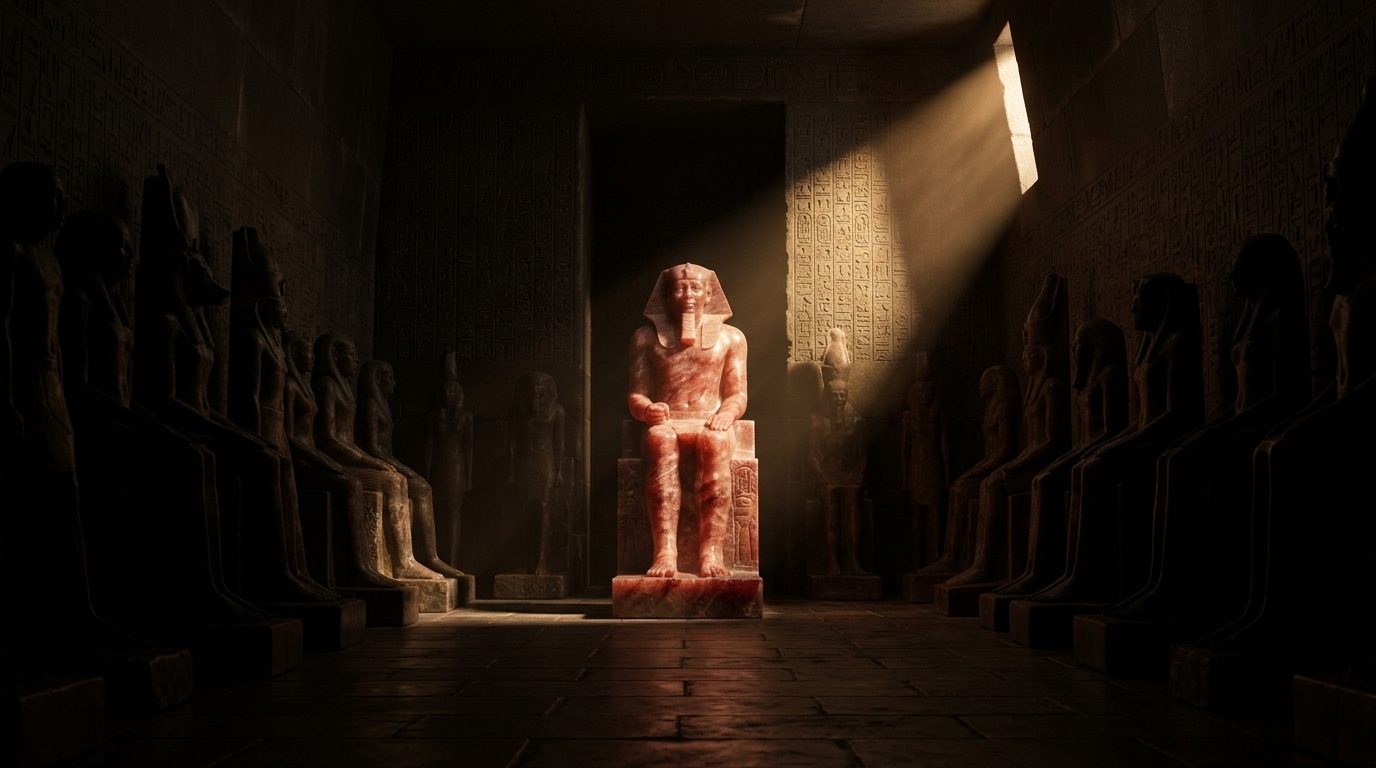
In 1900 and 1901 the French archaeologist Émile Chassinat found in the temple beside the pyramid many fragments of royal statues, most of them of hard red quartzite. The finest piece, a head of Djedefre wearing the royal headcloth, is now in the Louvre. Among the finds was also a small sphinx, one of the earliest known from Egypt. A few scholars have even suggested that Djedefre carved the Great Sphinx of Giza for his father, but most still attribute it to Khafre.
A wronged pharaoh
THEME SIX
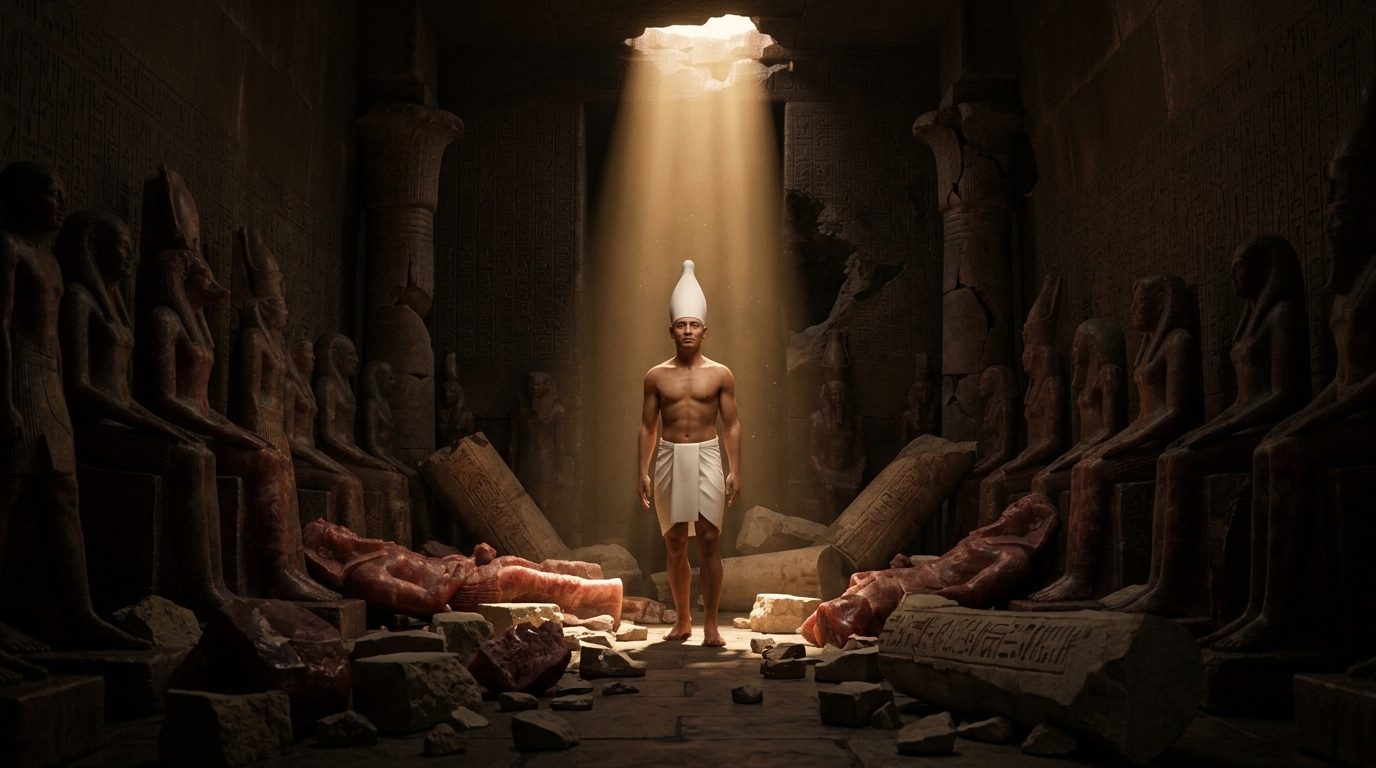
Because his statues were found smashed and his pyramid in ruins, older historians thought that Djedefre had seized the throne, perhaps by killing his brother Kawab, and that his memory was hated after his death. The Swiss excavations of Michel Valloggia from 1995 to 2005 changed this picture. The pyramid had in fact been completed, and its ruin was the work of stone robbers from the end of the New Kingdom onwards, above all in Roman and early Christian times. Herodotus does not mention Djedefre at all, and only the king lists kept his name.
Summary
THEME SEVEN
Djedefre reigned only a few years between two of the greatest pyramid builders, his father Khufu and his brother Khafre. He buried his father with due honour, raised his own pyramid on the highest site of the Memphite region and gave the pharaohs their lasting title "Son of Ra".
Key dates
- 2482 BCEDjedefre becomes pharaoh after his father Khufu, according to E. Hornung (2006).
- Early in his reignHis workmen close the pit of Khufu's boat at Giza, and work begins on his own pyramid at Abu Rawash.
- 2475 BCEDeath of Djedefre and burial at Abu Rawash. The throne passes to his brother Khafre.