
Home · Ancient History · Ancient Egypt · Old Kingdom
Menkauhor
Menkauhor, also called Ikauhor, was the seventh pharaoh of the Fifth Dynasty. In the chronology of E. Hornung (2006) he reigned from 2373 to 2366 BCE. Few objects of his reign survive. He built the last of the temples of the sun and left Abusir to be buried at Saqqara, probably in the pyramid known today as the Headless Pyramid. In the New Kingdom, a thousand years after his death, Egyptians worshipped him as a god.
- Reign
- 2373 – 2366 BCE (E. Hornung, 2006). The Turin Canon gives 8 years, Manetho 9
- Dynasty
- 5th
- Predecessor
- Nyuserre Ini. Whether he was Menkauhor's father, uncle or another relative is not known
- Successor
- Djedkare Isesi, whose relationship to him is unknown
- Royal names
- Horus name Menkhau, "eternal of appearances". Throne name Menkauhor, "eternal are the kas of Horus". Birth name Kaiu
- Manetho
- Mencheres, 9 years
- Burial
- Probably the Headless Pyramid at North Saqqara, called Netjer-isut-Menkauhor, "divine are the places of Menkauhor"
- Main sources
- King lists of Abydos, Saqqara and Turin, an alabaster statuette from Memphis, a rock inscription in Sinai, seal impressions and stone vessels, titles of priests of his sun temple and pyramid
A pharaoh with few traces
THEME ONE
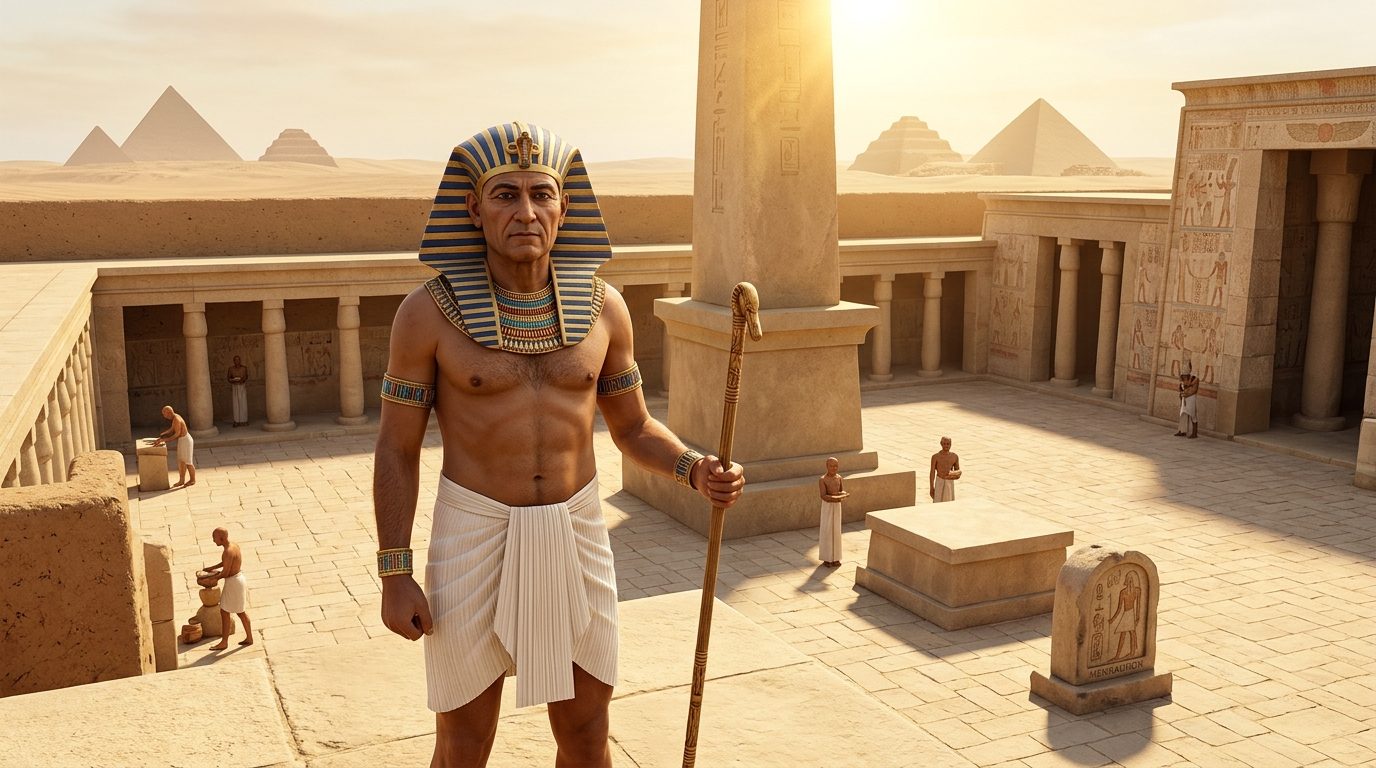
Menkauhor is named in all three great king lists of the New Kingdom, but only a few seal impressions, stone vessels and inscriptions of his own time survive. His family is uncertain. He may have been a son of Nyuserre or of Neferefre, and his mother may have been a queen Khentkaus III, whose tomb was found at Abusir in 2015. His throne name, "eternal are the kas of Horus", is the first royal name in about eighty years without the name of Ra.
The last sun temple
THEME TWO
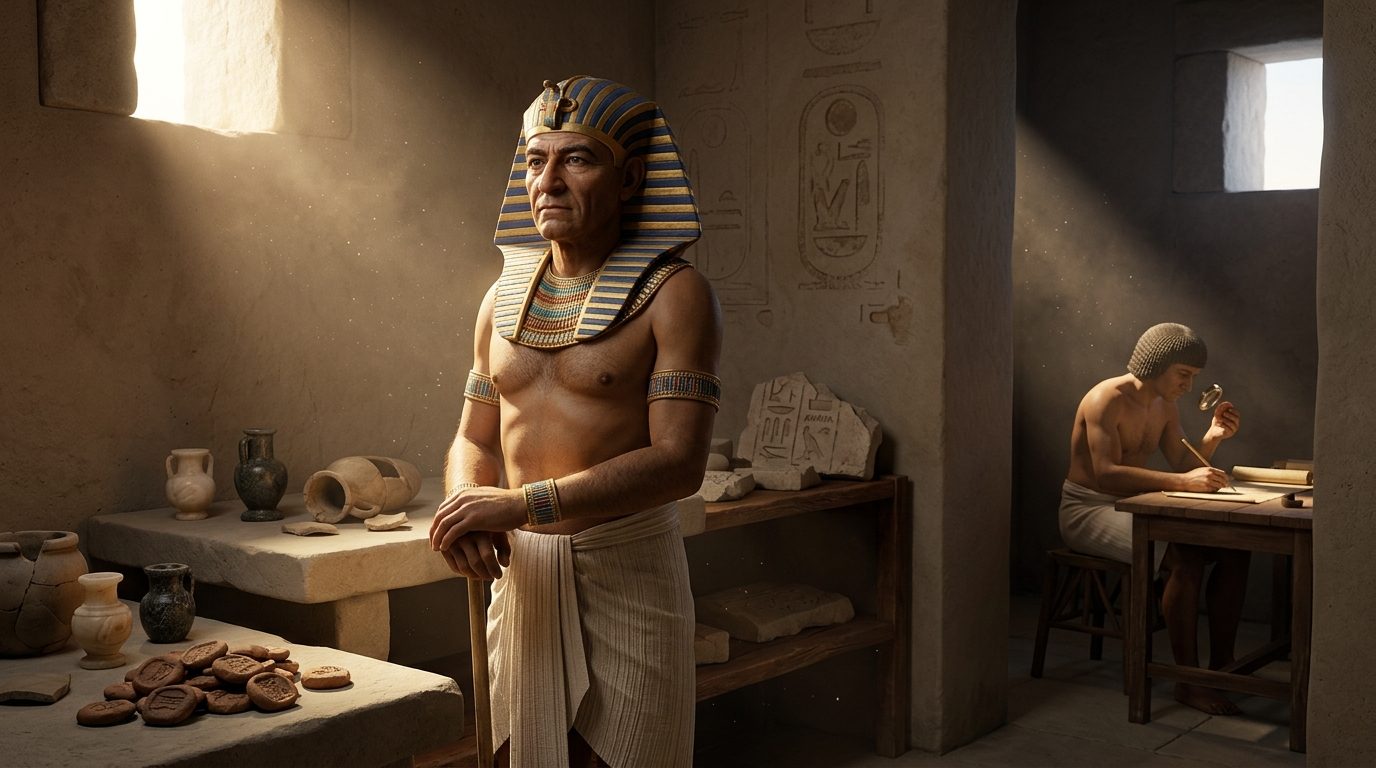
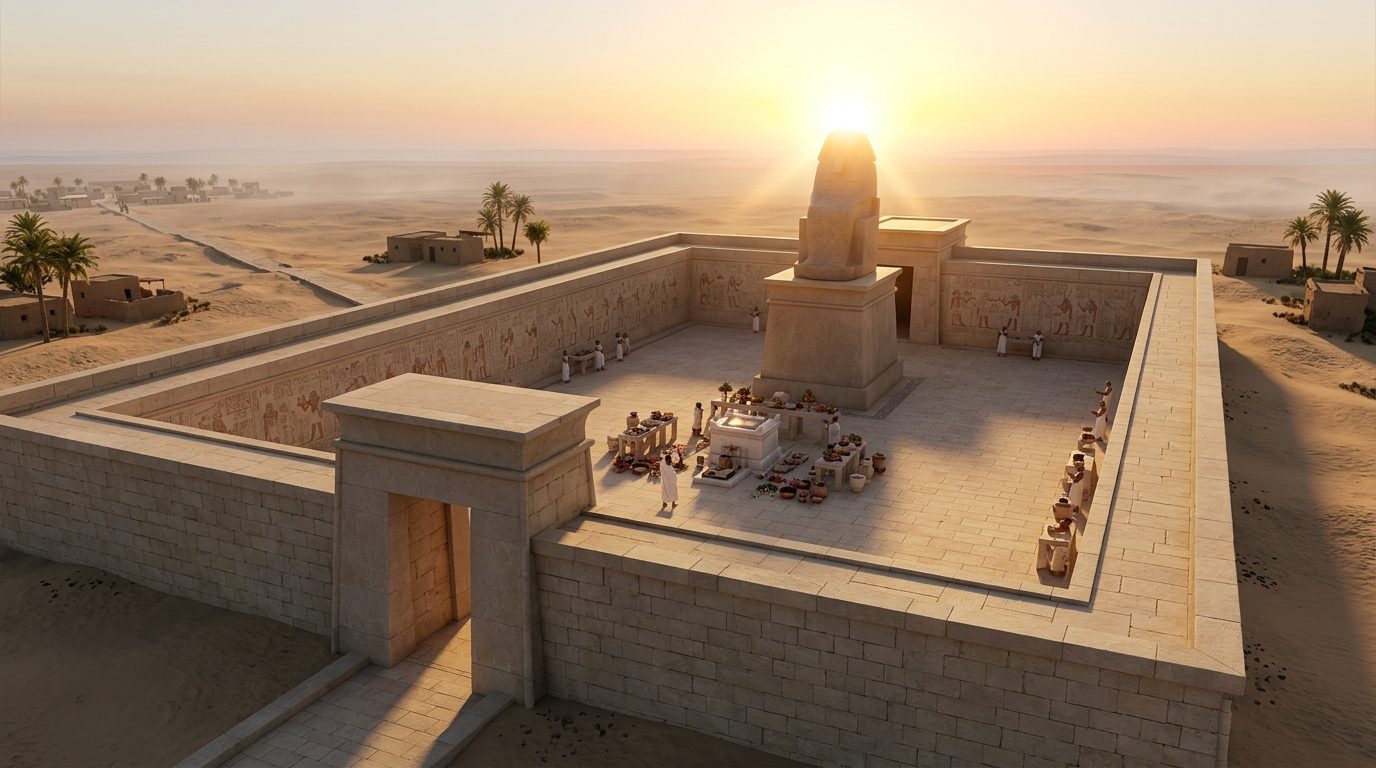
Like the pharaohs before him, Menkauhor founded a temple for the sun god. It was called Akhetre, "horizon of Ra", and it is known from the titles of its priests and from seal impressions. It was the last sun temple ever built. Its site has not been found, and it may have stood near Abusir or near his tomb at Saqqara. His successors stopped building such temples, although the sun god kept his central place in religion.
The Headless Pyramid
THEME THREE
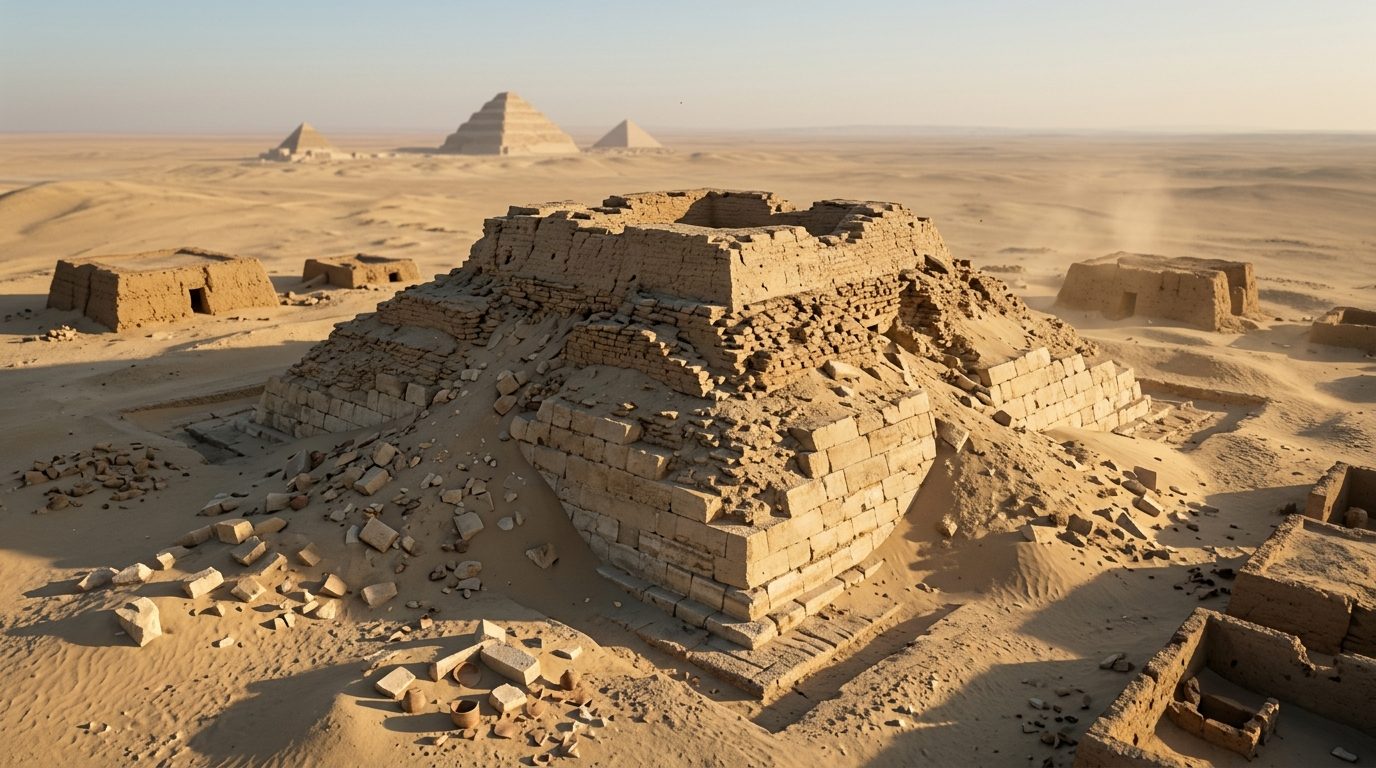
Menkauhor did not build at Abusir. At North Saqqara, east of the pyramid of Teti, lies a small ruined pyramid whose upper part has completely disappeared, so it is called the Headless Pyramid. It was recorded in the 19th century, lost again under the sand and rediscovered in 2008 by the team of Zahi Hawass. No name was found in it, but it is usually attributed to Menkauhor, because the tombs of all the other pharaohs of the period are known and its small size suits a short reign. Some scholars think it belongs to a later pharaoh.
An expedition to Sinai
THEME FOUR
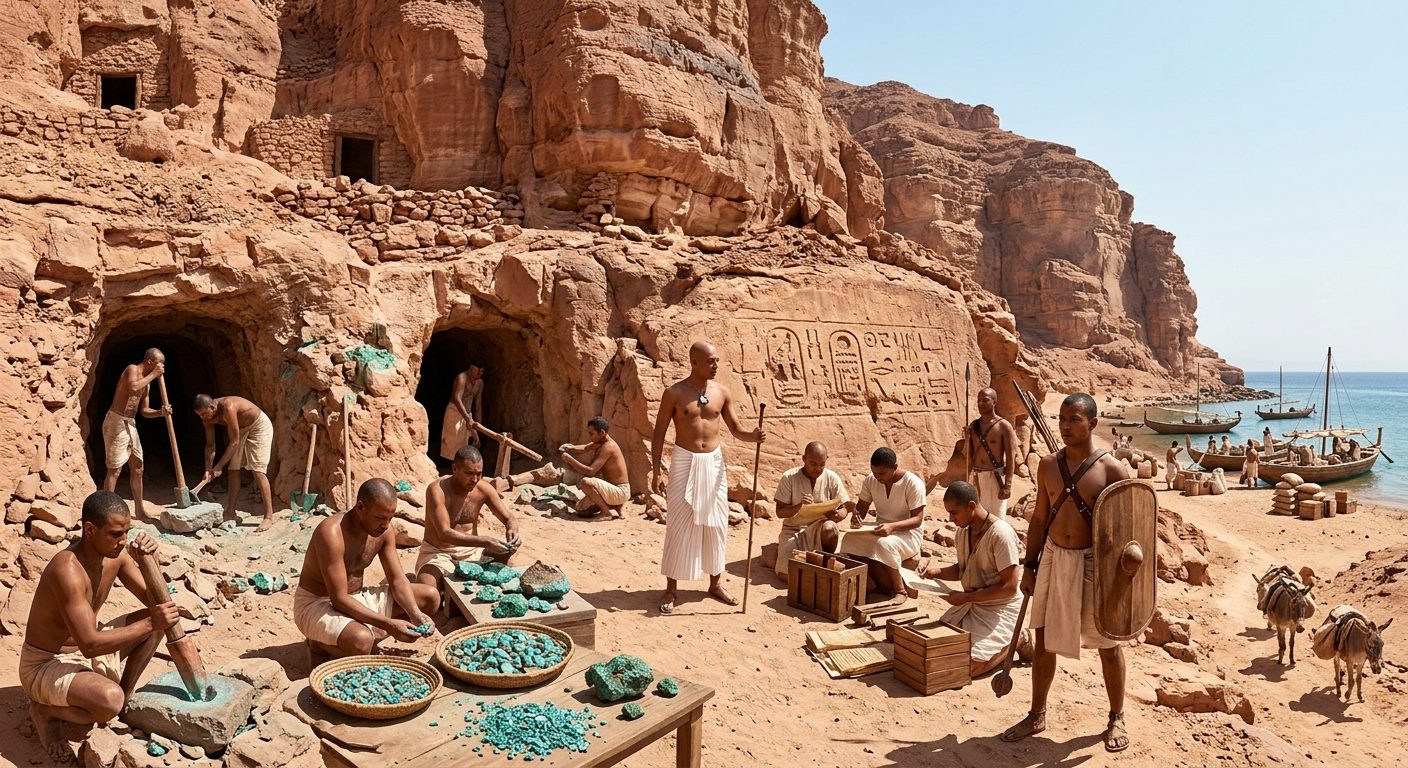
Like his predecessors, Menkauhor sent workers to the copper and turquoise mines of Wadi Maghara in Sinai. A damaged rock inscription there gives his full titles and records the expedition. Turquoise was prized for jewellery and inlays, and copper was needed for tools and weapons. Such expeditions needed boats, supplies and armed escorts, and they show that the royal administration was still working well under this little-known pharaoh.
A small statue of alabaster
THEME FIVE
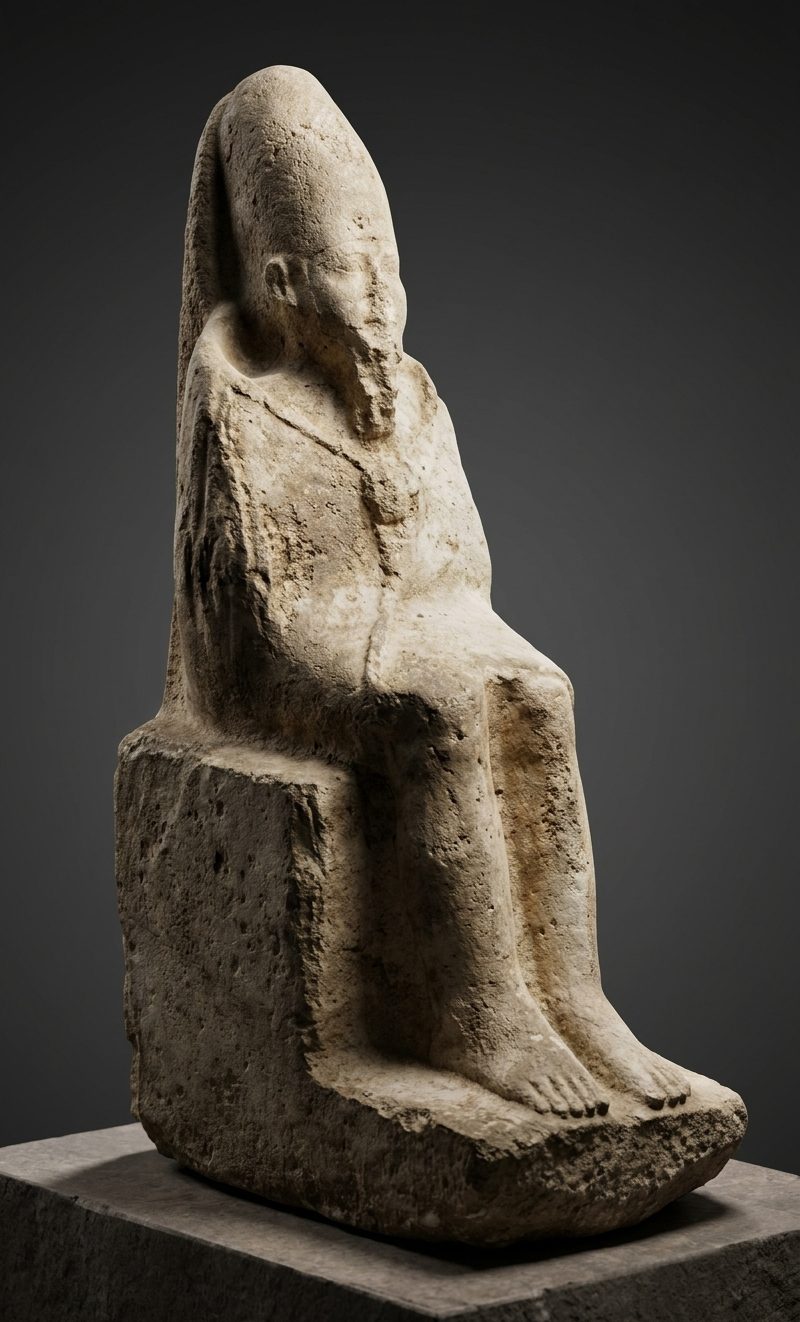
The only certain portrait of Menkauhor from his own time is a small seated statue of alabaster, found in a cache of statues at the temple of Ptah in Memphis and now in the Egyptian Museum in Cairo. The pharaoh wears the tight cloak of the Sed festival, the jubilee in which his power was renewed. Since his reign was short, the statue may show his hope of such a festival rather than a jubilee he really celebrated.
A god a thousand years later
THEME SIX
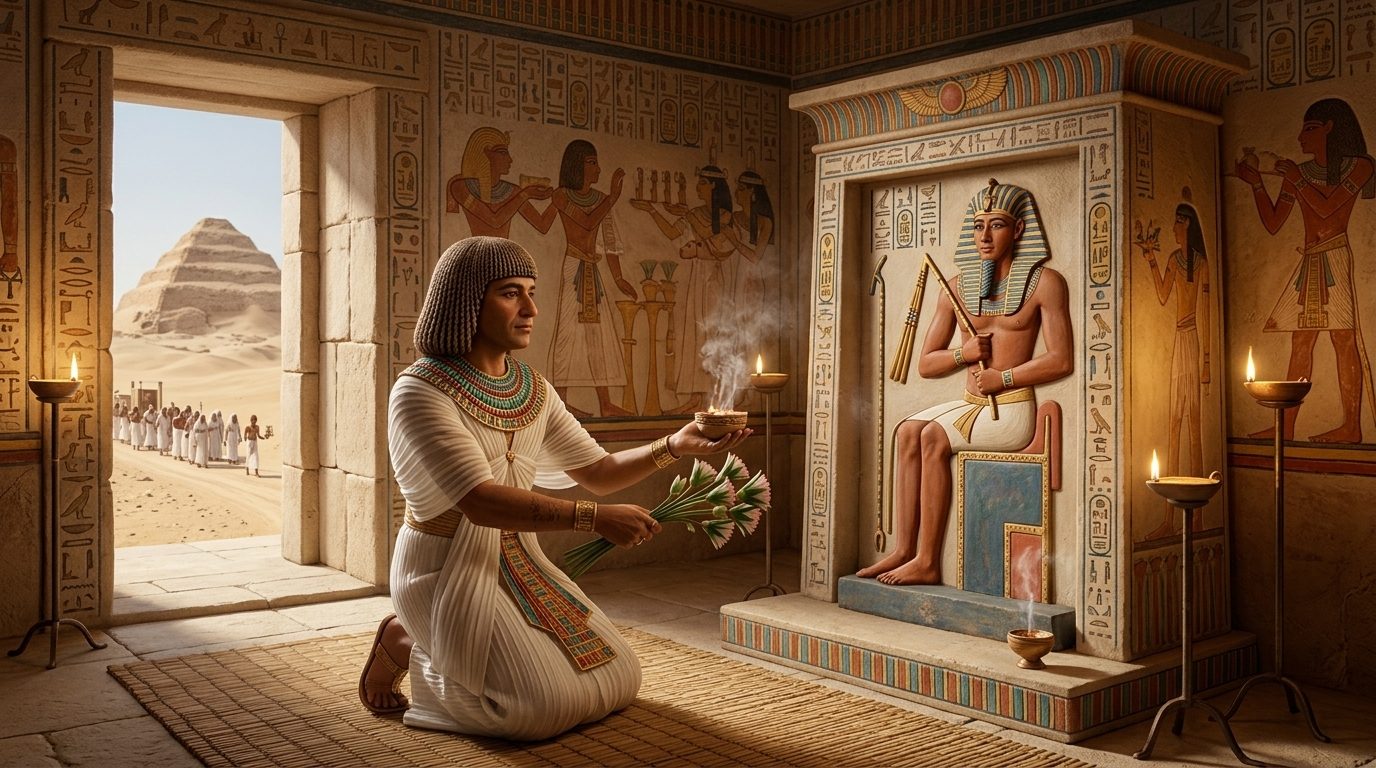
The cult of Menkauhor at his pyramid continued after his death, but the most surprising part of his story came much later. In the New Kingdom he was worshipped at Saqqara as a local god, "the strong lord of the Two Lands Menkauhor", and officials of that time showed themselves in their tombs praying before him. Other old pharaohs, such as Djoser, Teti and Userkaf, were honoured in the same way, but his cult was among the most lasting and continued into the Nineteenth Dynasty, about 1,200 years after his death. Perhaps it helped that his pyramid stood on the road to the burial place of the sacred Apis bulls.
Summary
THEME SEVEN
Menkauhor ruled only about eight years and left few monuments. He closed the age of the sun temples and moved the royal tombs back from Abusir to Saqqara, where his successors would also build. A thousand years later he was worshipped as a god at Saqqara.
Key dates
- 2373 BCEMenkauhor becomes pharaoh after Nyuserre, according to E. Hornung (2006).
- 2366 BCEDeath of Menkauhor, probably buried at North Saqqara. Djedkare Isesi succeeds him.
- 2008The Headless Pyramid at Saqqara, probably his tomb, is rediscovered under the sand.