
Home · Ancient History · Ancient Egypt · Old Kingdom
Menkaure
Menkaure, called Mycerinus by the Greeks, was a son of Khafre and one of the last pharaohs of the Fourth Dynasty. In the chronology of E. Hornung (2006) he reigned from 2447 to 2442 BCE, although other sources suggest a longer reign. He built the third pyramid of Giza, much smaller than those of his father and grandfather but partly cased in red granite, and his temples have given us some of the most beautiful statues of the Old Kingdom. Later tradition remembered him as a just and pious king.
- Reign
- 2447 – 2442 BCE (E. Hornung, 2006). The damaged Turin Canon is usually restored as 18 years, and a graffito mentions the year after the 11th cattle count, which suggests about 20 years. Manetho gives 63 years
- Dynasty
- 4th
- Predecessor
- Khafre, his father
- Successor
- Shepseskaf, probably his son, the last pharaoh of the 4th Dynasty
- Royal names
- Horus name Kakhet. Birth name Menkaure, "eternal are the kas of Ra". Greek form Mycerinus
- Manetho
- Mencheres, 63 years
- Burial
- The third pyramid of Giza
- Main sources
- His pyramid with its mortuary and valley temples, the triads and the pair statue from the valley temple, a graffito from a quarry, the Turin Canon, Herodotus, a wooden coffin of the Saite period from his pyramid
Heir of the great builders
THEME ONE
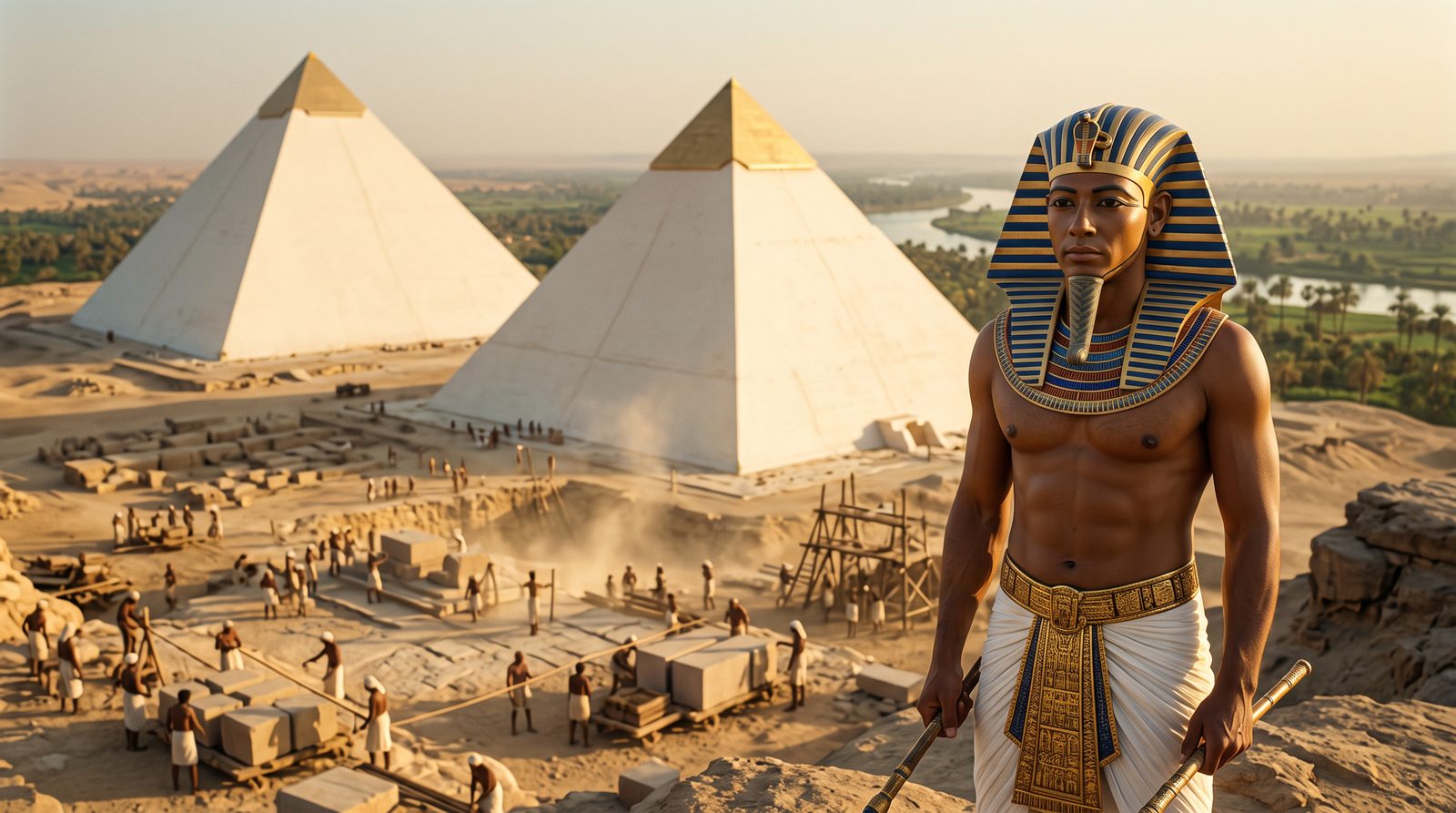
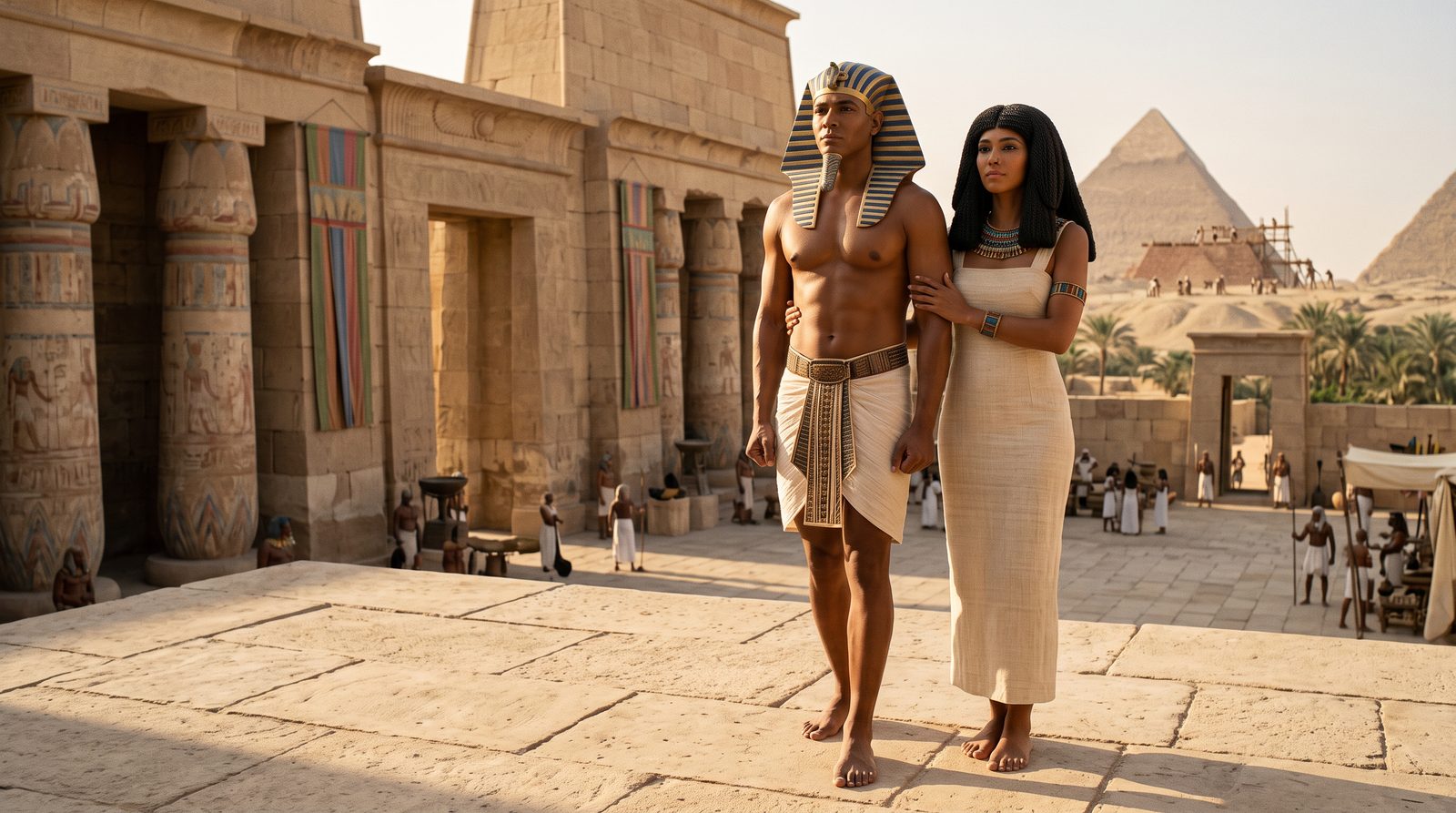
Menkaure was a son of Khafre and a grandson of Khufu, and his mother was probably Queen Khamerernebty I. His name means "eternal are the kas of Ra". His chief wife was Khamerernebty II, and his eldest son Khuenre died before him. When Menkaure came to the throne, the two largest pyramids already stood at Giza. He chose a place at the southern edge of the plateau, perhaps because little space was left, perhaps because the state could no longer afford monuments on the scale of his ancestors.
The third pyramid
THEME TWO
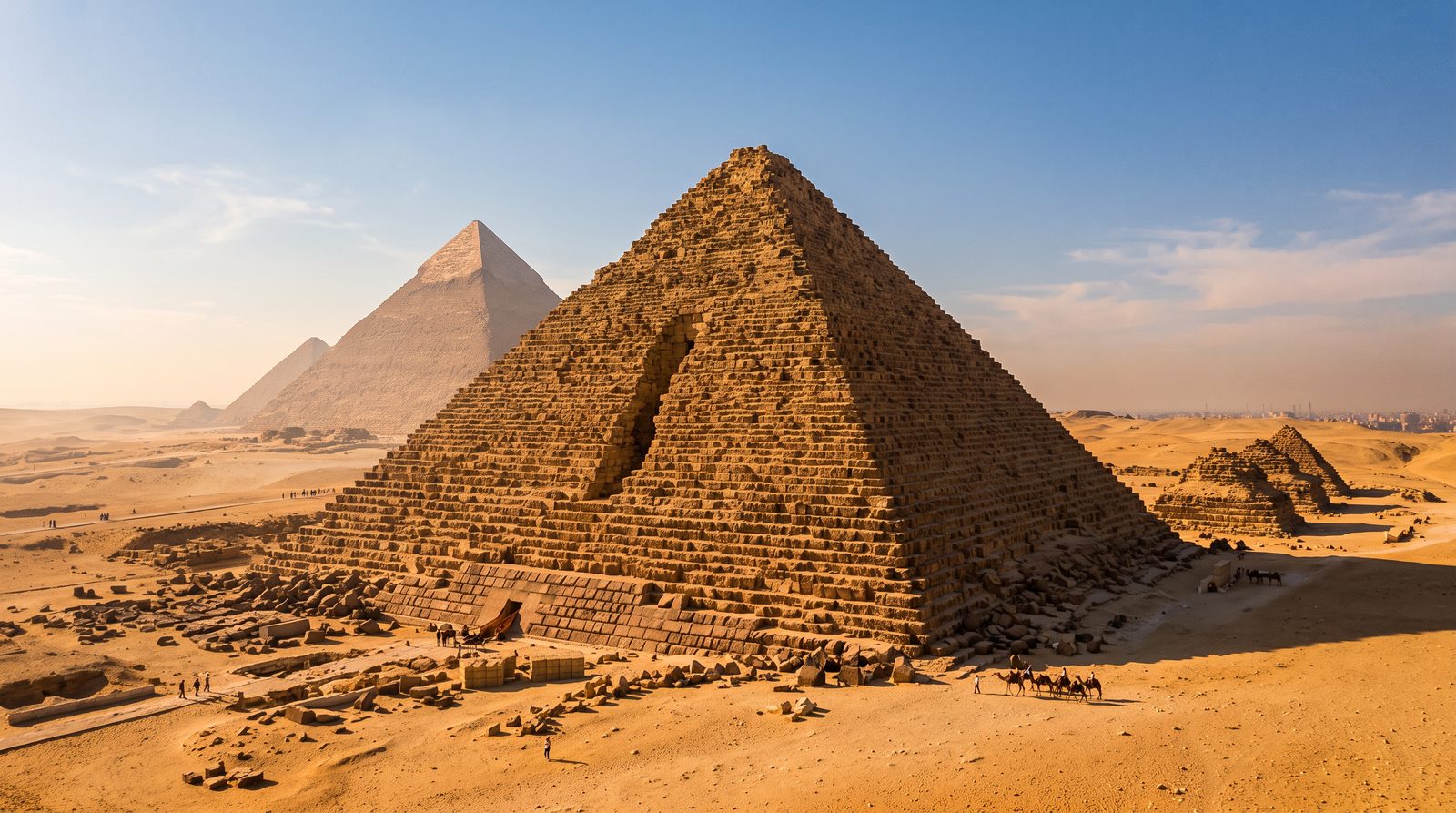
The pyramid of Menkaure was originally about 65 metres high, with a base of about 103 by 105 metres, less than a tenth of the volume of the Great Pyramid. Its lower part was cased with blocks of red granite brought from Aswan, far to the south, and many of them were never smoothed, a sign that the work stopped when the king died. To the south stand three small pyramids for queens. The Egyptians called the pyramid "Menkaure is divine". In 1196 CE a sultan of Egypt tried to demolish it, but after months of work his men had only torn a deep gash into its north side.
The triads and the pair statue
THEME THREE
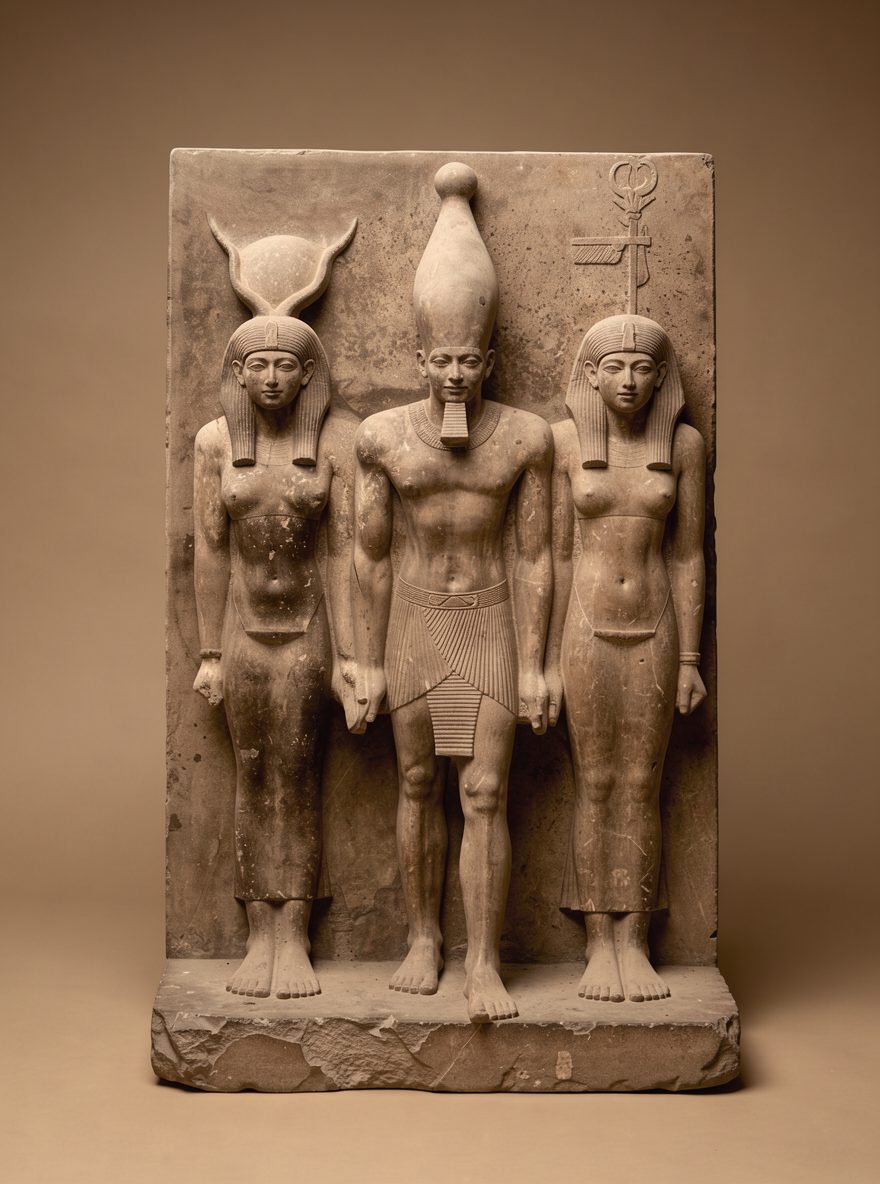
Between 1908 and 1910 the American archaeologist George Reisner excavated Menkaure's valley temple and found some of the masterpieces of Egyptian sculpture. Several triads in dark greywacke show the king between the goddess Hathor and a goddess who stands for one of the provinces of Egypt. A pair statue shows him with his queen, who puts her arm around his waist, and is now in the Museum of Fine Arts in Boston. The faces of these statues are among the most lifelike portraits of an Old Kingdom pharaoh.
The sarcophagus lost at sea
THEME FOUR
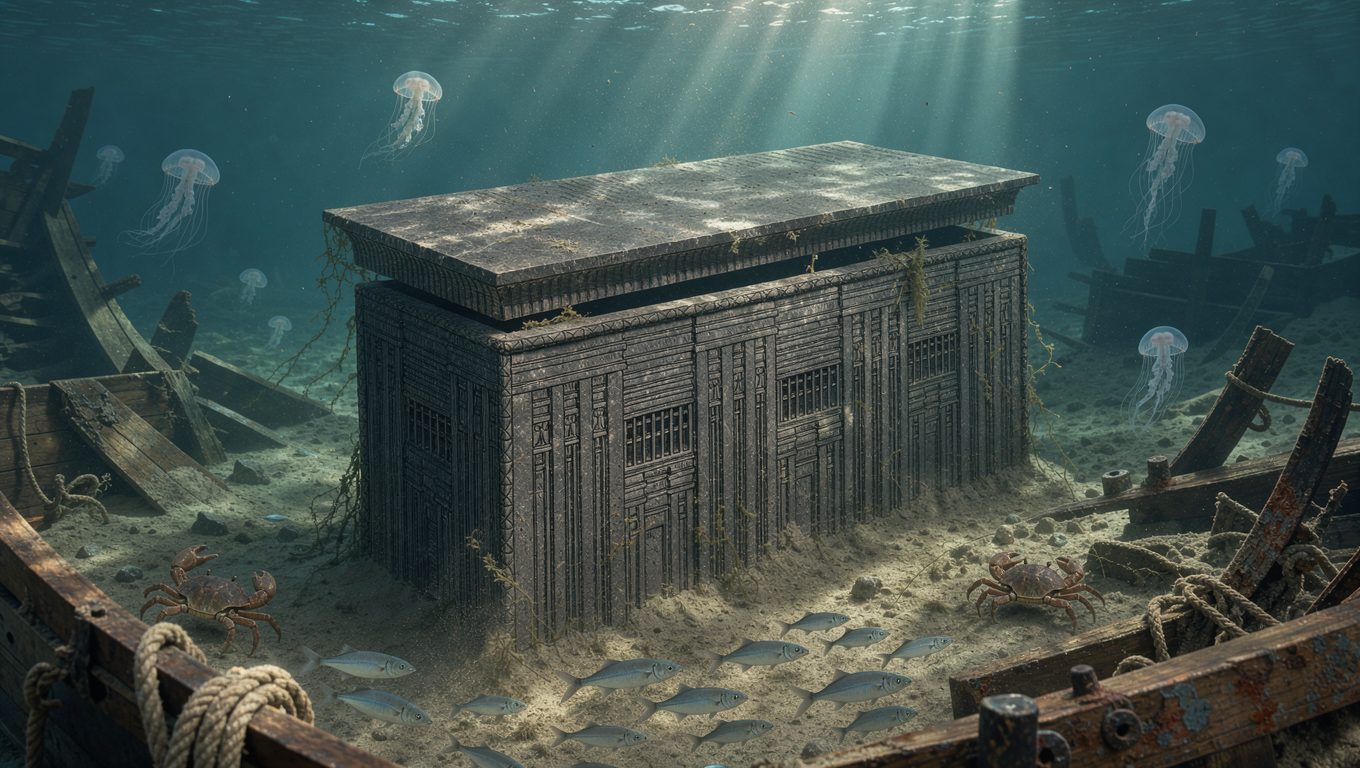
In 1837 the British explorers Richard Howard Vyse and John Perring entered the pyramid and found in the burial chamber a large stone sarcophagus decorated like the front of a palace. They sent it to the British Museum, but the ship Beatrice, which carried it, sank in the Mediterranean in October 1838 after leaving Malta. In the pyramid they also found a wooden coffin with Menkaure's name and human bones. The coffin was made almost two thousand years after his death, when priests of the Saite period restored old royal burials, and the bones date from the first centuries CE.
The just king of Herodotus
THEME FIVE
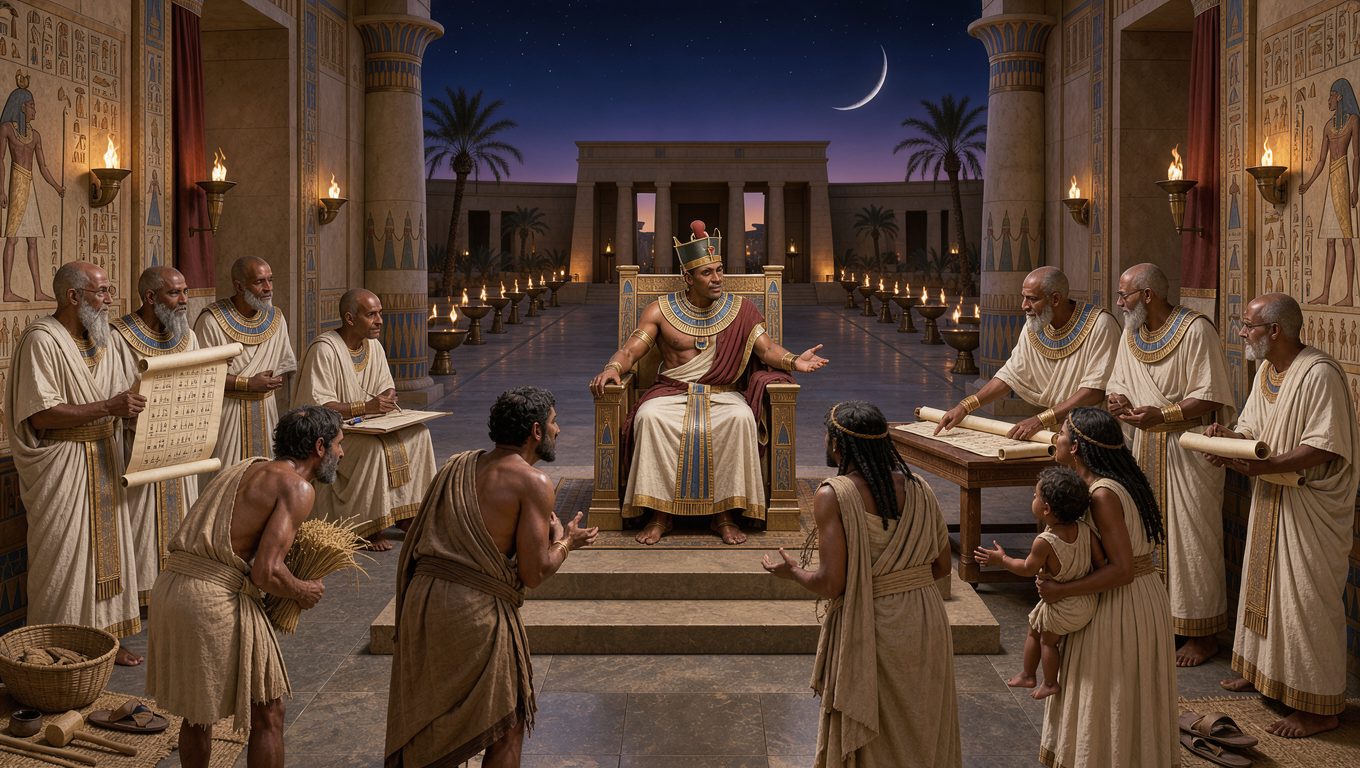
Herodotus tells that Mycerinus, unlike Cheops and Chephren, opened the temples again and judged his people more justly than any king before him. When the oracle of Buto announced that he would live only six more years, he complained that the gods punished him for being good. He then had lamps lit every night and feasted day and night, to turn six years into twelve and prove the oracle wrong. The story is a legend, but it shows that Menkaure was remembered as a pious and merciful ruler.
Completed by his successor
THEME SIX
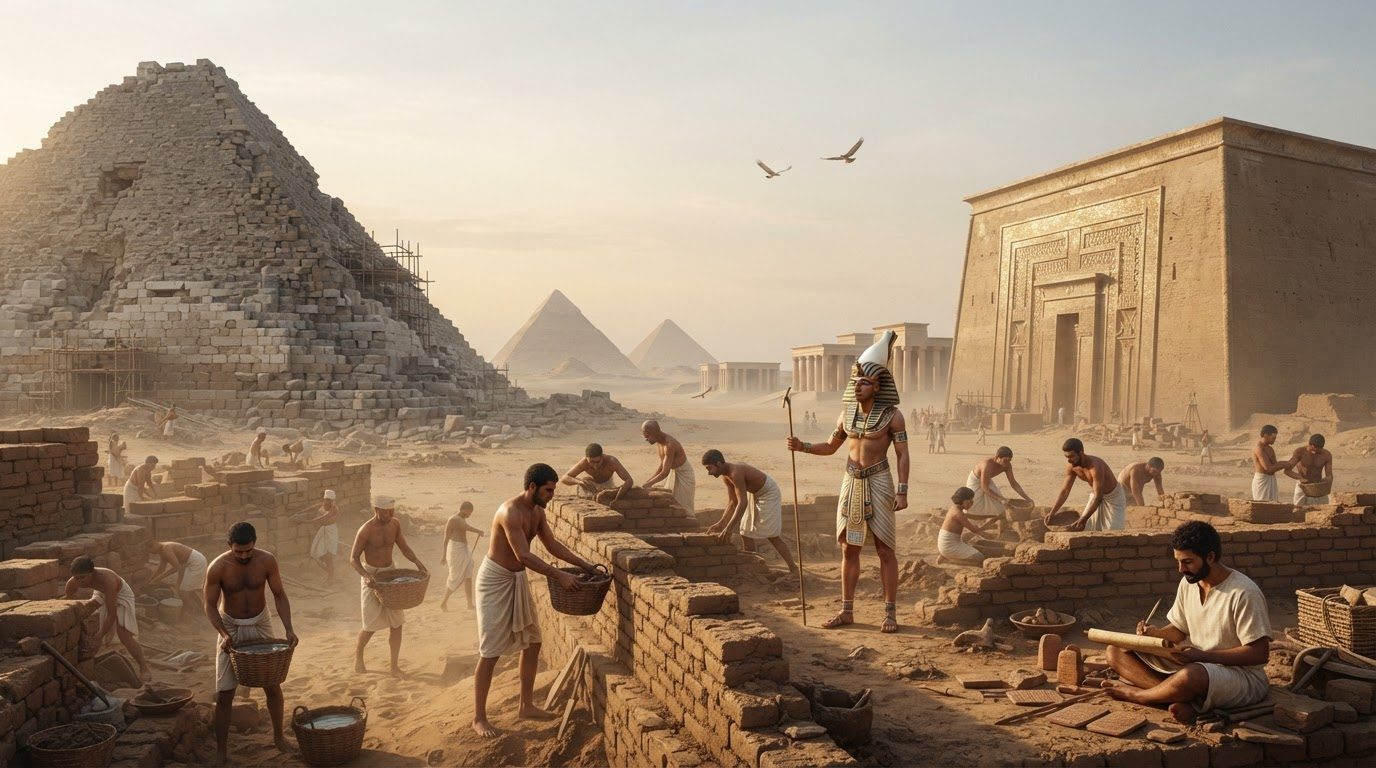
Menkaure died before his monuments were finished. His successor Shepseskaf completed the temples quickly in mud brick instead of stone and issued a decree, found in the mortuary temple, that protected the king's cult. Shepseskaf himself built no pyramid but a large tomb in the shape of a sarcophagus at South Saqqara, the Mastabat Faraun. With him the Fourth Dynasty came to an end, and the kings of the Fifth Dynasty built smaller pyramids and great temples of the sun god.
Summary
THEME SEVEN
Menkaure's pyramid is the smallest of the three at Giza, but his reign produced the finest royal sculpture of the Old Kingdom. With him the age of the giant pyramids drew to a close, and the memory of a just and gentle ruler outlived the stories told of his harsh predecessors.
Key dates
- 2447 BCEMenkaure succeeds his father Khafre, according to E. Hornung (2006).
- During his reignThe third pyramid of Giza and its temples are built. Sculptors carve the triads and the pair statue.
- 2442 BCEDeath of Menkaure. His successor Shepseskaf completes the temples in mud brick.