Home · Ancient History · Ancient Egypt · Old Kingdom
Huni
Huni was the last pharaoh of the Third Dynasty. In the chronology of E. Hornung (2006) his reign ended in 2544 BCE, when Sneferu, the founder of the Fourth Dynasty, came to the throne. Later Egyptians remembered him well, yet very few objects from his time survive and his Horus name is unknown. He is linked with a granite cone from Elephantine, with small step pyramids along the Nile and with officials whose tomb inscriptions show the state of the Old Kingdom taking shape.
- Reign
- Until 2544 BCE (E. Hornung, 2006). The Turin Canon gives 24 years
- Dynasty
- 3rd (last pharaoh)
- Predecessor
- Sanakht, in the chronology used on this site. In the Turin Canon the name of his predecessor is lost (Hudjefa)
- Successor
- Sneferu, the first pharaoh of the 4th Dynasty
- Royal names
- Cartouche name Huni, perhaps originally Nisut-Hu (reading disputed). Horus name unknown, perhaps Qahedjet or Khaba (both disputed). The Abydos list gives an unknown Neferkara in his place
- Manetho
- Uncertain, perhaps Aches or Kerpheres
- Burial
- Unknown. Proposed: the Layer Pyramid, mastaba M17 at Meidum or mastaba AS-54 at Abusir
- Main sources
- A granite cone from Elephantine, a stone bowl from Abusir, the tomb inscriptions of Metjen, the Palermo Stone, the Prisse Papyrus (Instruction for Kagemni), the king lists of Saqqara and Turin
A famous name, few traces
THEME ONE
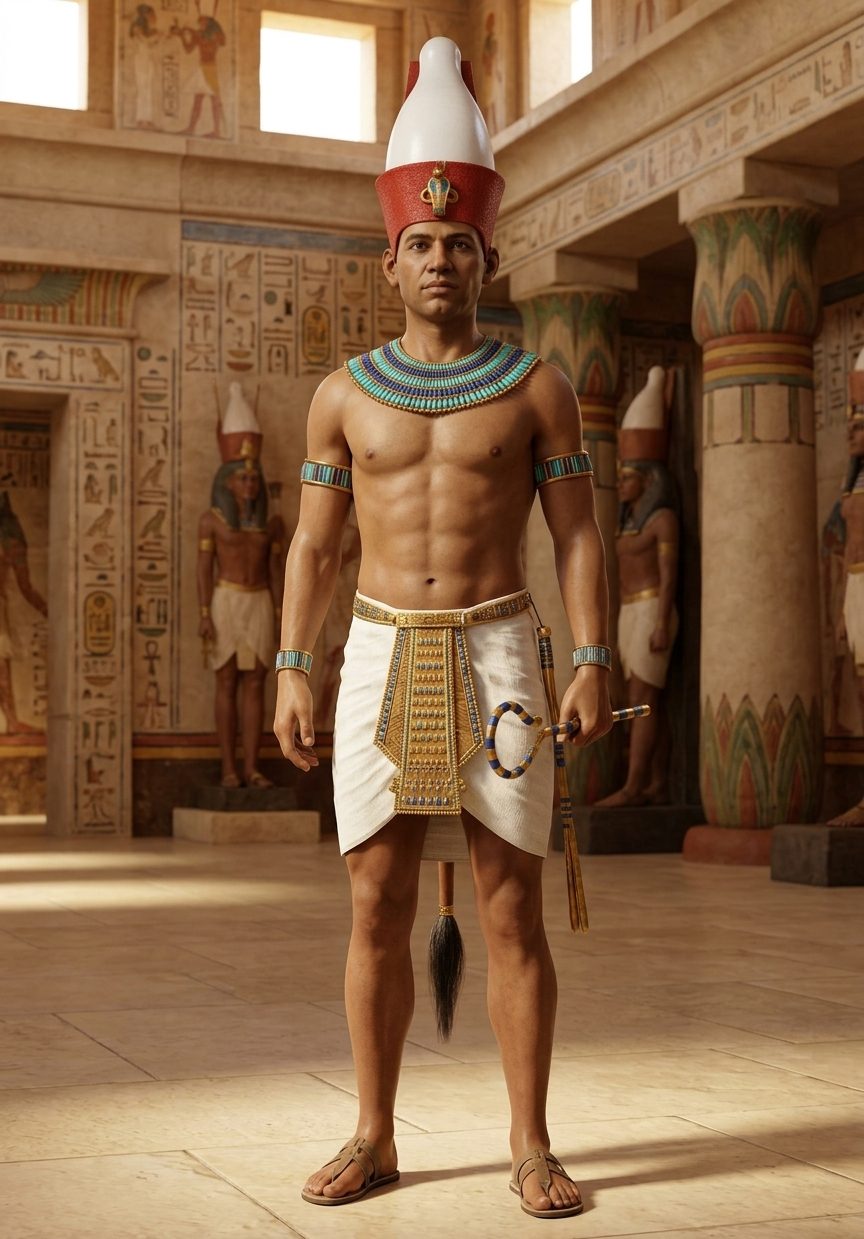
Huni is known almost only by a name written in a cartouche, and very little about him is certain. Only two objects of his own time bear his name: a granite cone from Elephantine and a polished stone bowl found in 2007 in a tomb at Abusir. Even the reading of the name is disputed, because the scribes of the New Kingdom misunderstood the old signs, and the original form was perhaps Nisut-Hu. His Horus name is unknown. Some Egyptologists identify him with Horus Khaba, others with Horus Qahedjet, known from a stele in the Louvre whose date and authenticity are disputed. The Abydos list omits him altogether and gives an unknown king Neferkara in his place.
The cone of Elephantine
THEME TWO
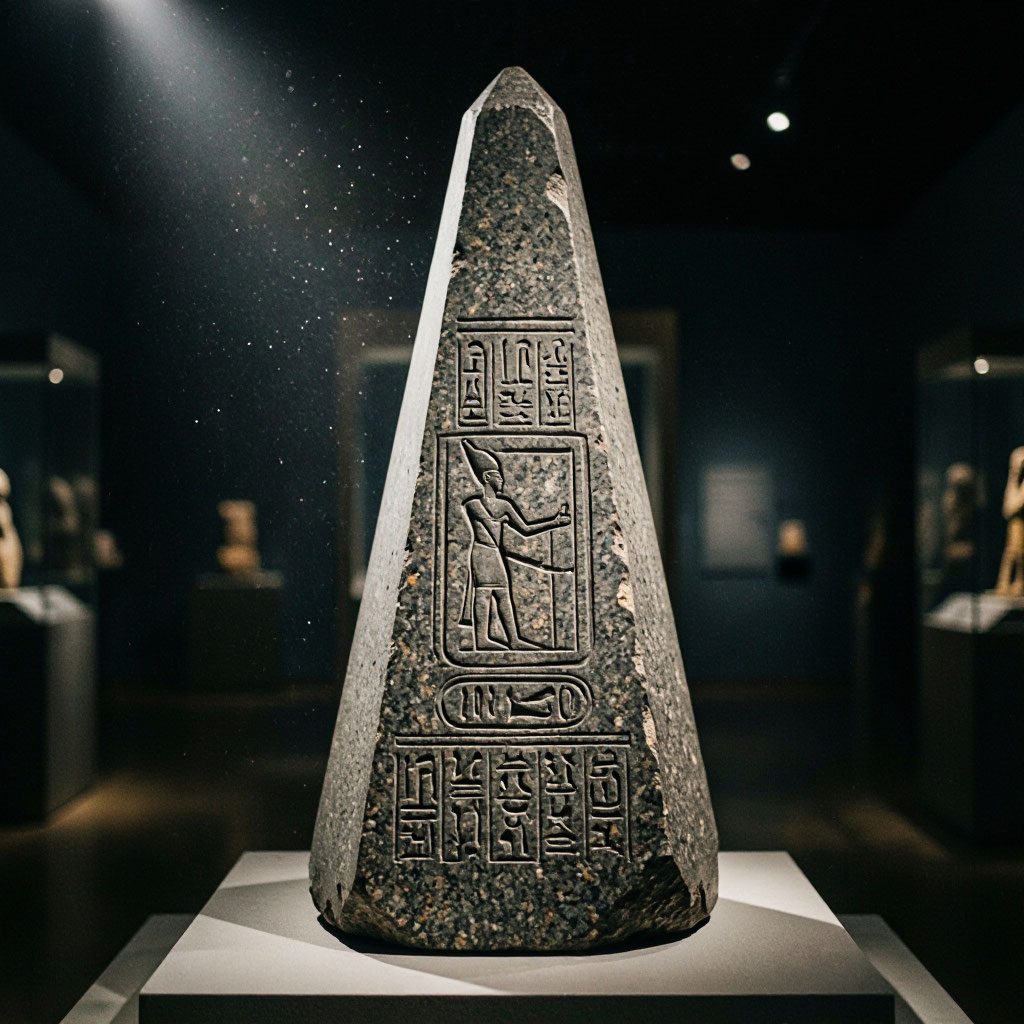
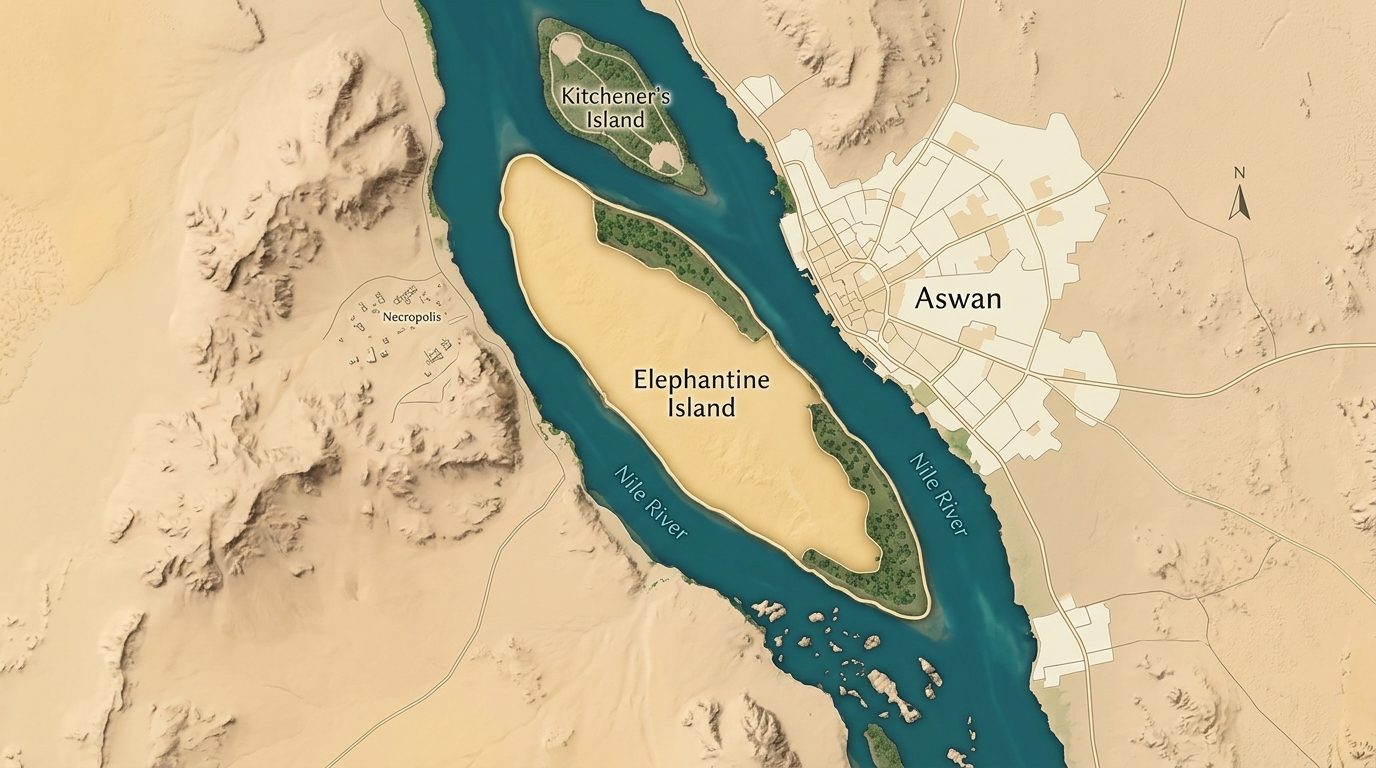
In 1909 the French Egyptologist Henri Gauthier found on the island of Elephantine, at the southern border of Egypt, a cone of red granite 1.6 metres long. In a niche on its front an inscription names a royal palace or residence called "the headband of Huni", with the king's name in a cartouche. The cone was found close to a small step pyramid on the island and may once have been set into it. Today it is in the Egyptian Museum in Cairo. Some books say that Huni built a fortress on Elephantine, but the inscription speaks of a royal residence, not of a fortress.
Small pyramids along the Nile
THEME THREE
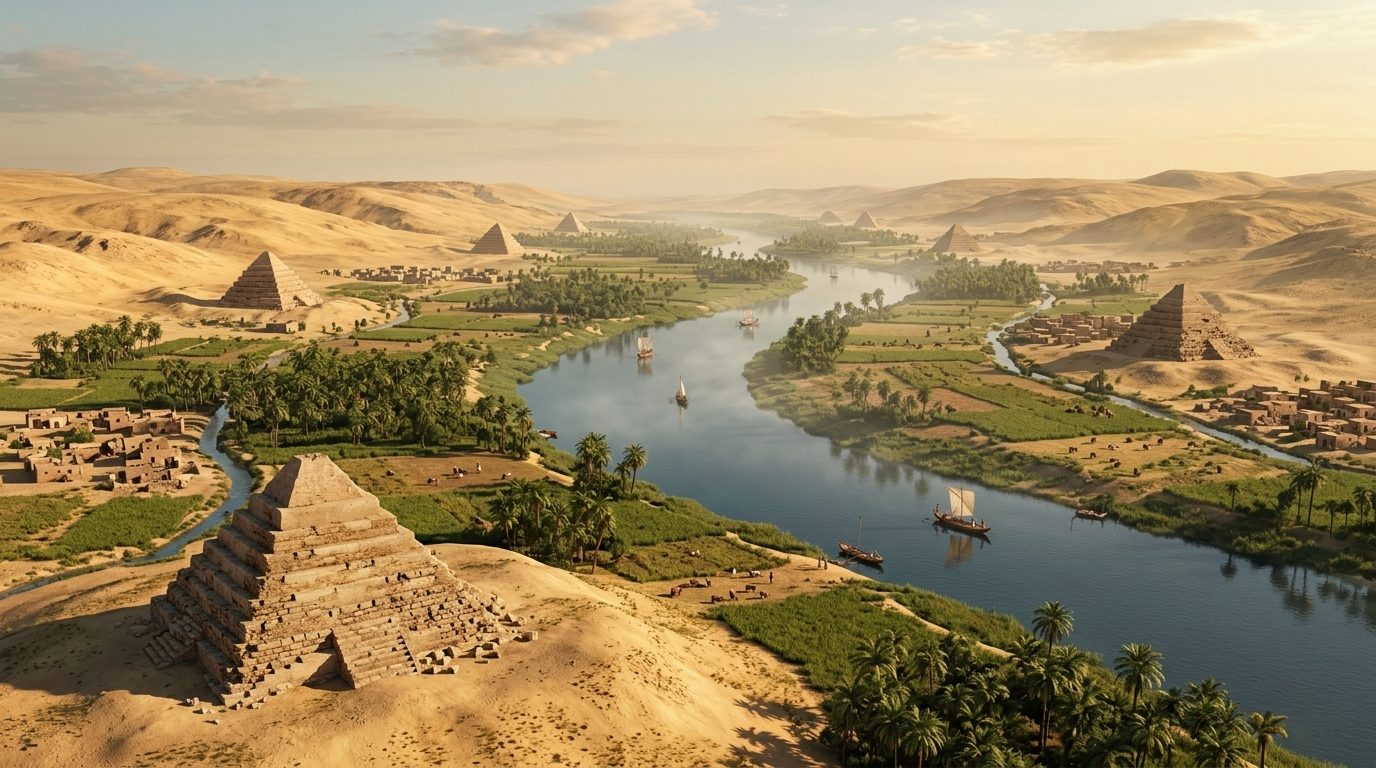
At Elephantine, Edfu, el-Kula, Naqada, Sinki, Zawyet el-Maiyitin and Seila stand seven small step pyramids without burial chambers. They were not tombs: they probably marked royal estates or centres of the royal cult in the provinces. Many Egyptologists date them to the end of the Third Dynasty and attribute most of them to Huni, but only two can be connected with a king: the pyramid of Elephantine through Huni's cone, and the pyramid of Seila in the Fayum through two stelae of Sneferu. The pyramid of el-Kula, sometimes called Huni's pyramid, is attributed to him only because of its type and date.
Officials and the new state
THEME FOUR
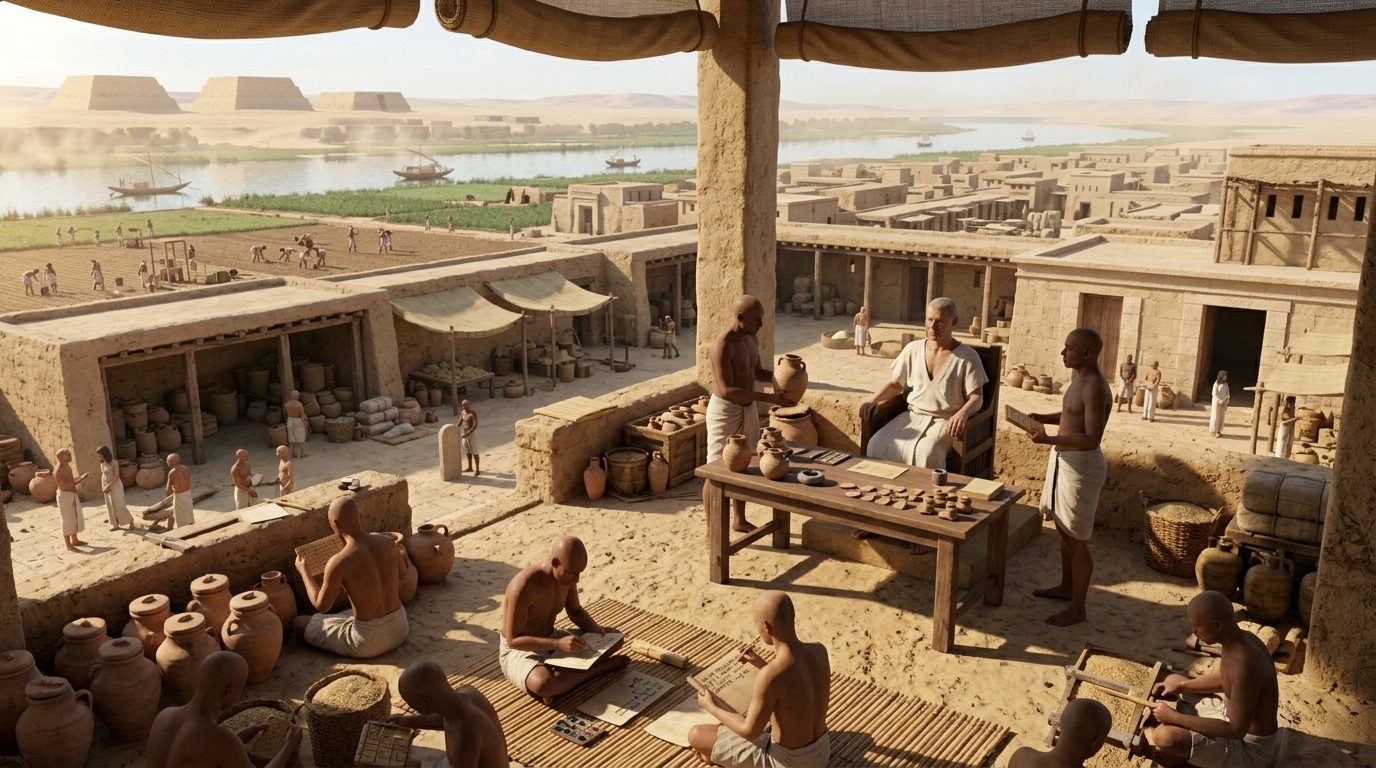
The best sources for Huni's time are the tombs of his officials, such as Metjen, Khabawsokar and Akhetaa. The inscriptions of Metjen's tomb at Saqqara mention a royal estate named after Huni and describe the career of an official who administered provinces and royal estates. They show a state with governors of the nomes, viziers and a growing administration, the state that would build the great pyramids of the Fourth Dynasty. The Turin Canon also credits Huni with a building whose name is now partly lost.
The family of Huni
THEME FIVE
A queen named Djefatnebti, known from ink inscriptions on jars from Elephantine, may have been Huni's wife. Sneferu's mother was Queen Meresankh I, but no source calls her Huni's wife or daughter. Some Egyptologists have suggested that Hetepheres I, the wife of Sneferu and mother of Khufu, was Huni's daughter, which would have linked the two dynasties, but this too is uncertain. Manetho says that a new royal house came to power with Sneferu, while the Instruction for Kagemni simply says that when Huni died, Sneferu was raised as king over the whole land.
Meidum and the search for his tomb
THEME SIX
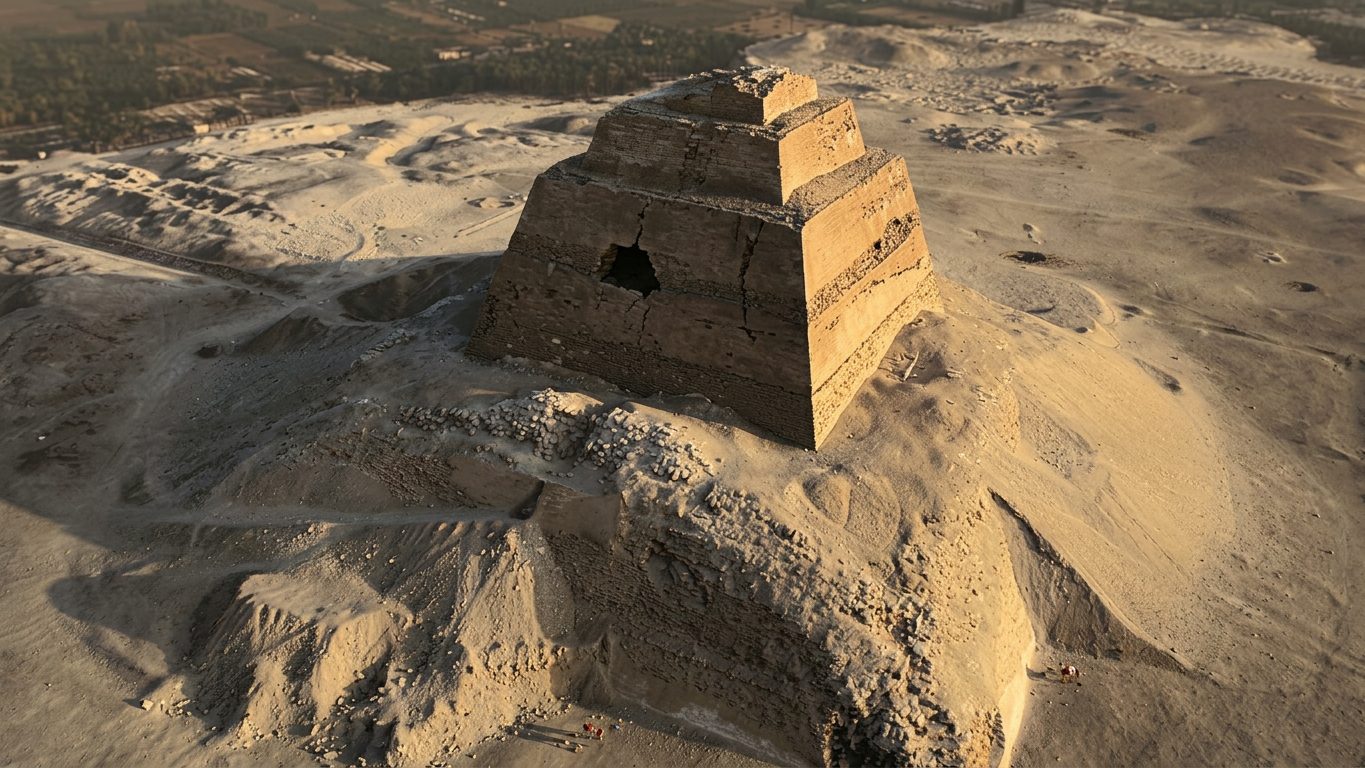
For a long time the pyramid of Meidum was attributed to Huni: it was thought that he had begun it as a step pyramid and that Sneferu completed it. Later research found there only the name of Sneferu, in the tombs around it and in visitors' graffiti praising his pyramid, and today it is considered Sneferu's work. Huni's tomb is unknown. Egyptologists have proposed the Layer Pyramid at Zawyet el-Aryan, if Huni and Khaba were the same king, the huge mastaba M17 at Meidum and mastaba AS-54 at Abusir, where the bowl with his name was found. The Palermo Stone shows that his cult was still endowed in the Fifth Dynasty.
Summary
THEME SEVEN
Huni closed the Third Dynasty, the period in which Egypt passed from tombs of mud brick to the first stone pyramids. Little is known of his deeds, but his name was honoured for a long time, and the officials and provincial monuments of his reign prepared the strong, centralised state of Sneferu and of the builders of Giza.
Key dates
- Date uncertainHuni becomes pharaoh, in the chronology used on this site after Sanakht.
- During his reignSmall step pyramids are built in the provinces, among them the pyramid of Elephantine.
- 2544 BCEDeath of Huni, according to E. Hornung (2006). Sneferu founds the Fourth Dynasty.