
Home · Ancient History · Ancient Egypt · Old Kingdom
Nyuserre Ini
Nyuserre Ini was the younger son of Neferirkare Kakai and Queen Khentkaus II. In the chronology of E. Hornung (2006) he reigned from 2402 to 2374 BCE, nearly thirty years. After the short reigns of his brother Neferefre and of Shepseskare he brought stability back to the throne. He completed the unfinished tombs of his parents and brother, built his own pyramid at Abusir and raised at Abu Gurob the largest and best-preserved temple of the sun of the Old Kingdom.
- Reign
- 2402 – 2374 BCE (E. Hornung, 2006). The figure in the Turin Canon is damaged. Reliefs of his jubilee festival point to a reign of about thirty years. Manetho gives 44
- Dynasty
- 5th
- Predecessor
- Neferefre, his elder brother, in the order of E. Hornung (2006). In another reconstruction, Shepseskare
- Successor
- Menkauhor, perhaps his son or nephew
- Royal names
- Horus name Setibtawy, "favourite of the Two Lands". Throne name Nyuserre, "one who belongs to the power of Ra". Birth name Ini
- Manetho
- Rathures, 44 years
- Burial
- His pyramid at Abusir, called Mensut-Nyuserre, "the places of Nyuserre endure"
- Main sources
- His pyramid and the completed family tombs at Abusir, his sun temple at Abu Gurob with its reliefs, the tomb of the vizier Ptahshepses, a rock relief in Sinai, statues in Munich, Brooklyn and Cairo
The younger son on the throne
THEME ONE
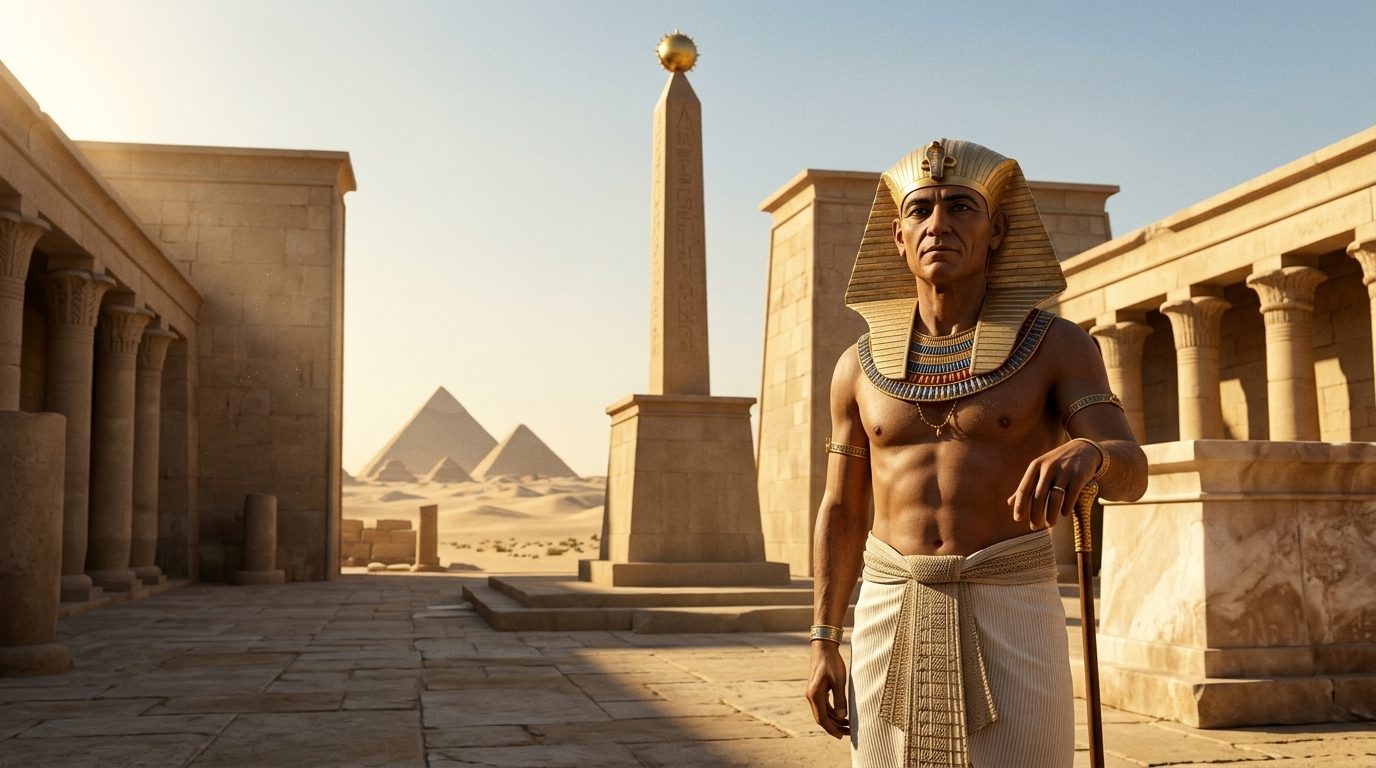
Nyuserre was a son of Neferirkare Kakai and Khentkaus II. When his elder brother Neferefre died young and the obscure Shepseskare had ruled only briefly, he came to the throne, probably still young himself. His mother seems to have played an important part in securing his rule, and she was honoured as the mother of two pharaohs. His wife was Queen Reptynub, and his daughter Khamerernebty married the powerful official Ptahshepses.
Completing the family tombs
THEME TWO
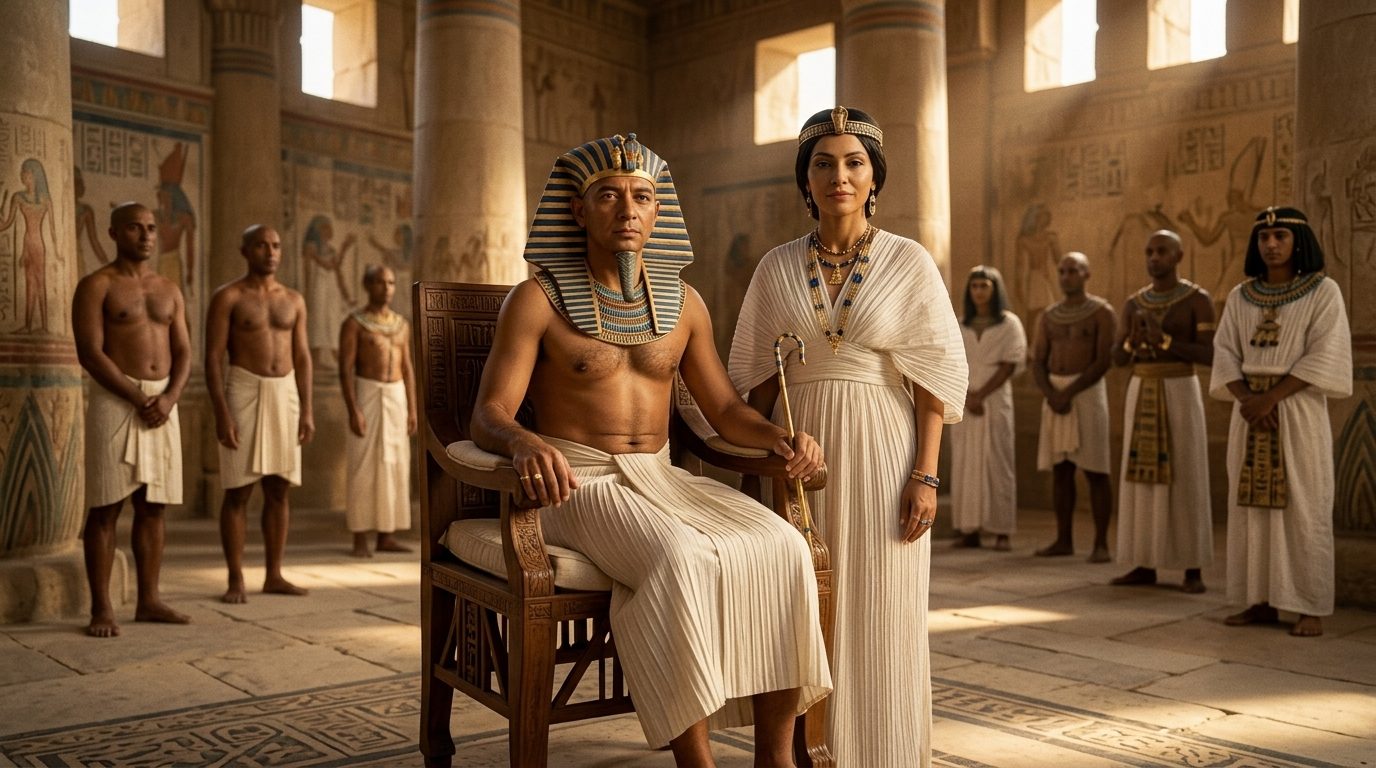
Nyuserre inherited three unfinished tombs at Abusir. He completed the mortuary temple of his father Neferirkare in mud brick, though the casing of the pyramid stayed unfinished. He turned the stump of his brother Neferefre's pyramid into a low square building and enlarged his temple. He also resumed work on the pyramid complex of his mother Khentkaus II, which had stood untouched for years. By honouring his family he also showed that he was its rightful heir.
His own pyramid
THEME THREE
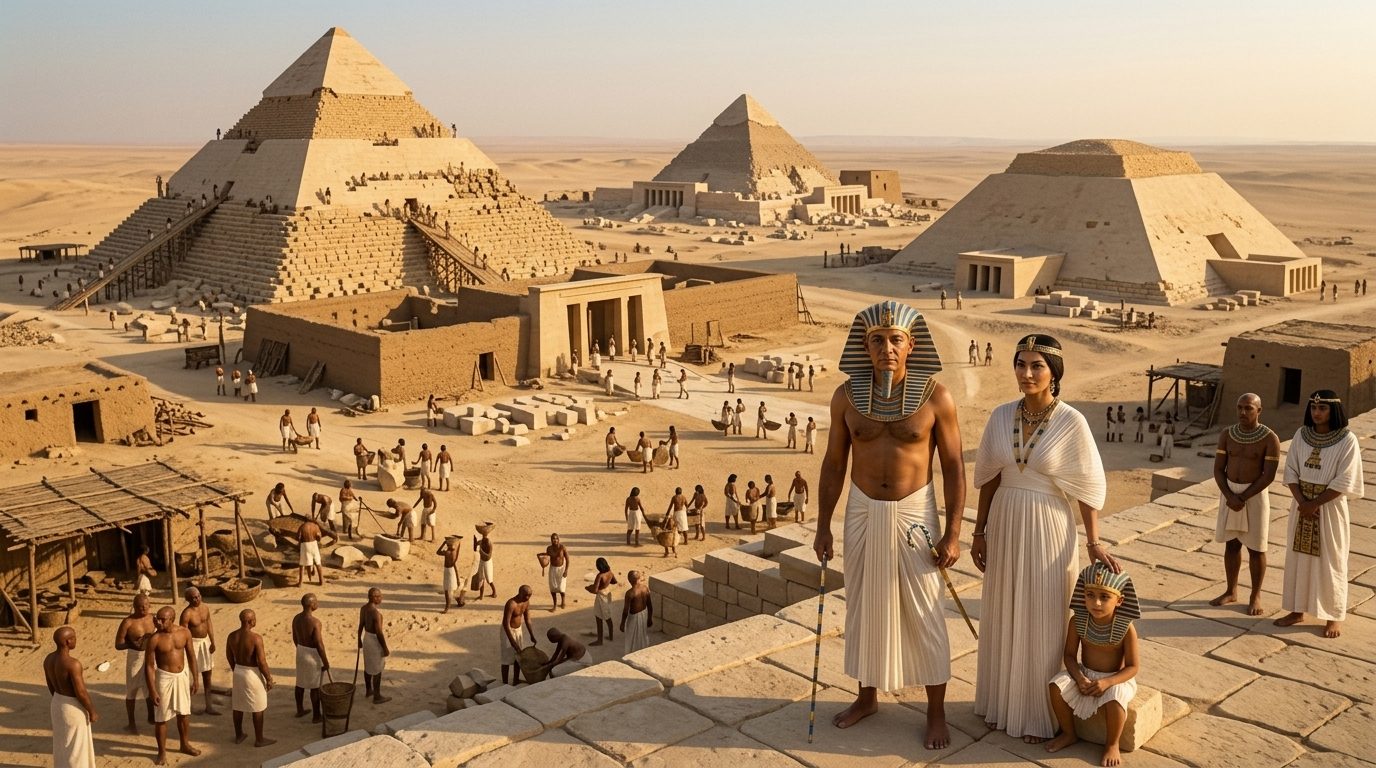
Nyuserre built his pyramid at Abusir close to the north-east corner of his father's, between the pyramids of Neferirkare and Sahure. It was about 52 metres high with a base of about 79 metres. Because space was short, he took over the causeway that his father had begun towards the valley and turned it towards his own pyramid, and his valley temple stood on foundations laid for Neferirkare. His mortuary temple was richly decorated with reliefs and had granite columns in the form of papyrus bundles.
The sun temple of Abu Gurob
THEME FOUR
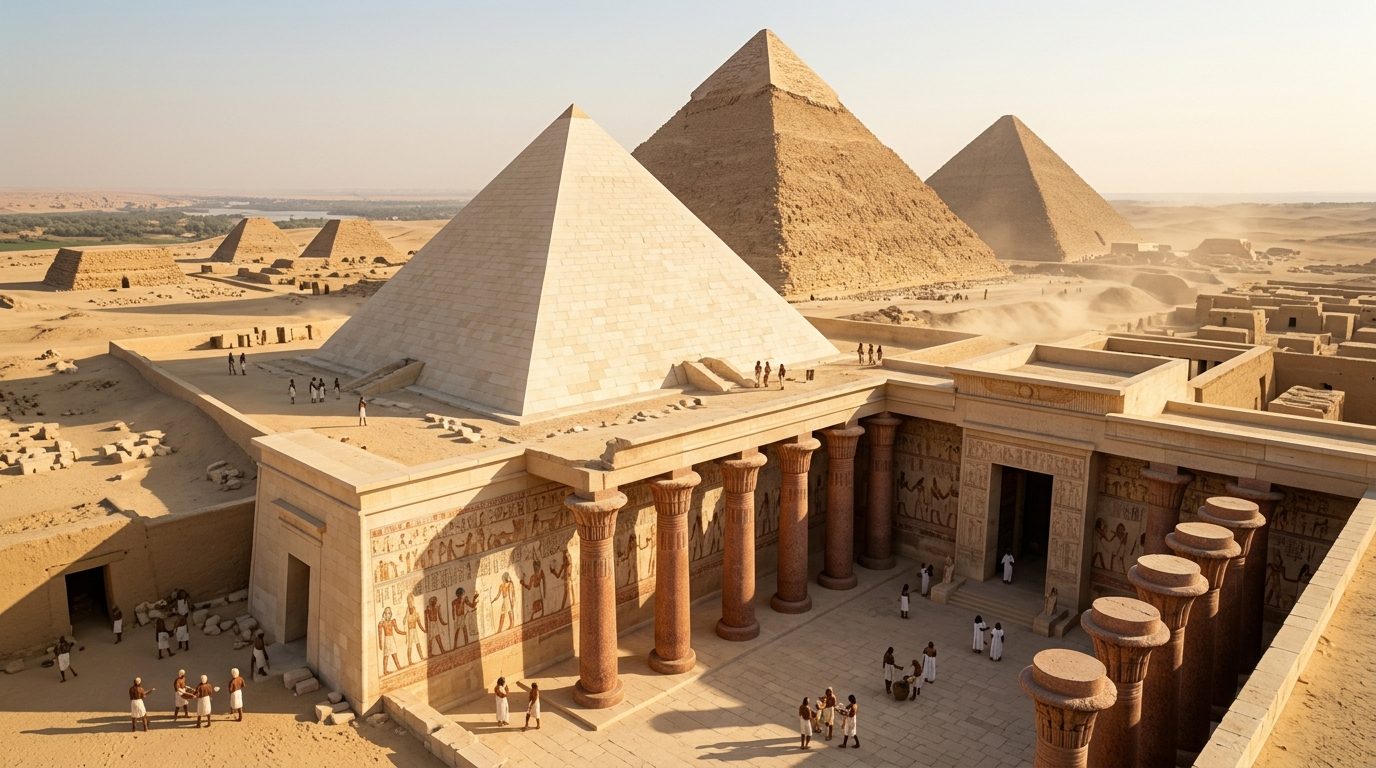
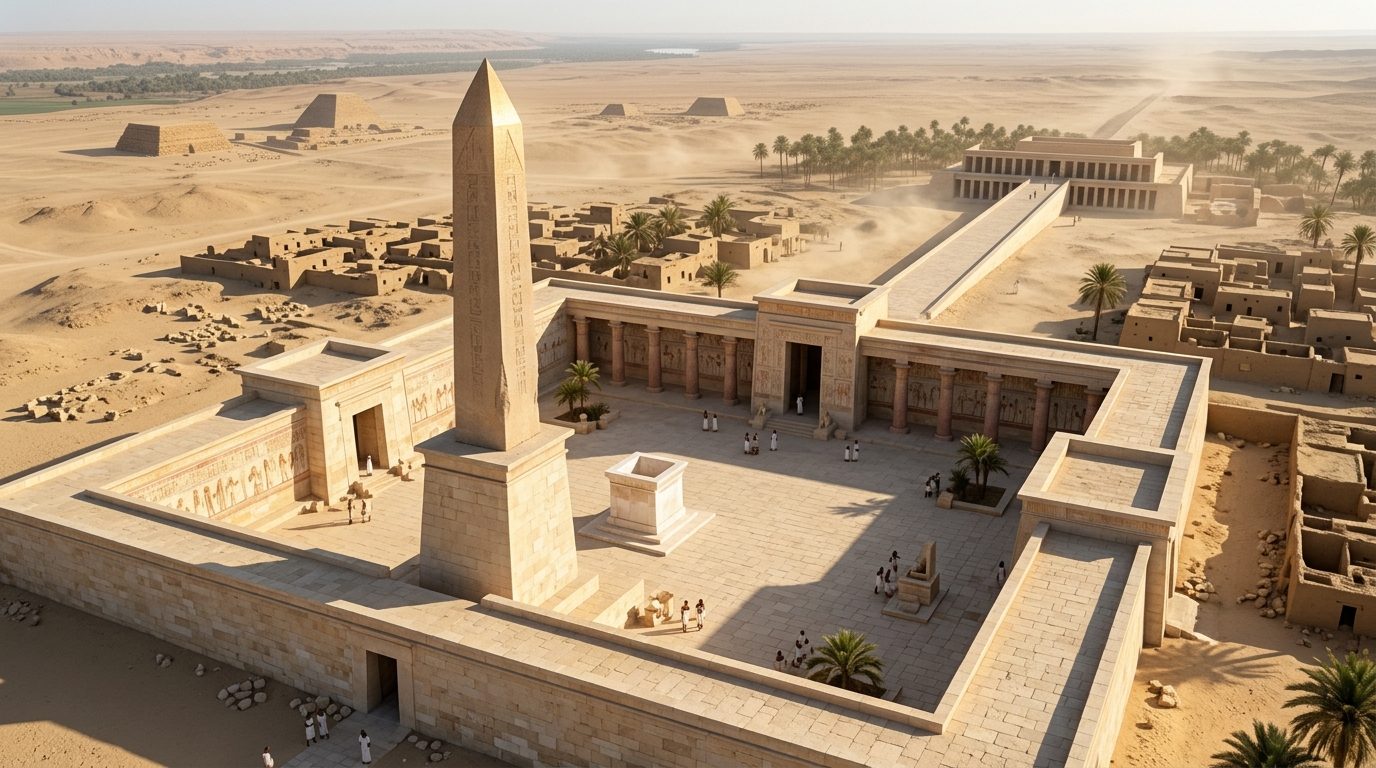
North of Abusir, at Abu Gurob, Nyuserre built the sun temple Shesepibre, "delight of Ra". It was first built in mud brick and later rebuilt in stone, and it is the best preserved of all the sun temples. A valley temple and a causeway led up to a large open court. At its western end a massive squat obelisk stood on a pedestal about 20 metres high, a symbol of the sun's first rays. In front of it lay an altar made of five blocks of alabaster, whose shape reads "May Ra be satisfied" from all four directions.
The seasons and the jubilee
THEME FIVE
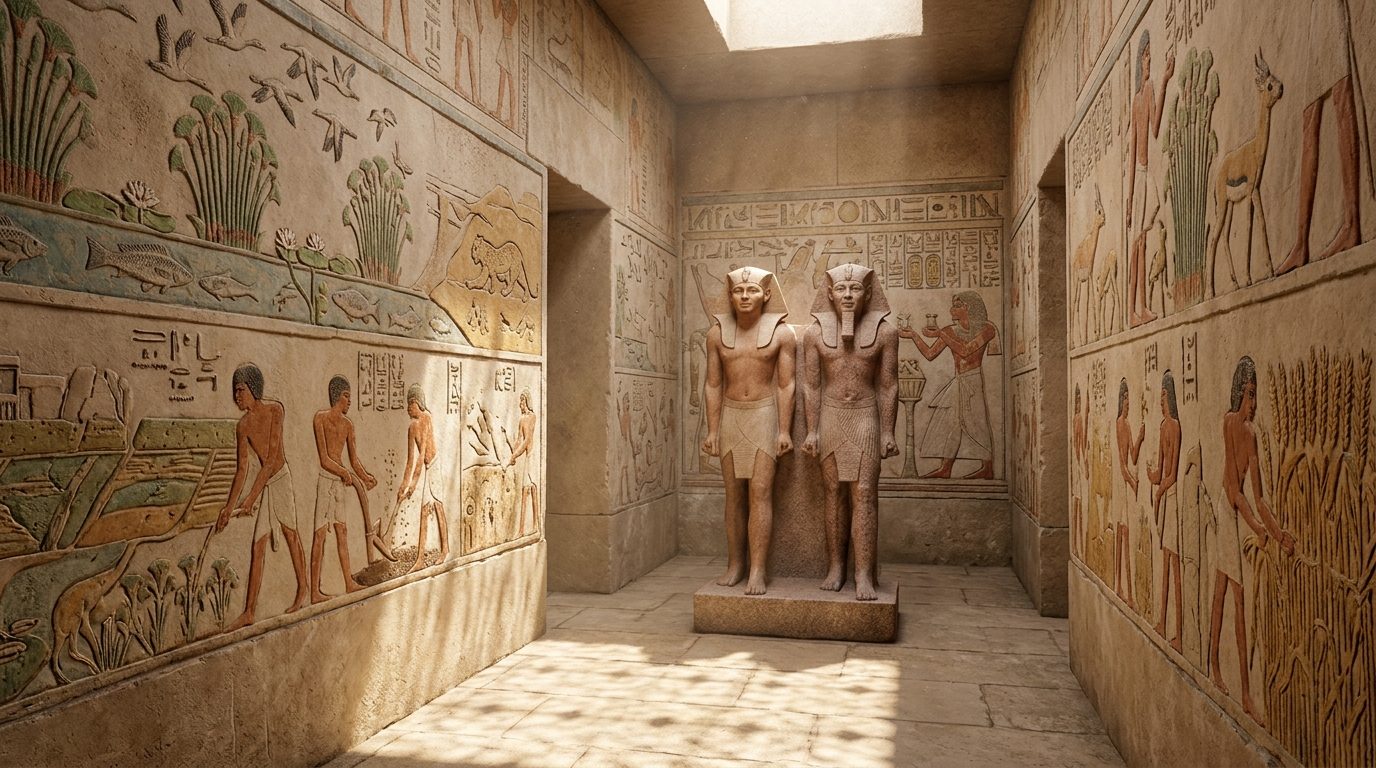
Beside the obelisk a small chapel and a corridor were decorated with the famous reliefs of the "room of the seasons". They show the life of Egypt through the year as the creation of the sun god: the flood, the sowing and harvest, birds migrating, fish spawning and animals giving birth in the desert. Other reliefs showed the pharaoh celebrating his jubilee, the Sed festival, which renewed his strength, usually after thirty years of rule. A double statue now in Munich shows Nyuserre as both a young and an old man.
Ptahshepses and the court
THEME SIX
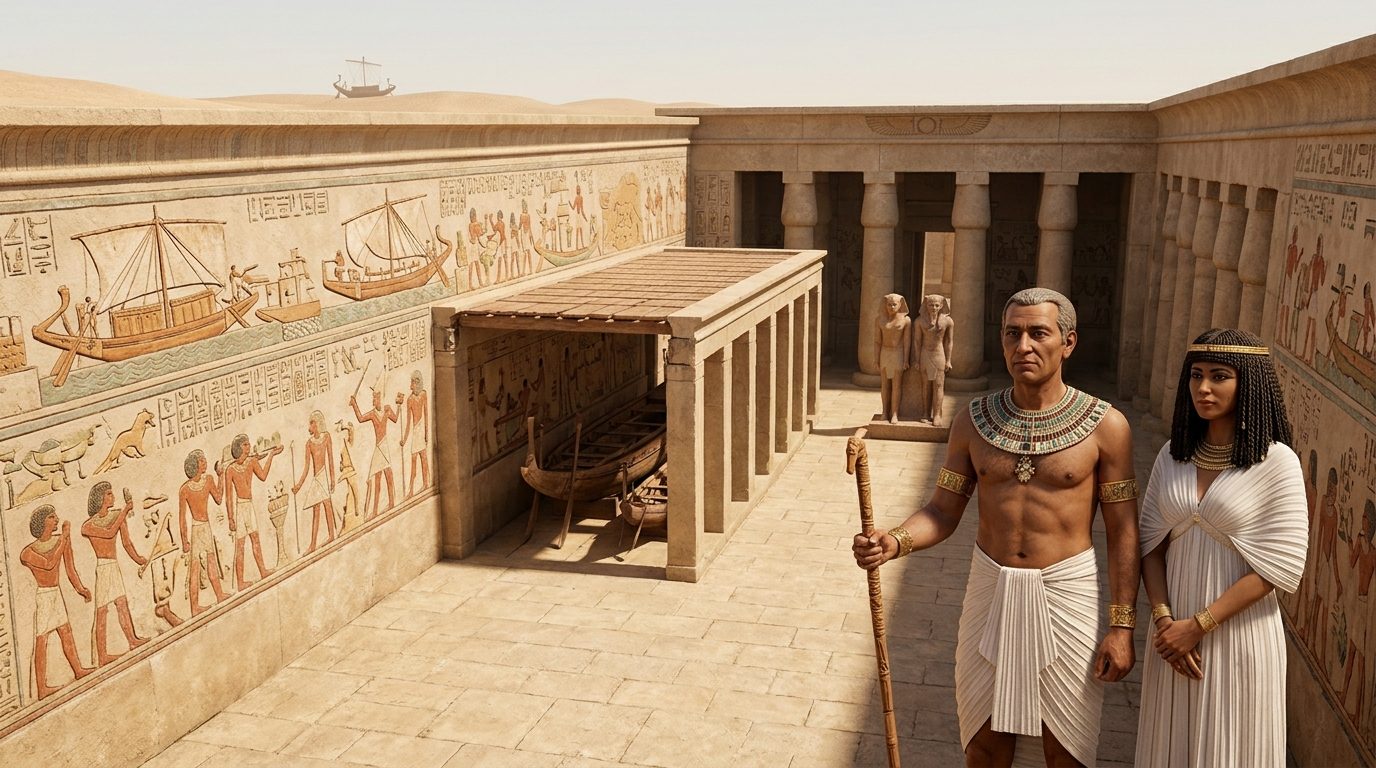
The vizier Ptahshepses married the pharaoh's daughter and was allowed the title "king's son". His tomb at Abusir is one of the largest private tombs in Egypt, with a columned hall, a court of pillars and a room for boats, almost like a royal temple. It shows how much power officials gained in this period. Nyuserre's expeditions sailed from the Red Sea port of Ain Sukhna to the turquoise mines of Sinai, where a rock relief shows him striking down enemies, and trade with Byblos continued.
Summary
THEME SEVEN
Nyuserre's long reign was the high point of Abusir and of the sun cult. He finished what his family had begun and built the finest of the sun temples. He was remembered for a long time: his cult lasted into the Middle Kingdom, and ordinary people honoured him as a protector under his birth name Ini.
Key dates
- 2402 BCENyuserre becomes pharaoh after the short reigns of Shepseskare and Neferefre, according to E. Hornung (2006).
- About his 30th yearNyuserre celebrates his jubilee, shown in the reliefs of his sun temple at Abu Gurob.
- 2374 BCEDeath of Nyuserre and burial in his pyramid at Abusir. Menkauhor succeeds him.