Home · Ancient History · Ancient Egypt · Old Kingdom
Sneferu
Sneferu was the first pharaoh of the Fourth Dynasty and, in the chronology of E. Hornung (2006), reigned from 2543 to 2510 BCE. No other pharaoh moved so much stone: he built at least three large pyramids, at Meidum and at Dahshur, and in them the step pyramid of the Third Dynasty turned into the true pyramid with smooth sides. The royal annals record his campaigns to Nubia and Libya and ships of cedar brought from Lebanon, and later Egyptians remembered him as a good and generous king.
- Reign
- 2543 – 2510 BCE (E. Hornung, 2006). The Turin Canon gives 24 years, Manetho 29. Inscriptions mention at least the 24th cattle count, so most Egyptologists assume about 30 years or more
- Dynasty
- 4th (founder)
- Predecessor
- Huni, the last pharaoh of the 3rd Dynasty. Whether Huni was his father is not known
- Successor
- Khufu (Cheops), his son
- Royal names
- Horus name Nebmaat, "lord of Maat". Golden Horus name Bik-nebu, "golden falcon". Birth name Sneferu, "he has made me perfect", written in a cartouche
- Manetho
- Soris, 29 years
- Burial
- Probably the Red Pyramid at Dahshur. The Bent Pyramid at Dahshur and the pyramid of Meidum were also built for him
- Main sources
- His pyramids at Meidum and Dahshur with their temples, the Palermo Stone, a rock relief at Wadi Maghareh in Sinai, the tombs of his family and officials at Meidum and Dahshur, the Westcar Papyrus and the Prophecy of Neferti
The founder of a new dynasty
THEME ONE
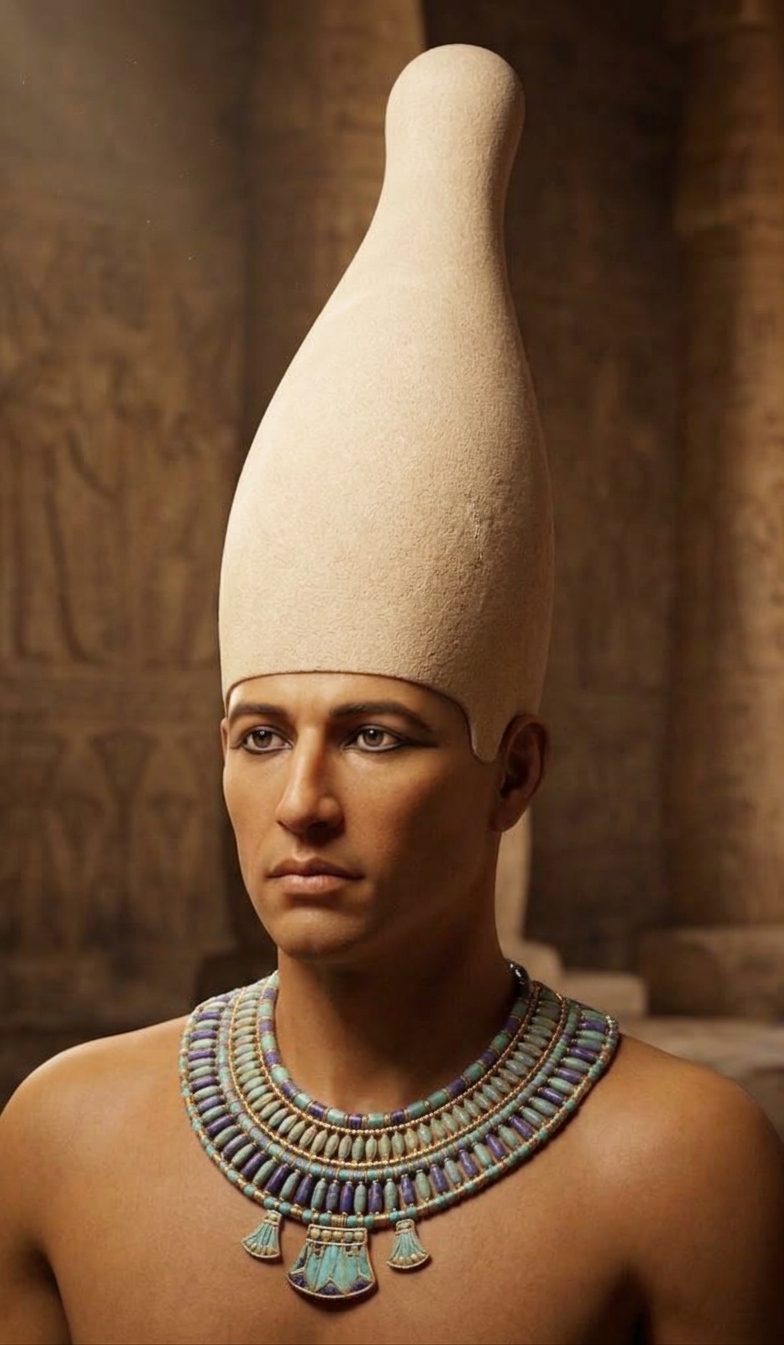
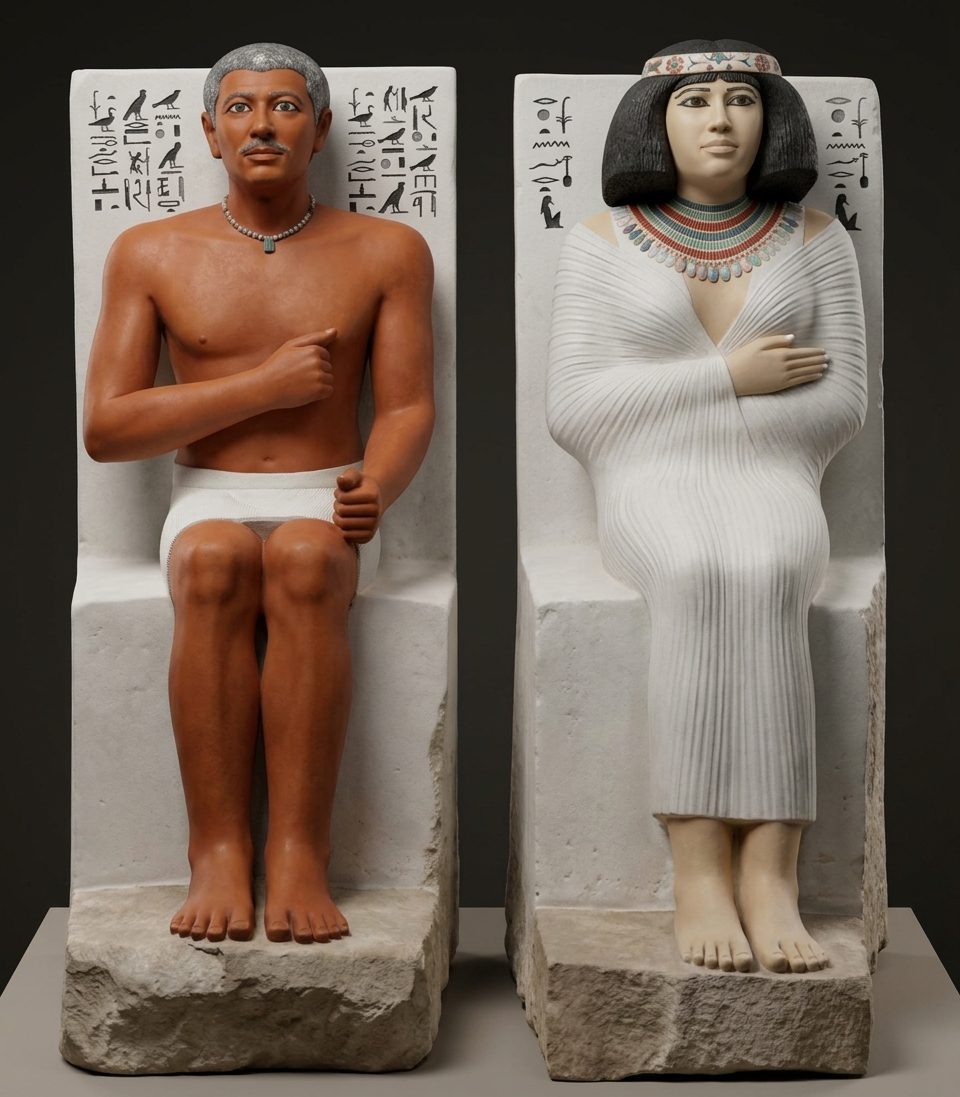
Sneferu came to the throne after Huni, and the Instruction for Kagemni says simply that when Huni died, Sneferu was raised as king over the whole land. His mother was Queen Meresankh I, but it is not known whether his father was Huni. Manetho begins a new dynasty with him, which suggests that later Egyptians saw a new royal family. Sneferu married Hetepheres I, who became the mother of his successor Khufu. Many of his sons became high officials and builders. Prince Rahotep, probably one of them, and his wife Nofret are known from their painted statues from Meidum, among the masterpieces of Egyptian art.
The pyramid of Meidum
THEME TWO
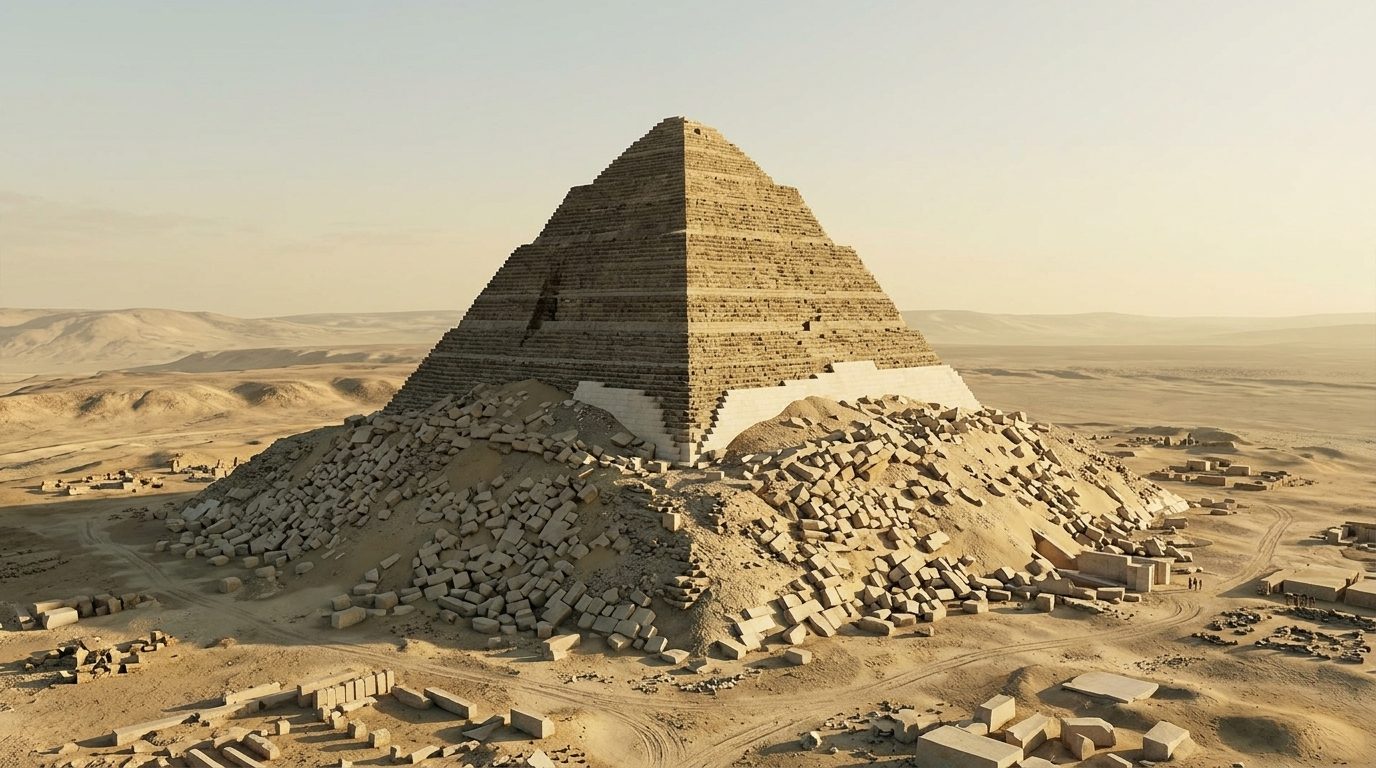
Sneferu's first great project was at Meidum, near the entrance to the Fayum. There a step pyramid of seven steps was built and then enlarged to eight. Years later the steps were filled in and the whole structure was cased to give it smooth sides, an early attempt at a true pyramid. Graffiti left by visitors of the New Kingdom praise it as the pyramid of Sneferu. Today only the steep core stands, like a tower on a hill of rubble, because the outer casing slid away, perhaps already in antiquity, perhaps much later. For a long time the monument was wrongly attributed to Huni.
The Bent Pyramid
THEME THREE
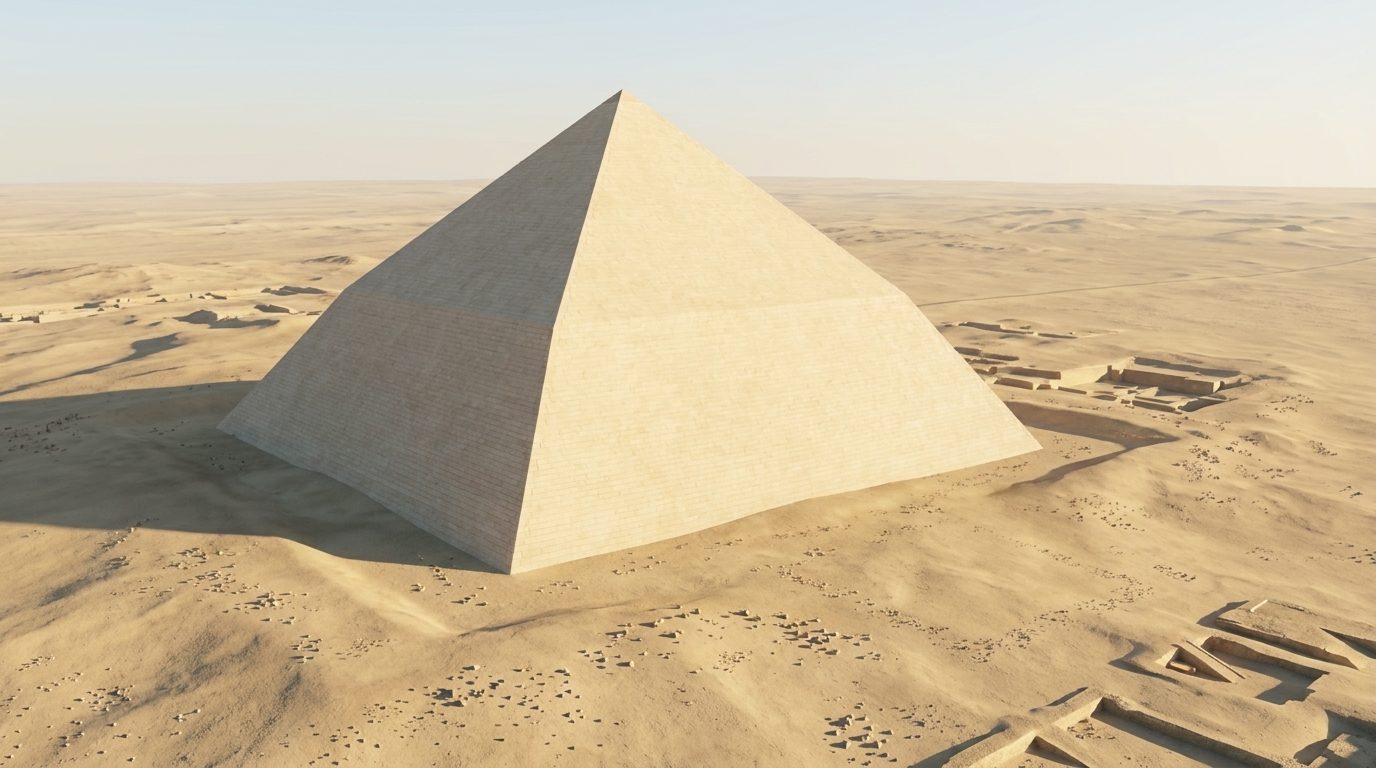
At Dahshur, south of Saqqara, Sneferu began a pyramid that was planned from the start with smooth sides. The builders chose a steep slope of about 54 degrees, but the ground was soft and the chambers inside began to crack under the weight. They widened the base, and at about half the height they changed the angle to about 43 degrees. That is why the monument is called the Bent Pyramid. It still keeps much of its original limestone casing and has two entrances, one on the north side and one on the west, a rare arrangement. A small pyramid beside it was probably meant for the king's cult.
The Red Pyramid
THEME FOUR
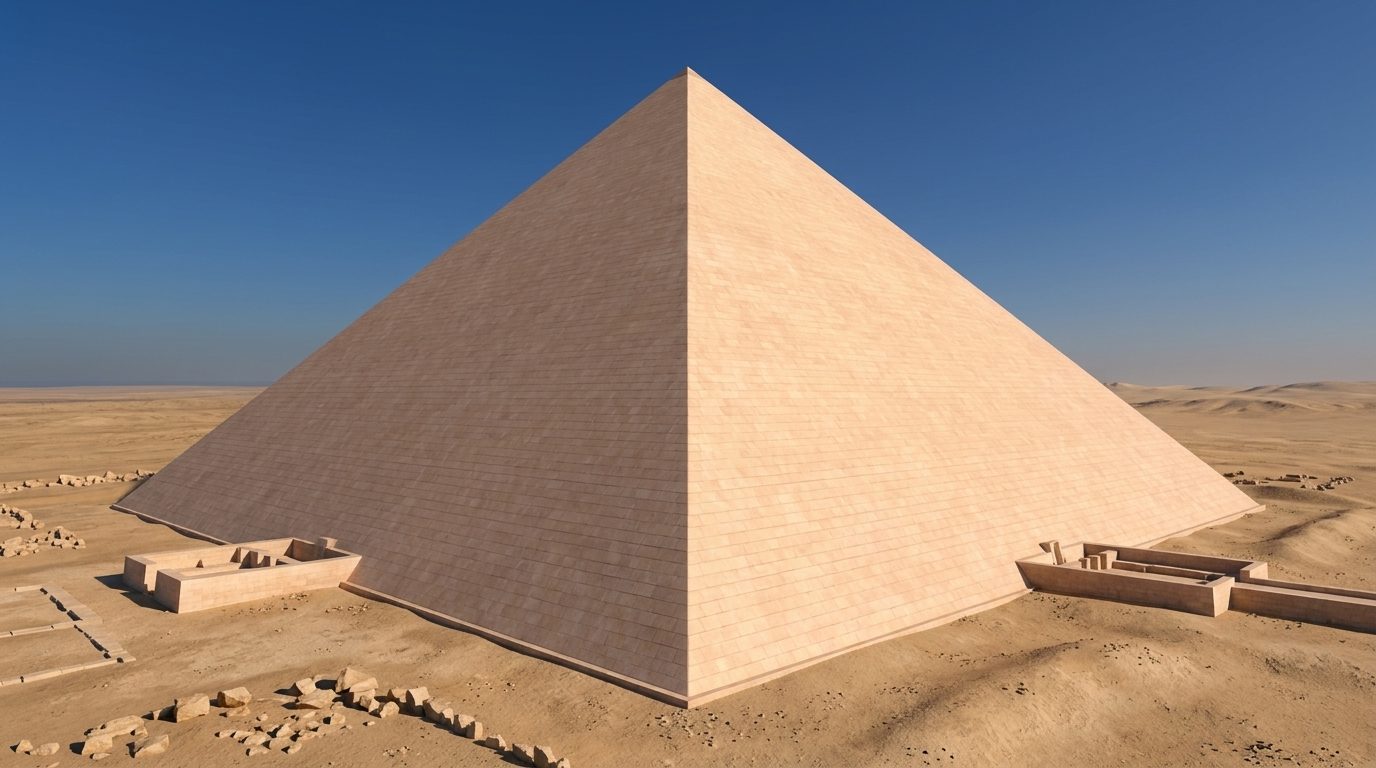
A little to the north the builders started again, this time with the gentler slope of about 43 degrees from the base. The result was the Red Pyramid, named after the reddish colour of its stone, the first true pyramid to be completed successfully. With a base of about 220 metres and a height of about 105 metres, it is the third largest pyramid in Egypt, after the two great pyramids of Giza. Sneferu was probably buried here. In 1950 fragments of a human body were found inside it, but whether they belong to the pharaoh is unknown. Together his pyramids contain more stone than the Great Pyramid of his son.
Campaigns, ships and mines
THEME FIVE
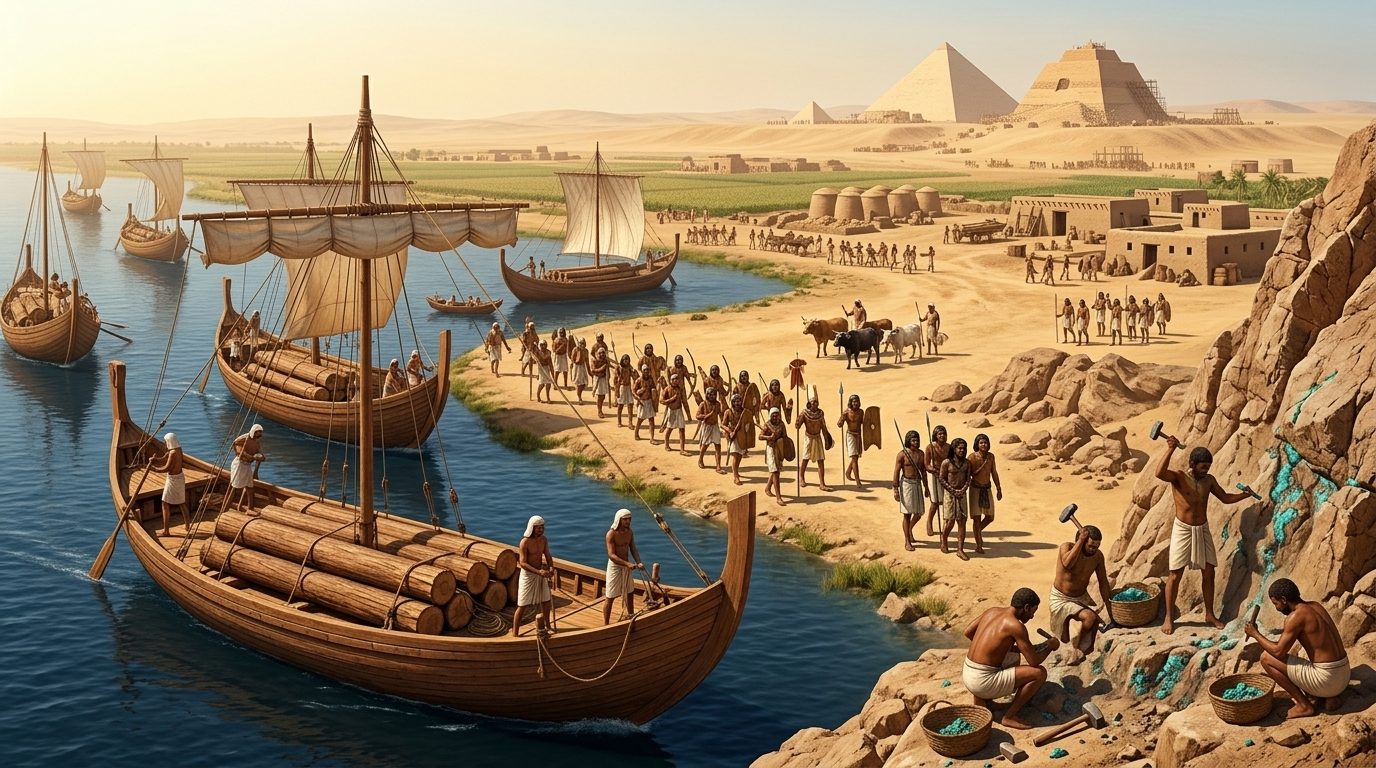
The Palermo Stone, a copy of the royal annals, records the main events of several of Sneferu's years. A campaign to Nubia brought back 7,000 captives and 200,000 animals, a campaign to Libya 11,000 captives and 13,100 head of cattle. The annals also mention 40 ships laden with cedar wood, which must have come from Lebanon, and the building of royal boats 100 cubits long, about 52 metres. In Sinai a rock relief at Wadi Maghareh shows Sneferu striking down an enemy, and his expeditions mined turquoise and copper there. Such a state could feed and organise the many thousands of workers on his pyramids.
The good king of legend
THEME SIX
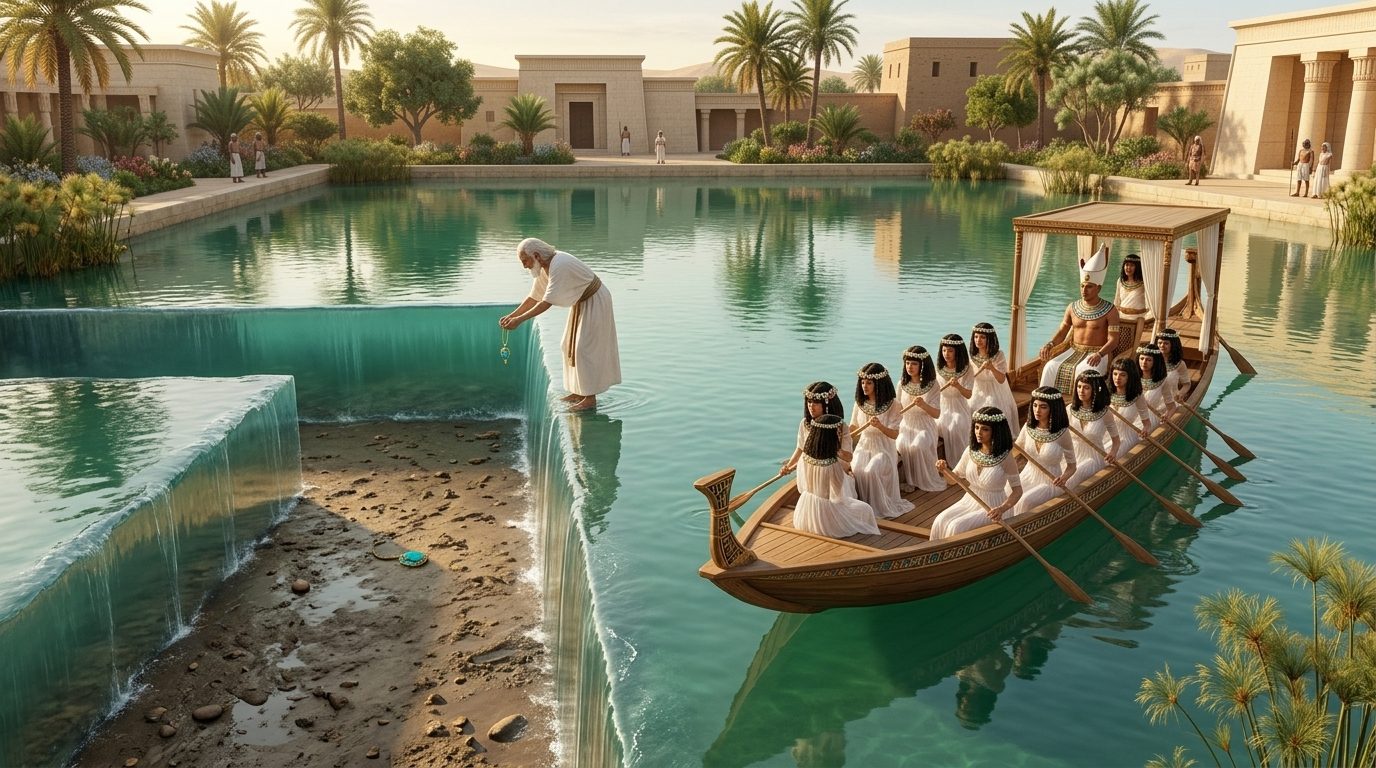
Later Egyptians remembered Sneferu as a kind and generous ruler. In a tale of the Westcar Papyrus he is a bored king who goes rowing on the palace lake with twenty young women. When one of them loses her turquoise pendant in the water, the magician Djadjaemankh folds one half of the lake over the other, picks up the jewel from the bottom and puts the water back. The Prophecy of Neferti, a text of the Middle Kingdom, is also set at Sneferu's court. Officials of later times liked to name their estates after him, and in the Middle Kingdom he was worshipped in Sinai as a protector of the mining expeditions.
Summary
THEME SEVEN
Sneferu turned the experiments of the Third Dynasty into the true pyramid. His builders learned from their failures at Meidum and Dahshur, and the knowledge they gained made the Great Pyramid of Giza possible. With his campaigns, his ships and a state able to feed tens of thousands of workers, he opened the great age of the Fourth Dynasty.
Key dates
- 2543 BCESneferu becomes pharaoh after the death of Huni, according to E. Hornung (2006), and founds the Fourth Dynasty.
- During his reignThe pyramid of Meidum, the Bent Pyramid and the Red Pyramid are built. Campaigns go to Nubia and Libya, ships bring cedar from Lebanon.
- 2510 BCEDeath of Sneferu, probably buried in the Red Pyramid. His son Khufu succeeds him.