Home · Ancient History · Ancient Egypt · Old Kingdom
Khufu
Khufu, known to the Greeks as Cheops, was the son of Sneferu and the second pharaoh of the Fourth Dynasty. In the chronology of E. Hornung (2006) he reigned from 2509 to 2483 BCE. His tomb, the Great Pyramid of Giza, is the largest pyramid ever built and the only one of the Seven Wonders of the ancient world that still stands. Yet almost nothing else of him survives: his only certain portrait is an ivory figure a few centimetres high.
- Reign
- 2509 – 2483 BCE (E. Hornung, 2006). The Turin Canon gives 23 years, Herodotus 50, Manetho 63. Dated papyri and inscriptions reach at least his 27th year
- Dynasty
- 4th (second pharaoh)
- Predecessor
- Sneferu, probably his father
- Royal names
- Horus name Medjedu, "he who strikes". Birth name Khnum-Khufu, "Khnum protects me", usually shortened to Khufu. Greek form Cheops
- Manetho
- Souphis, 63 years
- Burial
- The Great Pyramid of Giza
- Main sources
- The Great Pyramid with its temples, boat pits and queens' pyramids, the ivory statuette from Abydos, the papyri of Wadi al-Jarf, inscriptions in Sinai, at Hatnub and in the Dakhla Oasis, the tomb of his mother Hetepheres I, Herodotus and the Westcar Papyrus
Son of Sneferu
THEME ONE
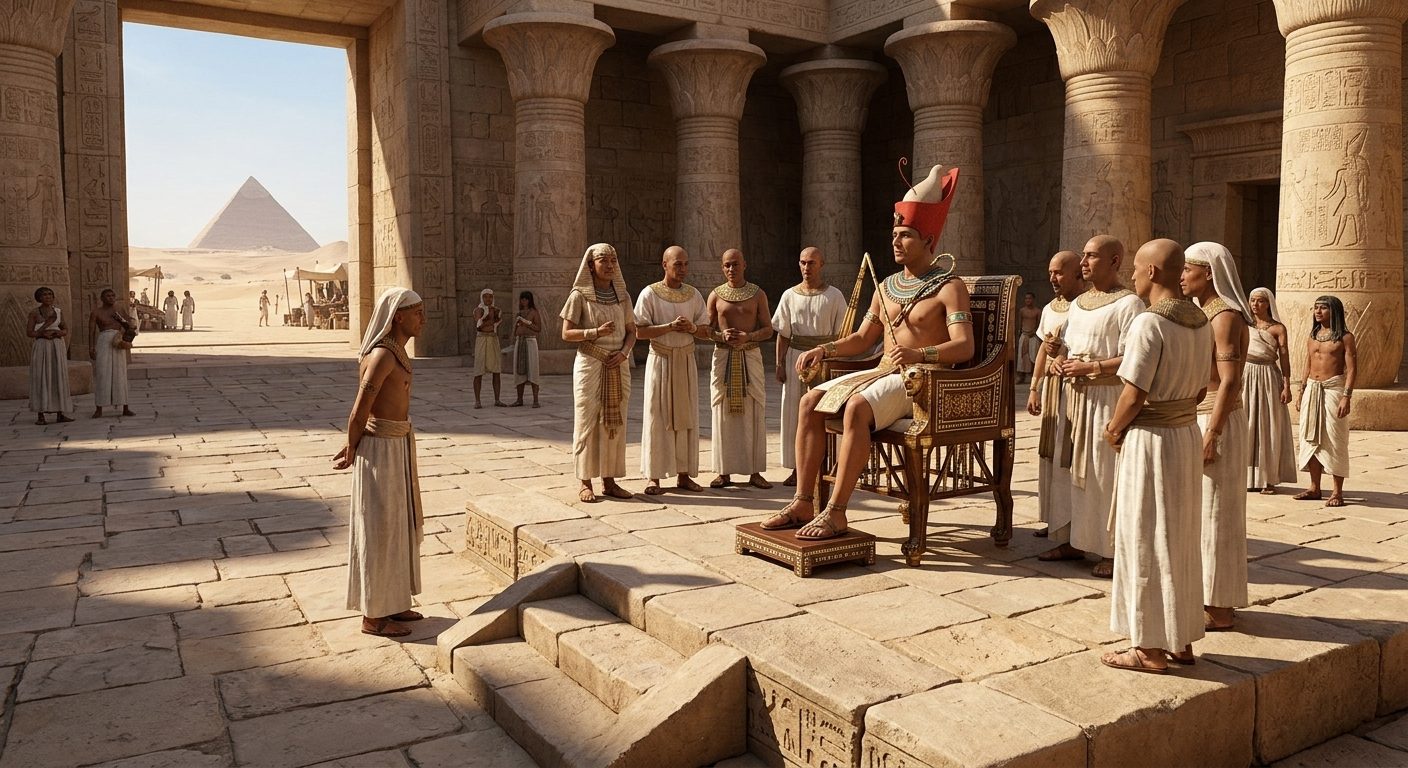
Khufu was probably the son of Sneferu and Queen Hetepheres I. His full name, Khnum-Khufu, means "Khnum protects me", after the ram-headed god of creation. He married Meritites I and Henutsen and had many children, among them the princes Kawab and Hardjedef and the future pharaohs Djedefre and Khafre. In 1925 an expedition of Harvard University and the Museum of Fine Arts, Boston found next to his pyramid the hidden tomb of his mother, with gilded furniture, a carrying chair and an alabaster sarcophagus, which turned out to be empty.
The Great Pyramid
THEME TWO
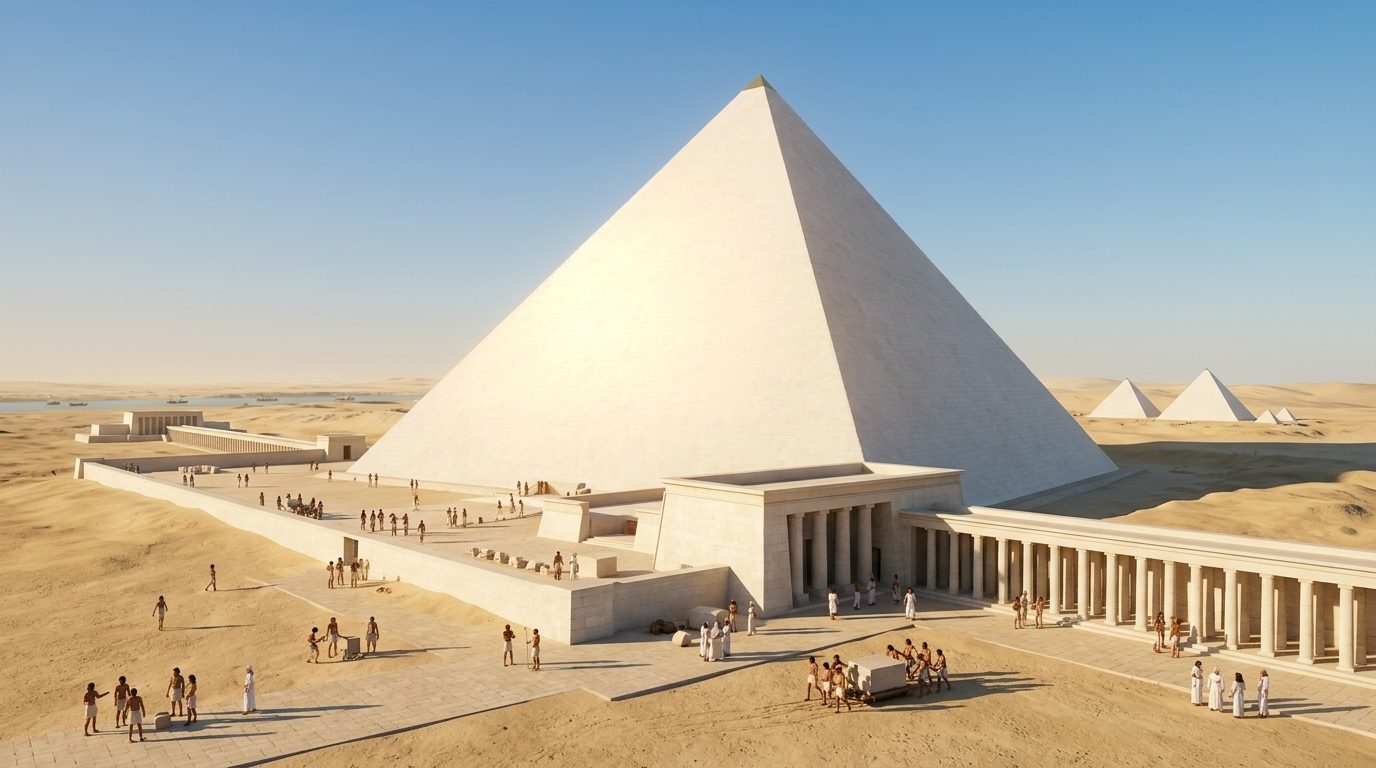
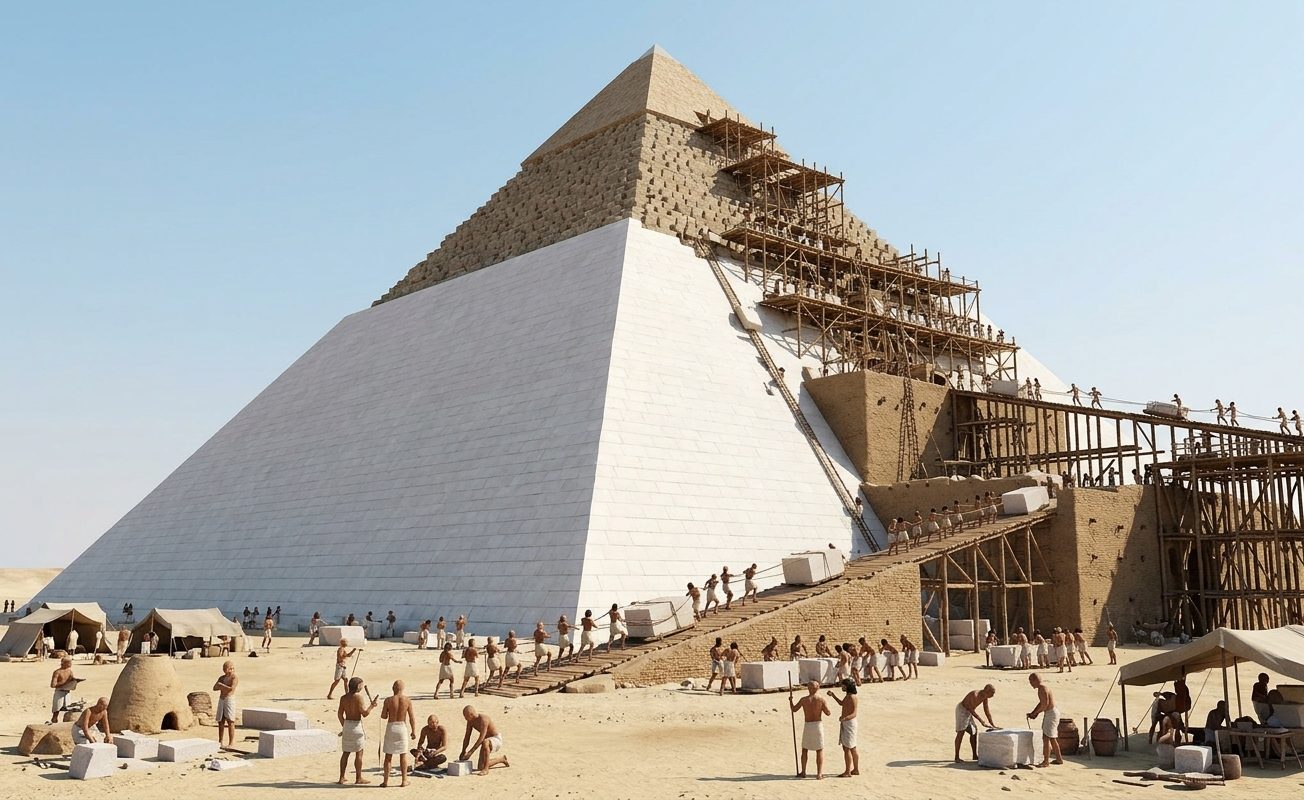
Khufu chose the plateau of Giza, north of Dahshur, for his tomb. The Great Pyramid was originally about 146 metres high, with a base about 230 metres long on each side, and for about 3,800 years it remained the tallest building in the world. It is usually estimated at about 2.3 million blocks of limestone, cased with fine white limestone from Tura that was later taken away for buildings in Cairo. Its sides are aligned almost exactly with the four cardinal points. Inside, passages lead to three chambers, and the burial chamber, lined with red granite from Aswan, still holds an empty granite sarcophagus.
Who built the pyramid
THEME THREE
The Greek historian Herodotus wrote two thousand years later that Khufu closed the temples and forced 100,000 men to work for him in shifts of three months. Archaeology tells a different story. South of the plateau Egyptologists have excavated a town of the pyramid builders, with bakeries, breweries, storerooms and lodgings, and a cemetery where the workers were buried with honour near the king's monument. Today most estimates speak of perhaps 20,000 to 30,000 people at a time, a core of skilled craftsmen and teams of workers who were fed, housed and cared for by the state.
The diary of Merer
THEME FOUR
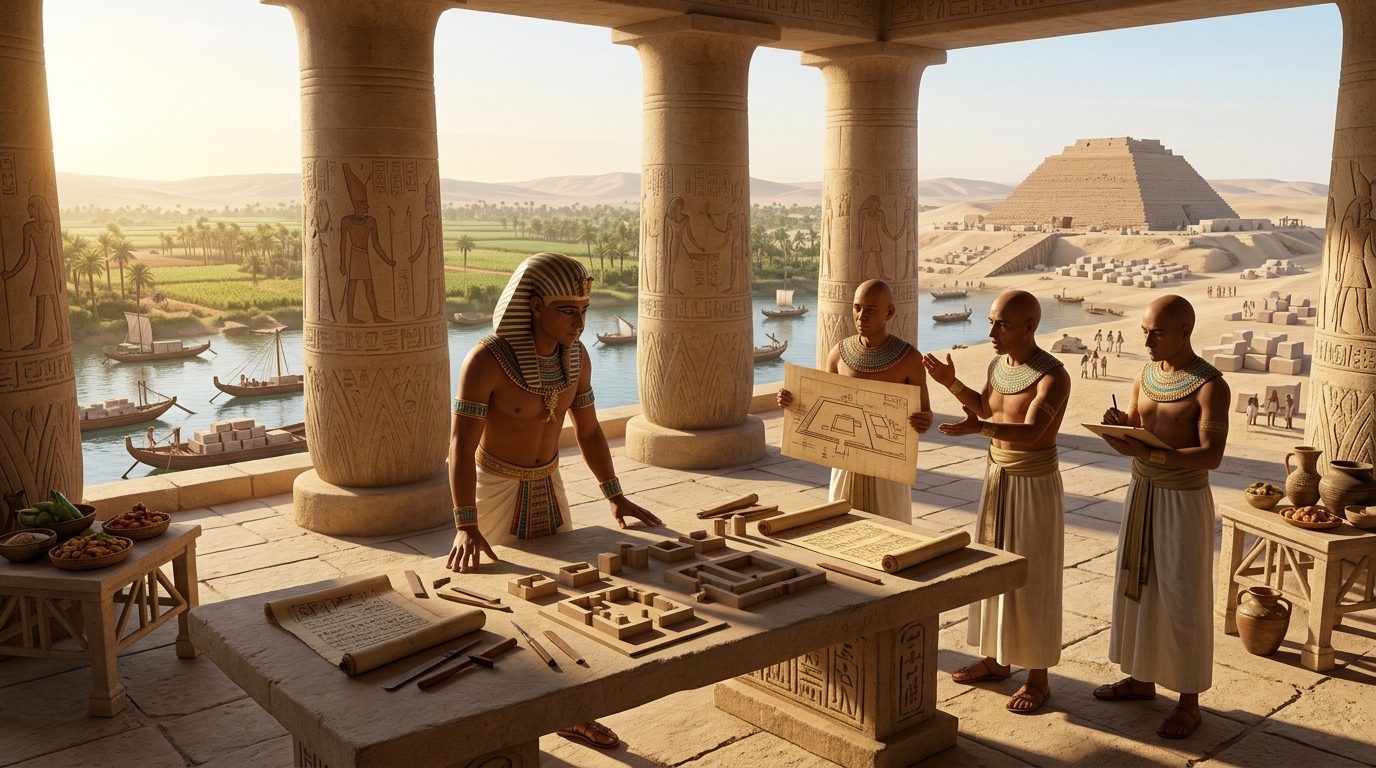
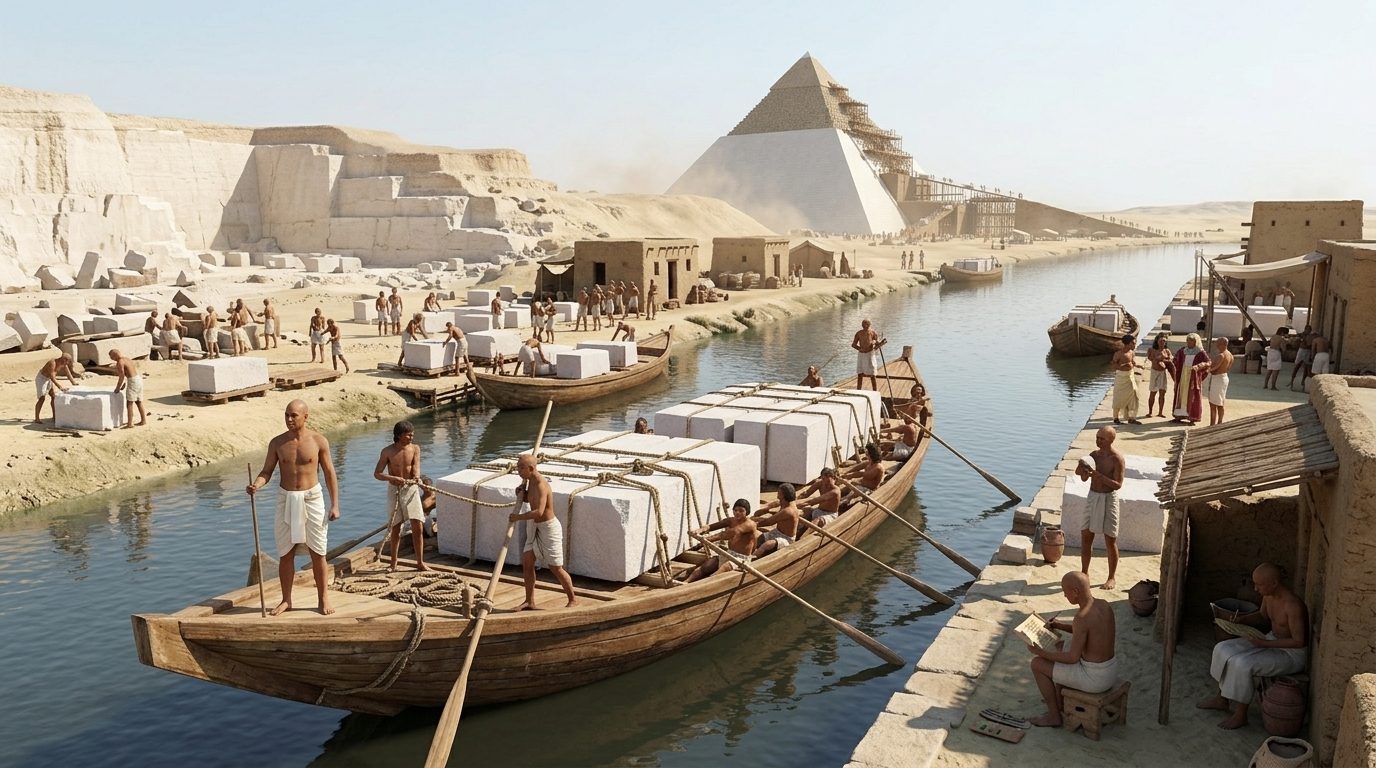
In 2013 a French and Egyptian team led by Pierre Tallet found at Wadi al-Jarf, an ancient harbour on the Red Sea, the oldest inscribed papyri known. Among them is the logbook of an official named Merer, who in the 27th year of Khufu led a team of about forty men. For months they carried blocks of fine limestone by boat from the quarries of Tura across the Nile and along canals to Giza, where the casing of the Great Pyramid was being laid. The papyri also name Ankhhaf, a half-brother of Khufu, as one of the officials in charge of the works.
The ship of Khufu
THEME FIVE
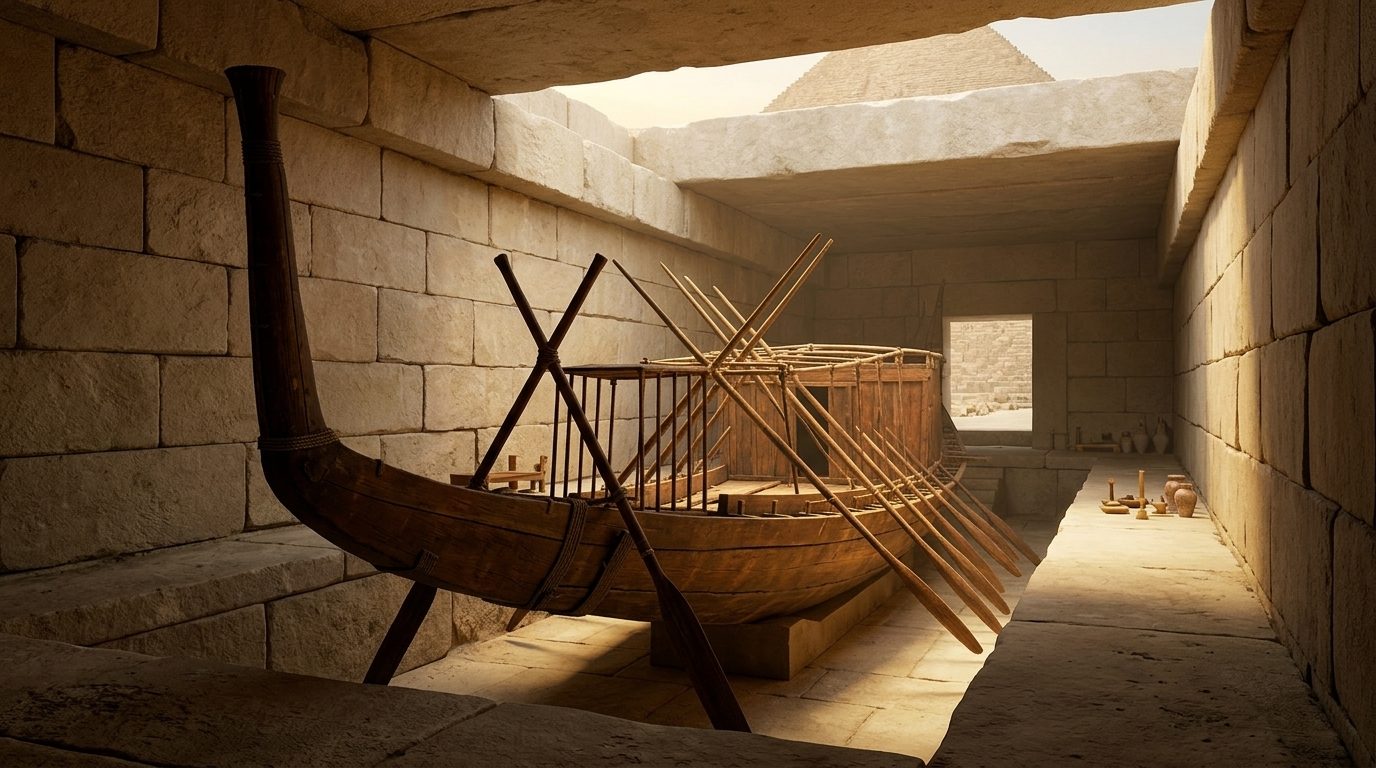
In 1954 the Egyptian archaeologist Kamal el-Mallakh opened a sealed pit beside the south side of the Great Pyramid. Inside lay a ship of Lebanese cedar, taken apart into 1,224 pieces. The restorer Ahmed Youssef Moustafa spent years putting it back together: the ship is about 43 metres long and one of the oldest and best preserved large vessels in the world. It may have carried the king's body to Giza, or it was meant for his journey with the sun god in the afterlife. Since 2021 it has been displayed in the Grand Egyptian Museum.
A great builder with a bad name
THEME SIX
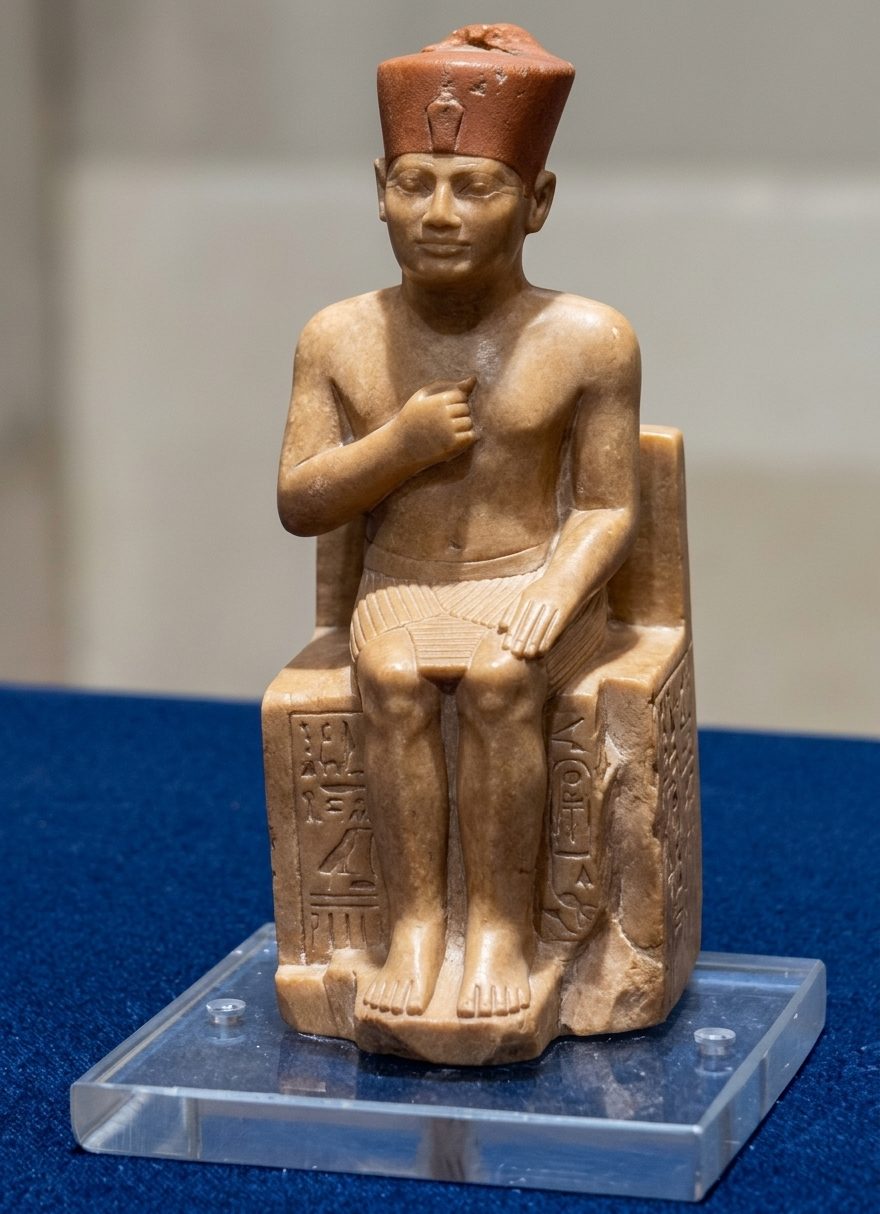
Khufu's only certain statue is an ivory figure about 7.5 centimetres high, found by Flinders Petrie at Abydos in 1903 and now in the Egyptian Museum in Cairo. Inscriptions show expeditions to the turquoise mines of Sinai, the alabaster quarries of Hatnub and the Dakhla Oasis in the western desert. Later tradition was divided about him. In the Westcar Papyrus he listens to tales of magic told by his sons and meets the magician Djedi, while Herodotus describes him as a cruel tyrant. Yet priests served his cult at Giza for many centuries after his death.
Summary
THEME SEVEN
Khufu built the greatest monument of the ancient world, yet left almost no image of himself. His pyramid, the papyri of Merer and the town of the builders show a state able to plan, supply and organise work on an enormous scale, and they tell more about the Egypt of his time than any portrait could.
Key dates
- 2509 BCEKhufu succeeds Sneferu, according to E. Hornung (2006), and begins his pyramid at Giza.
- 27th yearMerer's team carries limestone from Tura to Giza for the casing of the Great Pyramid.
- 2483 BCEDeath of Khufu and burial in the Great Pyramid. His son Djedefre succeeds him.