
Home · Ancient History · Ancient Egypt · Old Kingdom
Userkaf
Userkaf founded the Fifth Dynasty. In the chronology of E. Hornung (2006) he reigned from 2435 to 2429 BCE. He probably came from a side branch of the royal family of the Fourth Dynasty. He returned to Saqqara for his pyramid and was the first pharaoh to build a separate temple for the sun god Ra, beginning a tradition that his successors followed for about eighty years.
- Reign
- 2435 – 2429 BCE (E. Hornung, 2006). The Turin Canon gives 7 years, and the Palermo Stone records at least seven. Manetho gives 28
- Dynasty
- 5th
- Predecessor
- Shepseskaf, the last pharaoh of the 4th Dynasty
- Successor
- Sahure, his son
- Royal names
- Horus name Irimaat, "he who does Maat". Birth name Userkaf, "his ka is strong"
- Manetho
- Usercheres, 28 years
- Burial
- His pyramid at North Saqqara, beside the enclosure of Djoser, called Wab-isut-Userkaf, "pure are the places of Userkaf"
- Main sources
- His pyramid and temples at Saqqara, his sun temple at Abusir, the Palermo Stone, the Turin Canon, the Westcar Papyrus, statue heads now in the Egyptian Museum in Cairo
A new royal house
THEME ONE
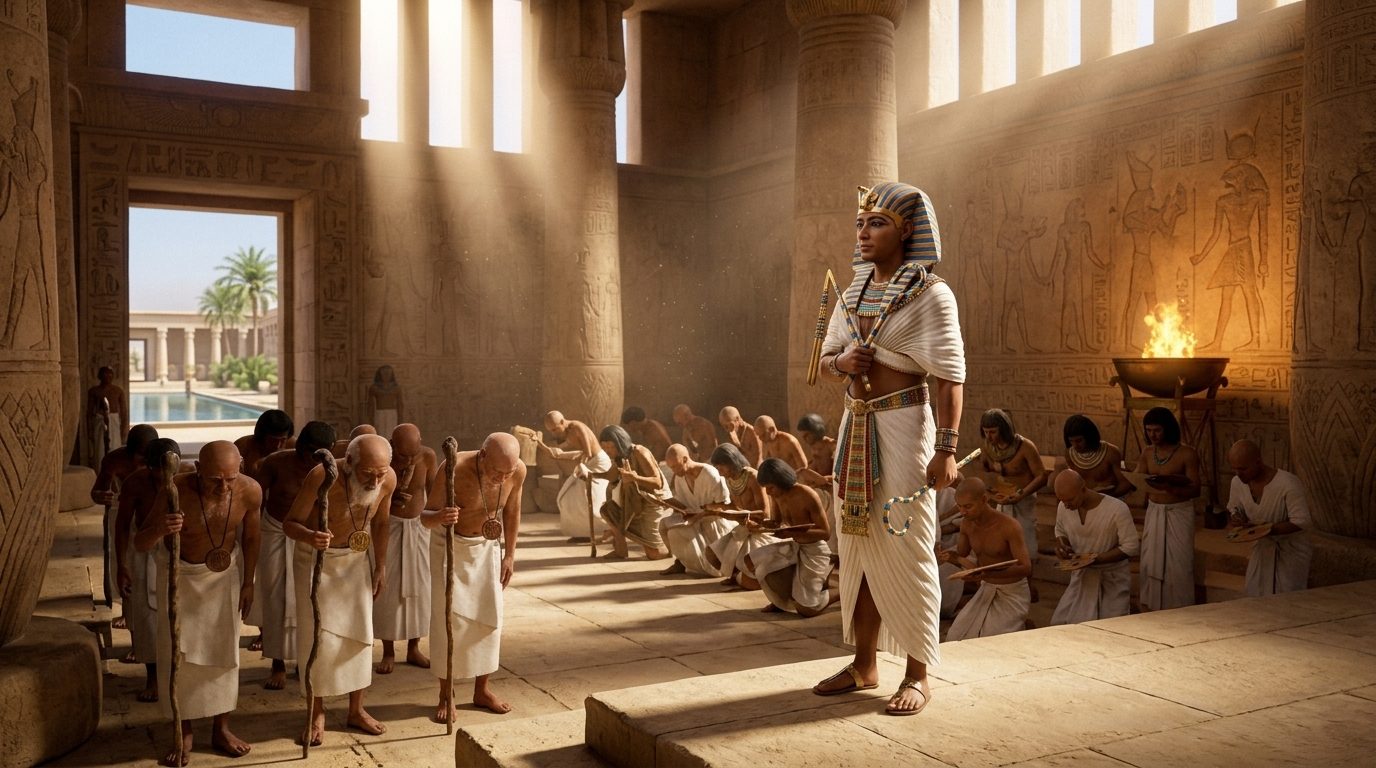
The origin of Userkaf is uncertain. He was probably a member of a side branch of the Fourth Dynasty family. Some Egyptologists think his mother was a Neferhetepes, perhaps a daughter of Djedefre. Others see him as a son of Menkaure or of Queen Khentkaus I. His wife was most likely another Neferhetepes, who was buried in a small pyramid next to his, and she was the mother of his son and successor Sahure. The change of dynasty seems to have been peaceful, because officials served under both Shepseskaf and Userkaf.
The children of Ra
THEME TWO
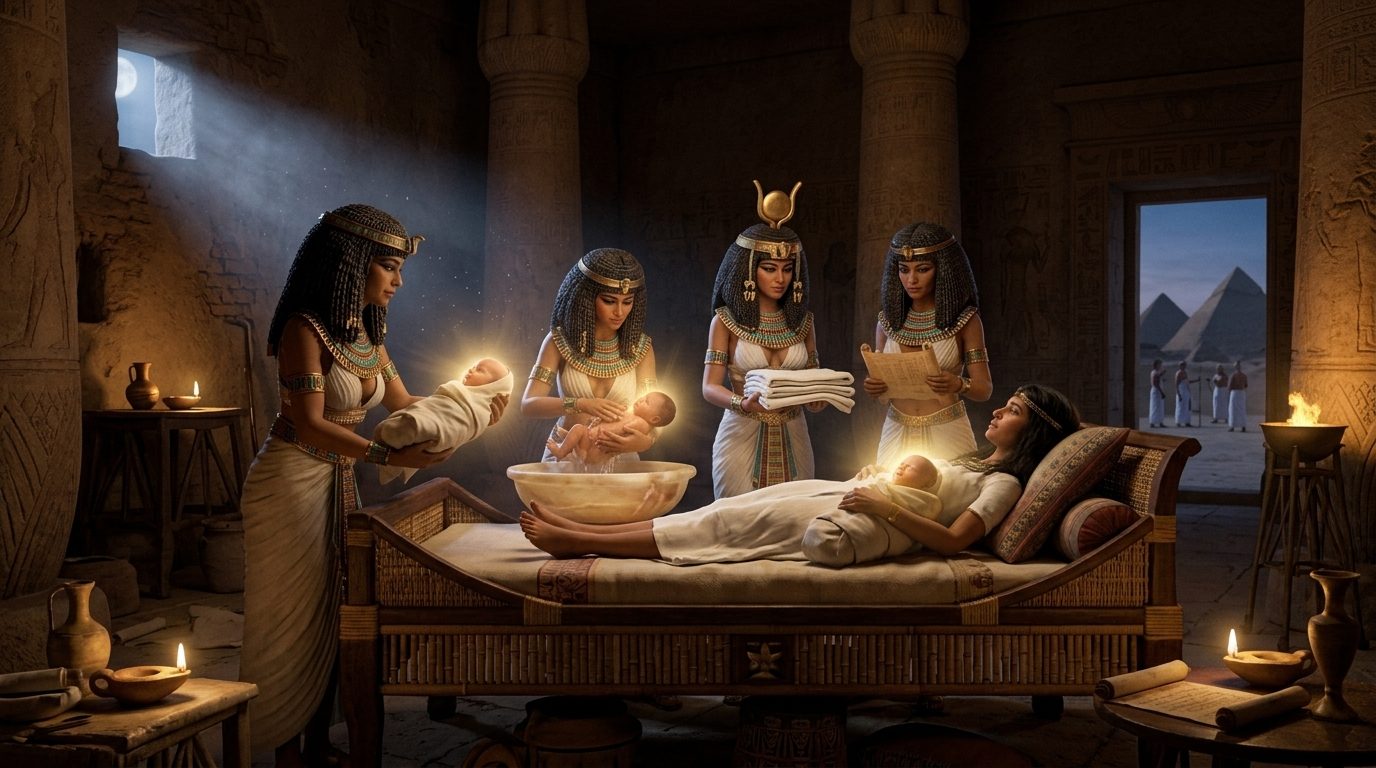
A story in the Westcar Papyrus, written down many centuries later, tells of the birth of the new dynasty. Rededjet, the wife of a priest of Ra, gave birth to three sons fathered by the sun god himself, and goddesses helped at the birth. The boys were to become pharaohs and replace the family of Khufu. The tale is not history, because Userkaf, Sahure and Neferirkare were not brothers, but it shows how the Fifth Dynasty was remembered: as the dynasty of the sun.
A pyramid beside Djoser
THEME THREE
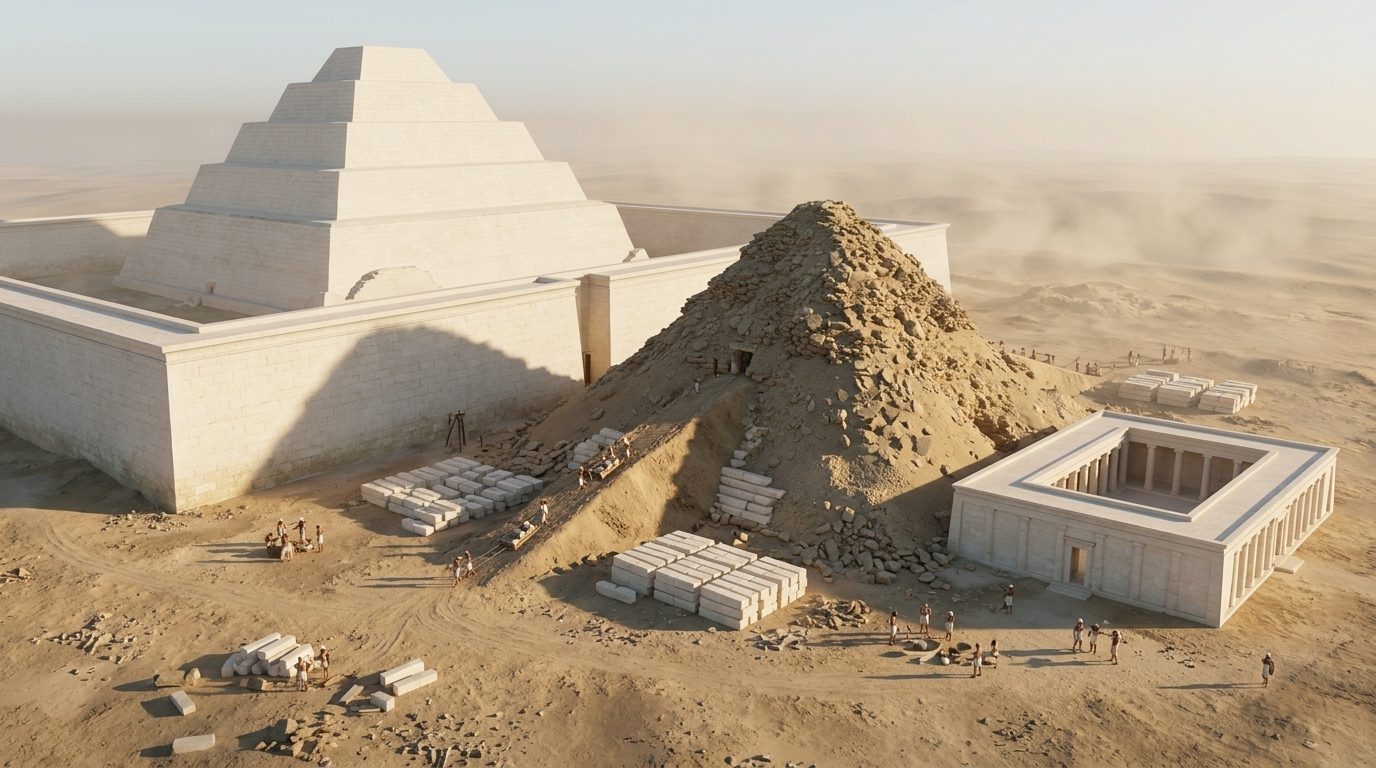
Userkaf built his pyramid at Saqqara, right next to the north-east corner of the enclosure of Djoser. It was about 49 metres high with a base of about 73 metres, much smaller than the pyramids of Giza, and its core of rough stone has collapsed into a heap. Because there was no room to the east, his mortuary temple was built on the south side. Its walls were covered with fine painted reliefs, including some of the earliest scenes of birds and hunting in the marshes.
The first sun temple
THEME FOUR
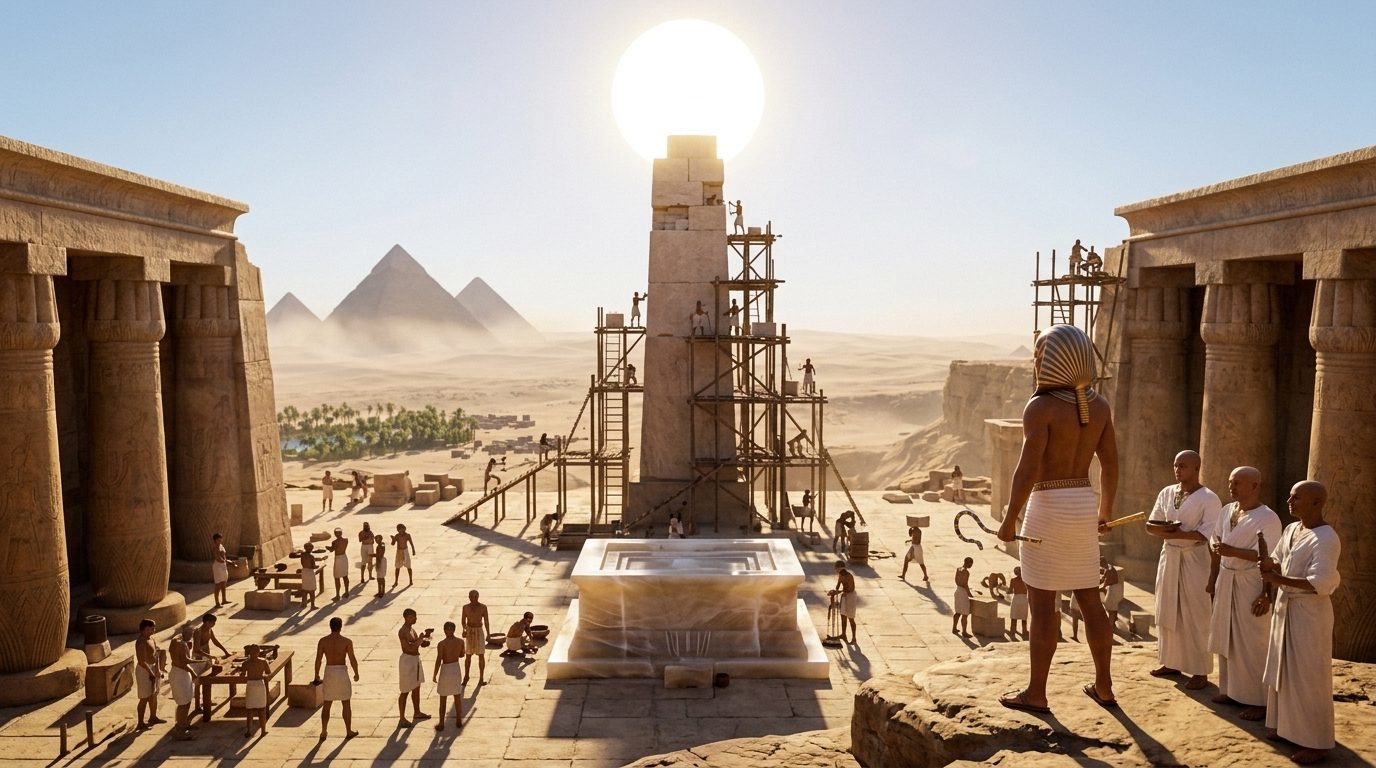
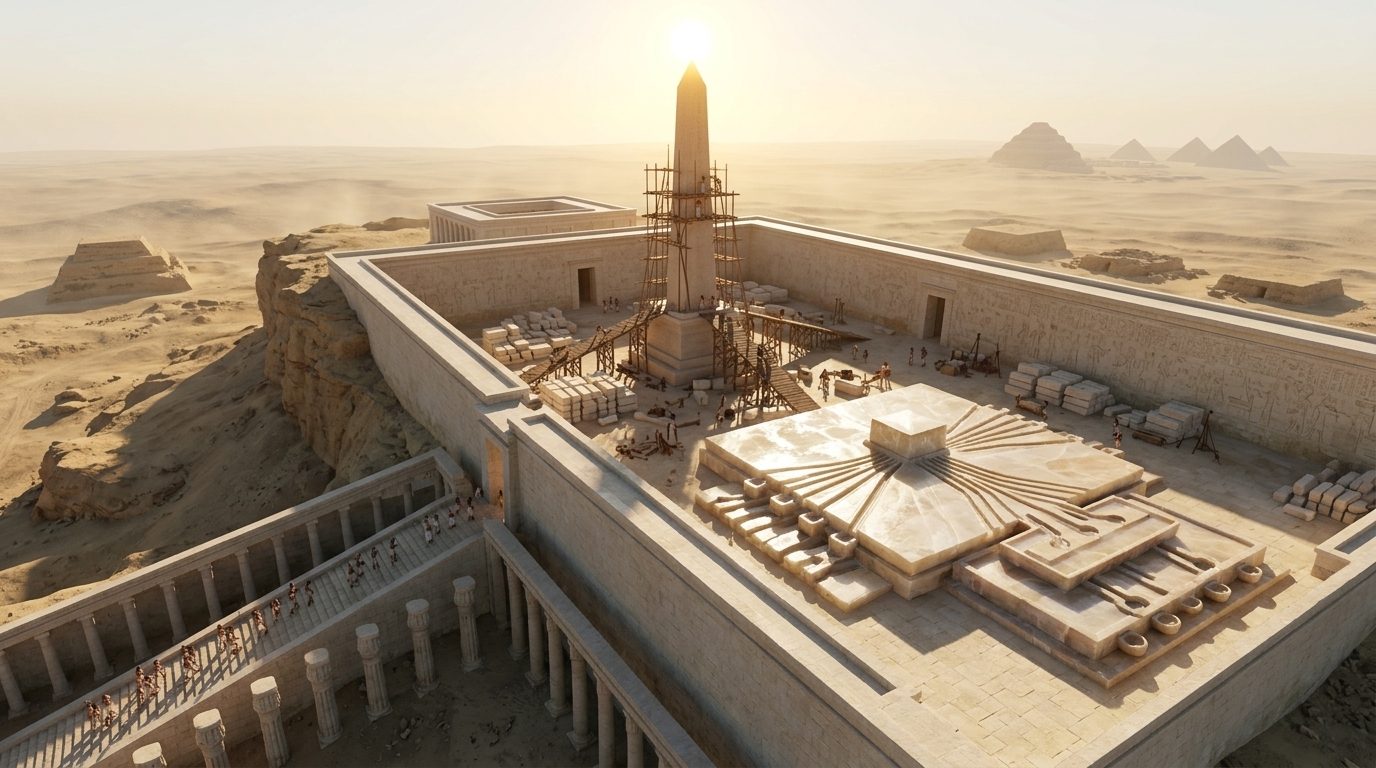
Around his fifth year Userkaf began a new kind of building at Abusir, a few kilometres north of Saqqara: a temple for the sun god Ra, called Nekhenre. It stood on raised ground, with an open courtyard and an altar under the sky. The temple was enlarged in several phases after his death, and its great obelisk was added later. Five of his successors built sun temples of their own. A stone vessel inscribed with the name of Userkaf's sun temple was found on the Greek island of Kythera, the oldest evidence of contact between Egypt and the Aegean world.
Gifts to the gods
THEME FIVE
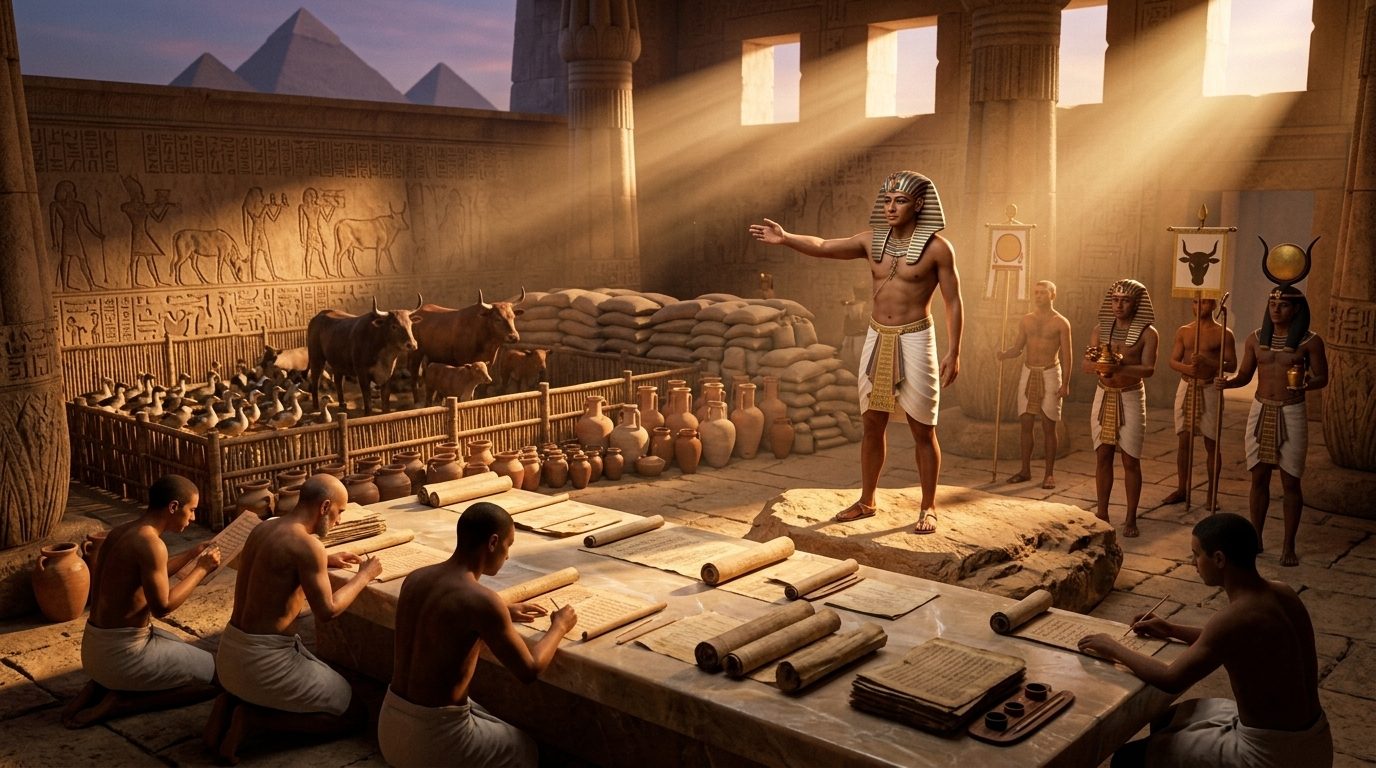
The Palermo Stone lists the gifts of Userkaf year by year. He gave land and daily offerings of bread, beer, cattle and geese to Ra, to Hathor, to the gods of Heliopolis and to the old shrines of Buto in the Delta, and in his sixth year he founded a temple of Horus. The annals also record workers brought from foreign lands for his pyramid. A royal decree from Tihna in Middle Egypt arranged the estates that supported a cult of Hathor. Such endowments made the temples richer and gave the priests a growing role in the state.
The faces of Userkaf
THEME SIX
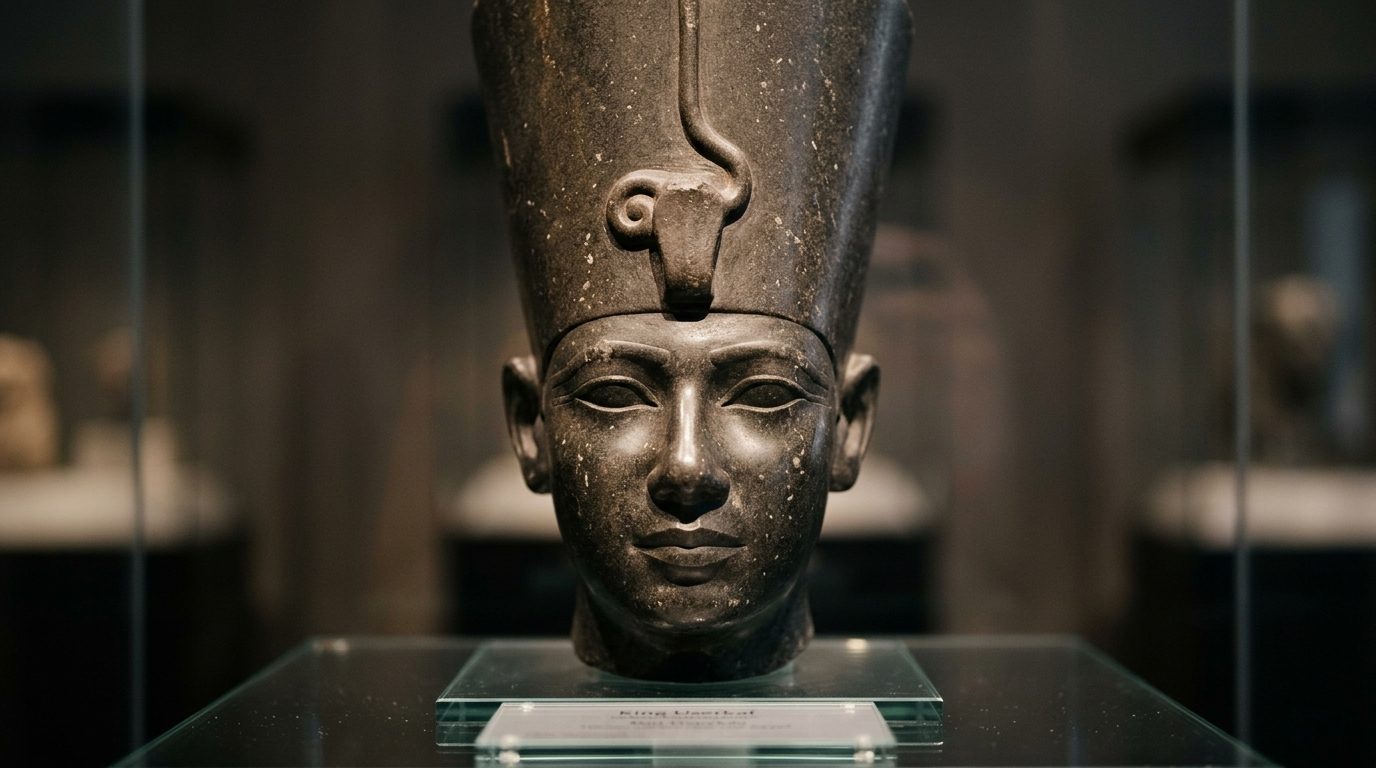
Two remarkable portraits of Userkaf are kept in the Egyptian Museum in Cairo. A colossal head of pink granite from his mortuary temple at Saqqara shows him with the royal headcloth and the cobra on his brow. Apart from the Great Sphinx, it is the largest royal head preserved from the Old Kingdom. A smaller head of greywacke, about 45 centimetres high, was found in his sun temple and shows a young pharaoh wearing the red crown of Lower Egypt.
Summary
THEME SEVEN
Userkaf ruled only about seven years, but he set the pattern of the Fifth Dynasty: a modest pyramid, a temple for the sun beside the royal tombs and rich gifts to the gods. Under his successors the sun cult of Ra reached its height.
Key dates
- 2435 BCEUserkaf becomes pharaoh and founds the Fifth Dynasty, according to E. Hornung (2006).
- Around his fifth yearWork begins on the first sun temple, Nekhenre, at Abusir.
- 2429 BCEDeath of Userkaf and burial in his pyramid at Saqqara. His son Sahure succeeds him.