
Home · Ancient History · Ancient Egypt · Old Kingdom
Khafre
Khafre, called Chephren by the Greeks, was a son of Khufu and the fourth pharaoh of the Fourth Dynasty. In the chronology of E. Hornung (2006) he reigned from 2472 to 2448 BCE. He returned to Giza and built there the second great pyramid, only a little smaller than his father's. Its valley temple of red granite held a series of royal statues, among them one of the finest works of Egyptian sculpture, and the Great Sphinx beside it is usually attributed to him.
- Reign
- 2472 – 2448 BCE (E. Hornung, 2006). The figure in the Turin Canon is lost. An inscription mentions the 13th cattle count, so most Egyptologists assume about 25 years. Herodotus gives 56 years, Manetho 66
- Dynasty
- 4th
- Predecessor
- Djedefre, his brother. The place of a little-known king Baka (Bikheris) before or after Khafre is disputed
- Successor
- Menkaure, his son
- Royal names
- Horus name Userib, "strong of heart". Birth name Khafre, "he appears like Ra". Greek form Chephren
- Manetho
- Souphis II, 66 years
- Burial
- The second pyramid of Giza
- Main sources
- His pyramid at Giza with its mortuary temple, causeway and valley temple, the statues from the valley temple, the Great Sphinx, the tombs of his family at Giza, Herodotus
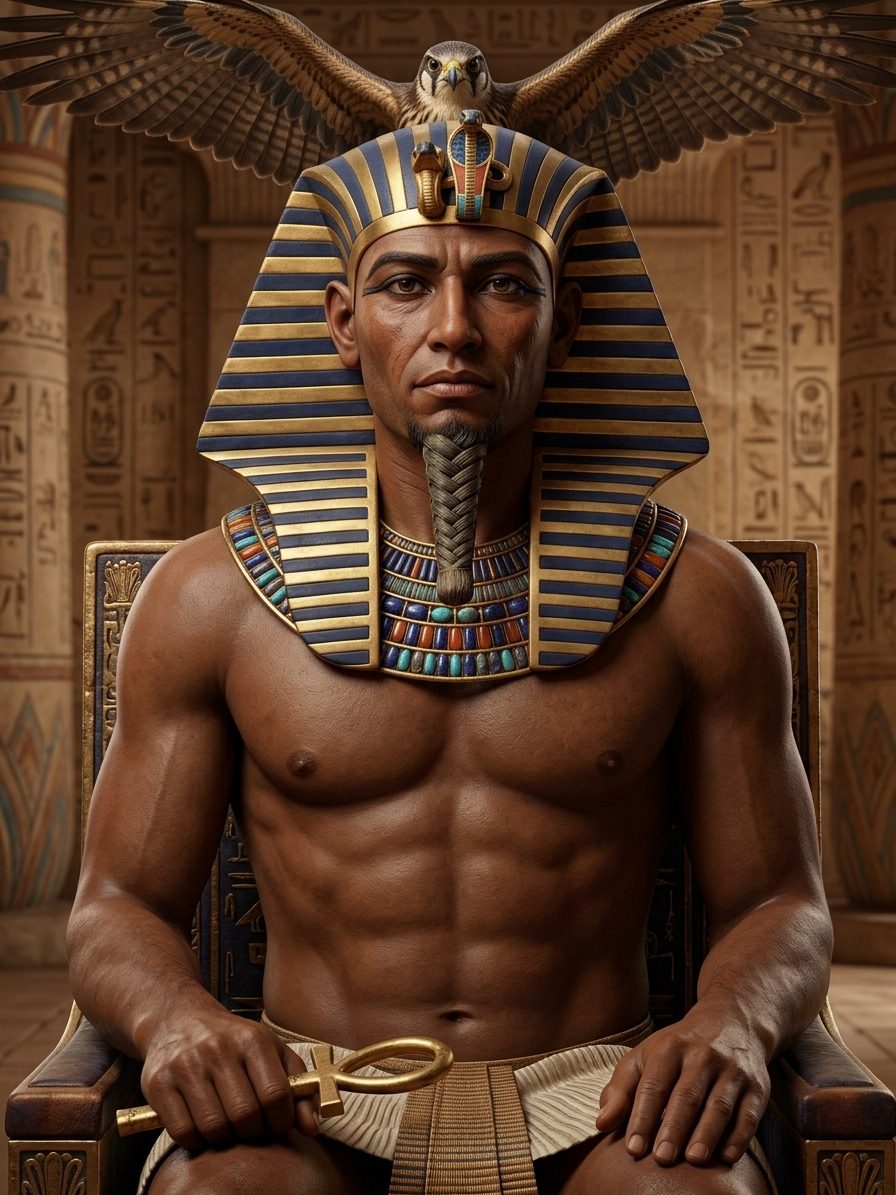
A son of Khufu
THEME ONE
Khafre was a son of Khufu. He became pharaoh after the short reign of his brother Djedefre, who built his pyramid at Abu Rawash, north of Giza. His name means "he appears like Ra", and like Djedefre he included the name of the sun god in his own, a sign of the growing importance of Ra. He had several wives, among them Meresankh III, whose richly painted tomb at Giza is one of the best preserved of the period, and Khamerernebty I, probably the mother of his successor Menkaure. He is said to have had at least twelve sons.
The second pyramid of Giza
THEME TWO
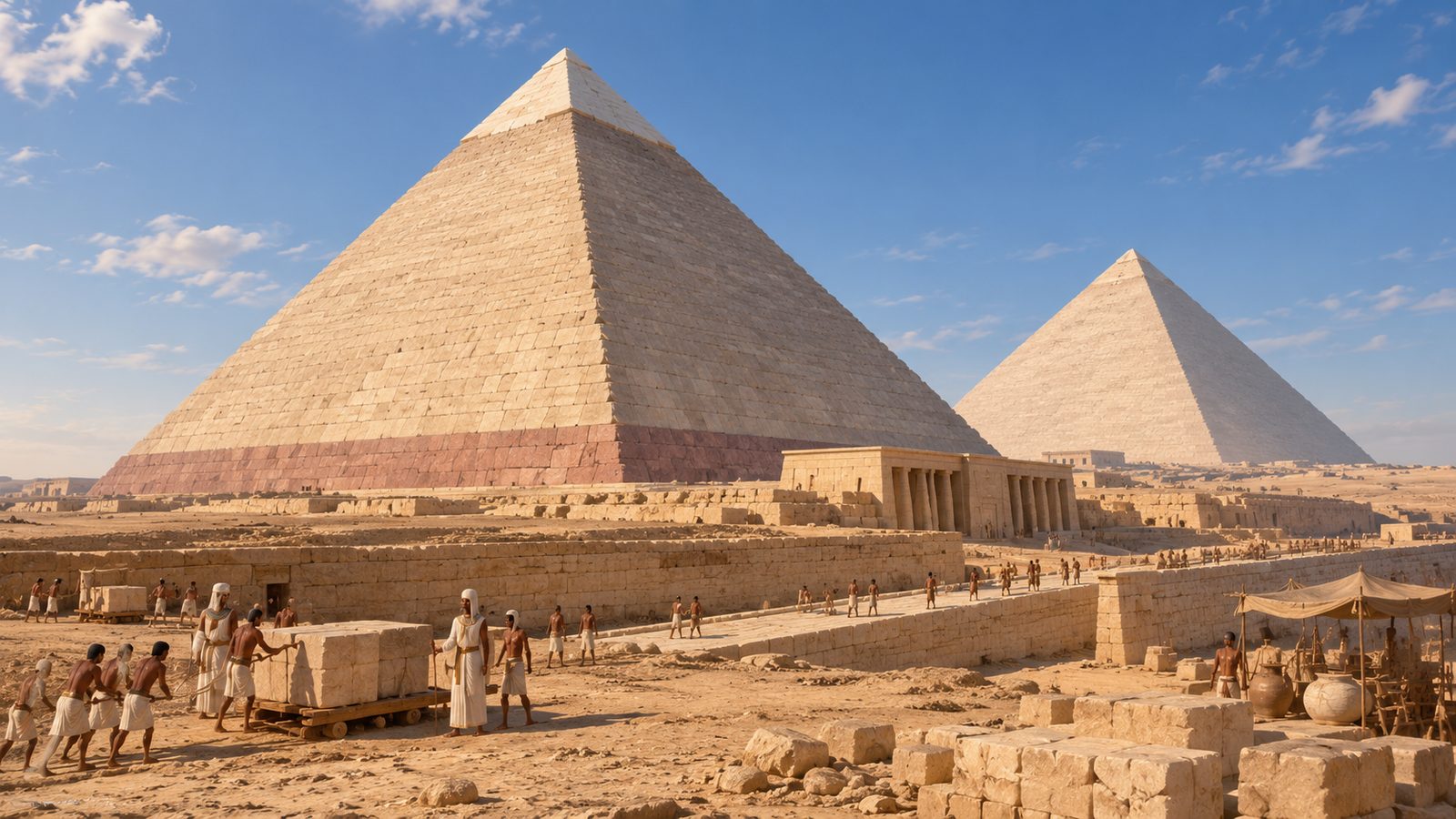
Khafre's pyramid stands next to his father's. It was originally about 143.5 metres high, only a few metres lower than the Great Pyramid, with a base of about 215 metres. Because it stands on higher ground and has a steeper slope of about 53 degrees, it often looks taller. Near its top part of the original casing of fine limestone survives, and the lowest course was of pink granite. Inside, a simple system of passages leads to a burial chamber cut into the rock, where Giovanni Belzoni found an empty granite sarcophagus in 1818.
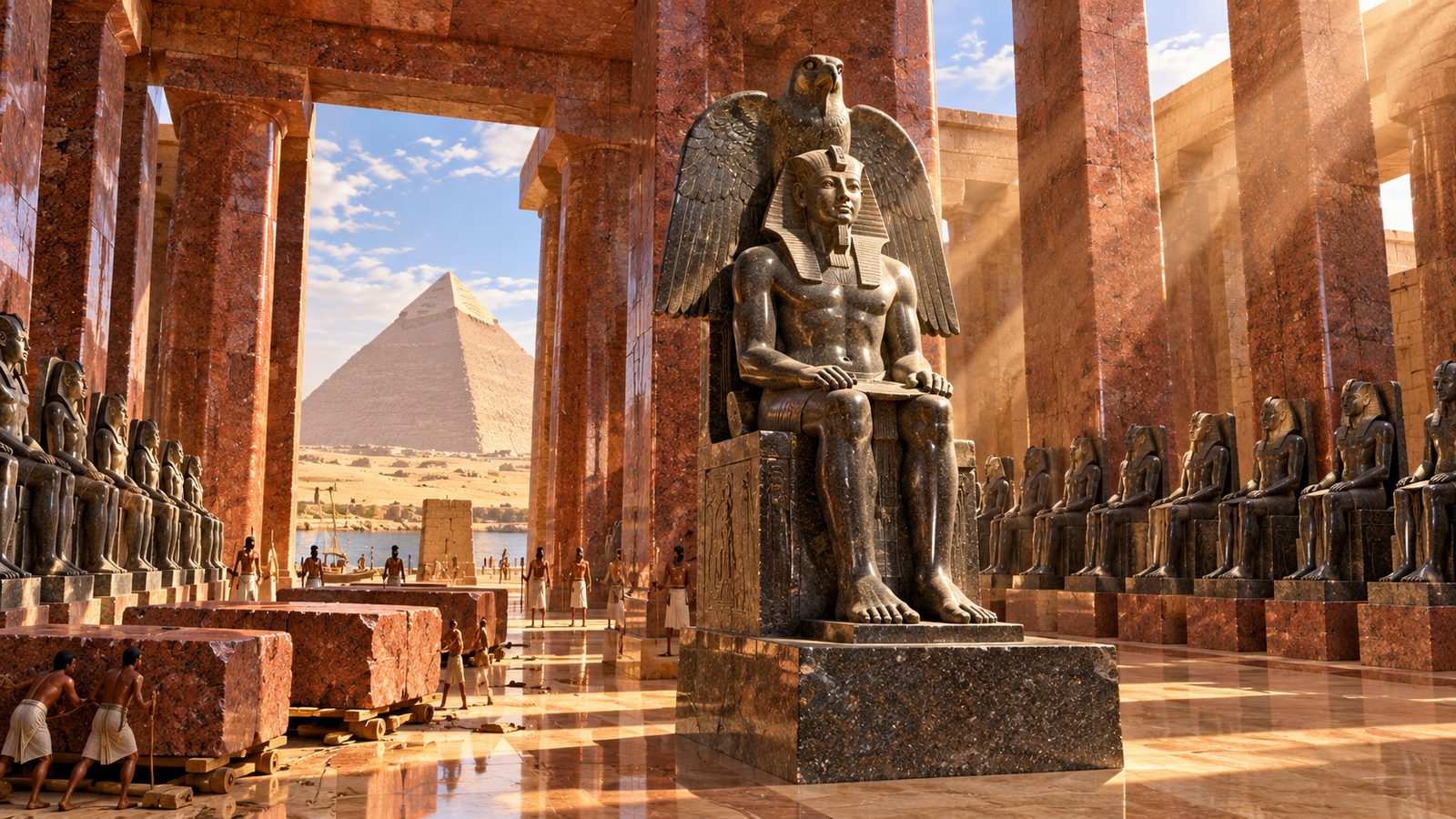
The valley temple of granite
THEME THREE
A causeway almost 500 metres long led from the pyramid down to a valley temple at the edge of the desert. Its walls and square pillars are of polished red granite, its floor of alabaster, and some of its blocks weigh more than 100 tonnes. Along the walls of its great hall stood 23 statues of the seated king. In 1860 Auguste Mariette found in a pit inside the temple a statue of Khafre carved from a hard dark stone, often called diorite. Behind his head a falcon, the god Horus, spreads its wings to protect him. Today it is in the Egyptian Museum in Cairo.
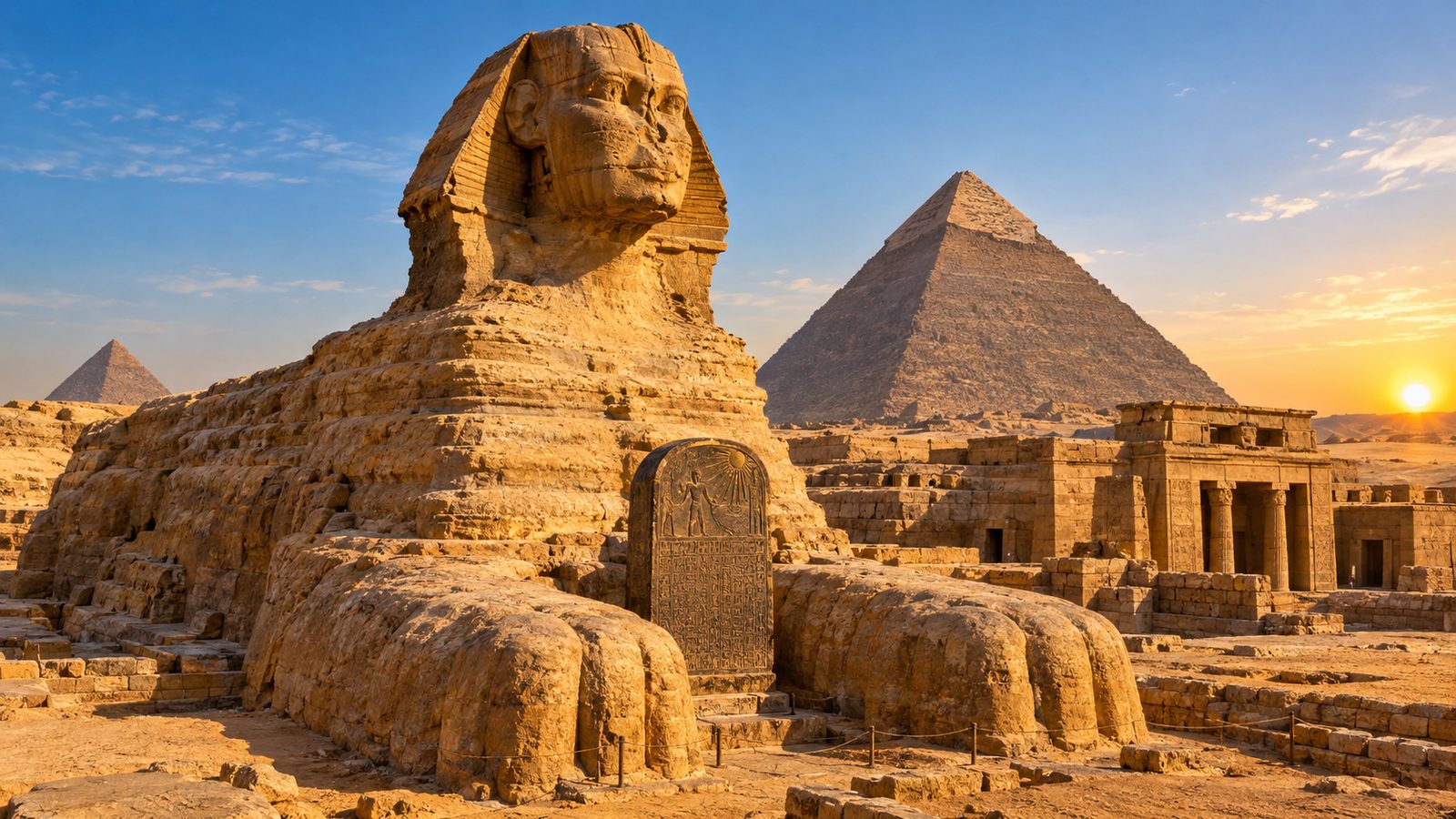
The Great Sphinx
THEME FOUR
Beside the valley temple lies the Great Sphinx, a lion with a human head about 73 metres long and 20 metres high, carved from a ridge of rock left standing when stone was quarried for the pyramids. No inscription of the Old Kingdom names its builder. Most Egyptologists attribute it to Khafre, because it lies next to his causeway and temple and its face resembles his statues, but some have proposed Khufu or Djedefre. In front of it stands an unfinished temple of the same period. More than a thousand years later the pharaoh Thutmose IV placed the Dream Stela between its paws.
The legend of a hard ruler
THEME FIVE
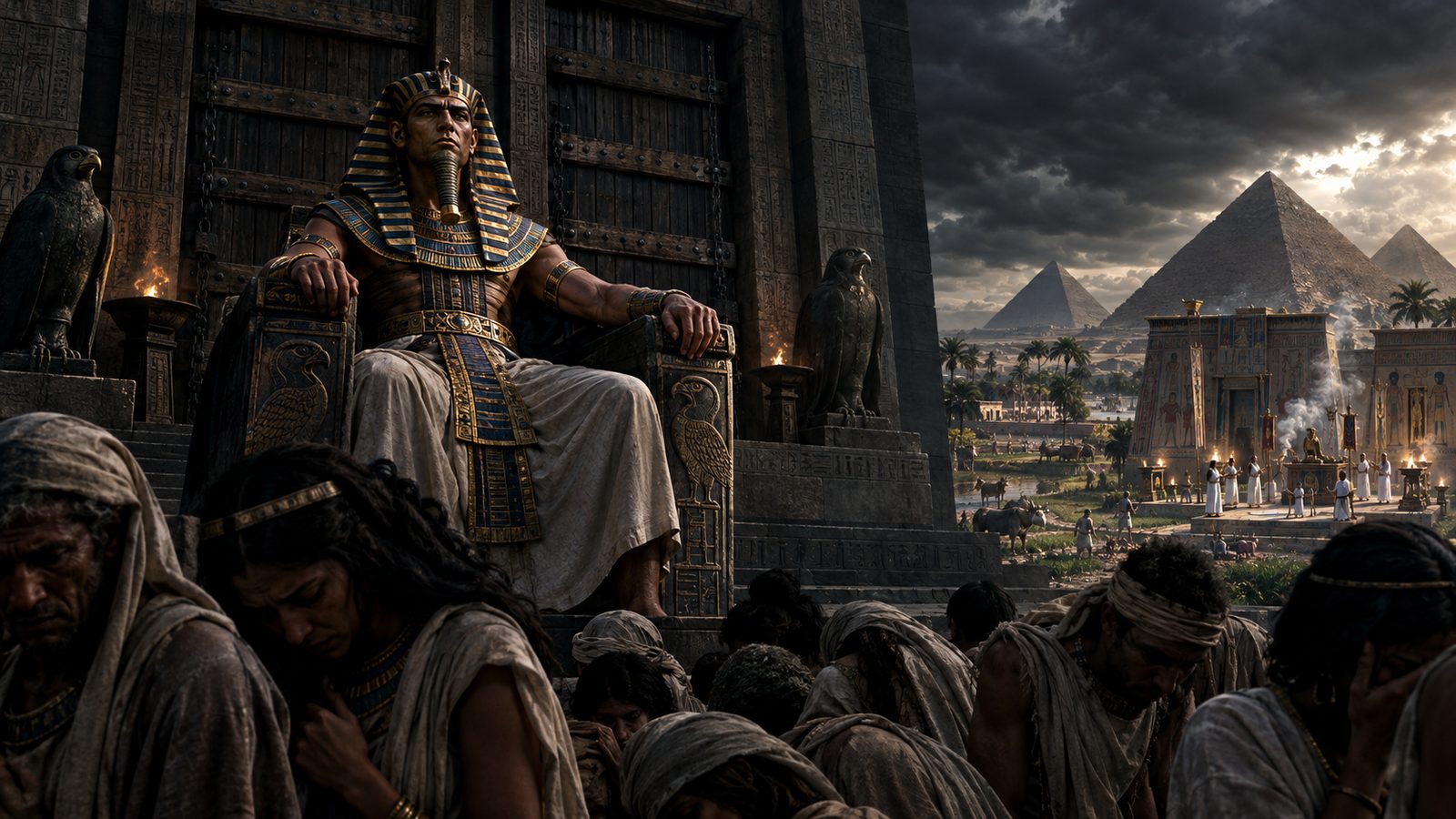
Herodotus, who visited Egypt about 2,000 years later, thought that Chephren was a brother of Cheops and wrote that he ruled for 56 years in the same harsh way, keeping the temples closed, so that the Egyptians did not even like to say the names of these two kings. This story reflects the views of the late period and of the guides Herodotus met rather than the evidence. The inscriptions of Khafre's time show a working administration, royal estates and a stable court, and priests serving his cult at Giza are known from long after his death.
A city of the dead
THEME SIX
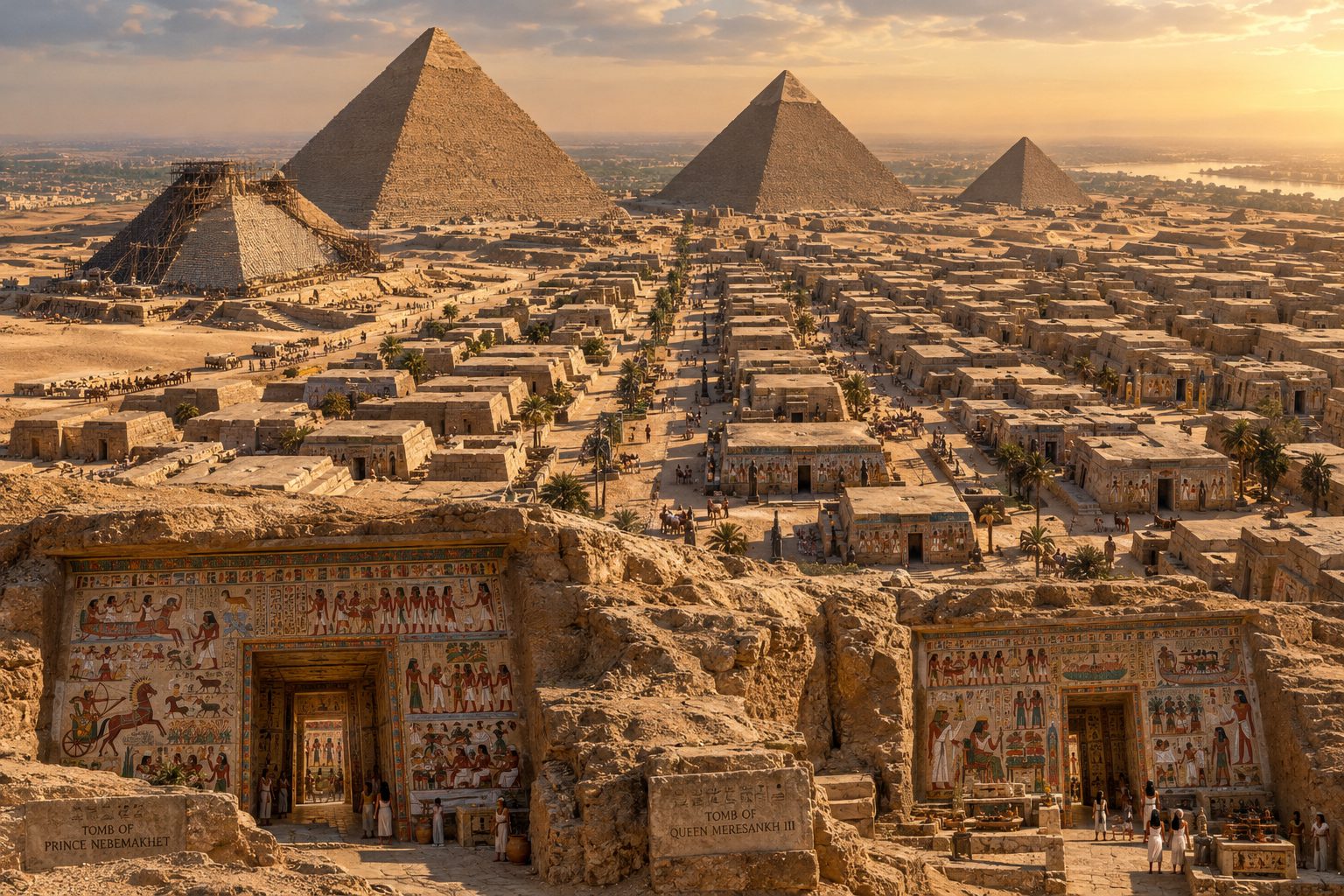
Under Khufu and Khafre the plateau of Giza became a true city of the dead. Around the pyramids of the kings stretched streets of stone mastabas for queens, princes and officials, laid out in rows like the blocks of a town. Many of Khafre's children and grandchildren were buried there. The rock-cut tomb of his son Nebemakhet and the tomb of Queen Meresankh III, decorated with scenes of daily life, show how the royal family lived and what it hoped for in the afterlife. When Khafre died, his son Menkaure began the third and smallest pyramid of the group.
Summary
THEME SEVEN
Khafre gave Giza its most famous image: two great pyramids side by side and the Sphinx keeping watch beside the valley temple. His statues reached a perfection rarely equalled later, and his monuments show the power of the Fourth Dynasty at its height.
Key dates
- 2472 BCEKhafre becomes pharaoh after his brother Djedefre, according to E. Hornung (2006).
- During his reignThe second pyramid of Giza, its valley temple and, probably, the Great Sphinx are built.
- 2448 BCEDeath of Khafre and burial in his pyramid. His son Menkaure succeeds him.